





October's Celestial Highlights
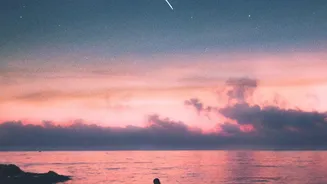
This October is a busy month in the night sky. First, look for Saturn, which will be at its brightest and visible all night early in the month, having reached opposition on October 4. A few days later, the Draconid meteor shower will peak on the night of
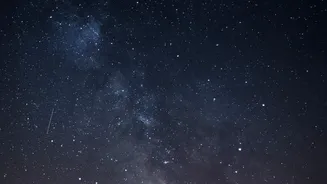
October 8-9. This is a gentle shower, but with the moon being a thin crescent, the sky will be dark, offering excellent viewing conditions just after sunset. The main event this month is the Orionid meteor shower, which peaks on the nights of October 21-22. These meteors are famous for being fast and bright, as they are debris left by the famous Halley's Comet. While a bright moon will be present, it sets a few hours before dawn, leaving a perfect window for viewing in the early morning hours. Expect to see up to 15-20 meteors per hour in a dark location. The month closes with the full Hunter's Moon on October 26.
Your Pocket Guide to the Cosmos
You don't need a telescope to start your stargazing journey; your smartphone is the perfect tool. Several apps can help you identify stars, planets, and constellations in real-time. Star Walk 2 is often recommended for beginners due to its user-friendly interface and beautiful augmented reality overlays that show you exactly what you're looking at. Another excellent free option is Stellarium Mobile, which provides a highly realistic and accurate map of the sky. For those who want detailed information and nightly suggestions, Sky Tonight is a fantastic choice that tells you exactly what's visible from your location each evening. These apps use your phone's sensors to create an interactive map—simply point your device at the sky, and it will identify celestial objects for you, making it easy to learn the constellations.
Finding the Perfect Viewing Spot
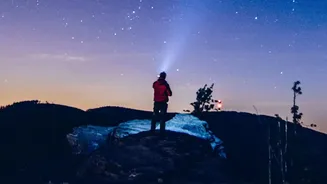
The biggest challenge for many aspiring stargazers in India is light pollution from cities, which washes out all but the brightest stars. To truly experience the night sky, you need to get away from urban centres. Even a short drive to a more rural area can make a significant difference. National parks, hill stations, and remote countryside locations are ideal. Places like the Rann of Kutch, Spiti Valley, Ladakh, and Coorg are renowned for their dark skies. For those near cities, look for local parks, high-altitude spots, or designated dark-sky reserves that are shielded from direct city glow. The key is to find a location with an unobstructed view of the horizon, far from streetlights and building lights. Planning your trip around the new moon phase will also ensure the darkest possible skies, as bright moonlight can also obscure fainter stars.
Simple Tips for a Great Night Out
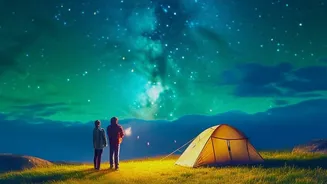
Once you have your spot, a few simple practices will dramatically improve your experience. First, give your eyes time to adjust to the darkness. It takes about 20-30 minutes for your eyes to become fully dark-adapted, allowing you to see faint objects like the Milky Way or dimmer meteors. Avoid looking at your phone screen or any white light during this time, as it will reset your night vision. If you need light, use a red-light torch, as red light is less disruptive to your eyes. Second, get comfortable. Stargazing involves a lot of patience, so bring a blanket to lie on or a comfortable chair. Nights can get chilly, even in warmer regions, so dress in layers. Finally, just look up. You don't need to identify everything at once. The simple act of observing the vastness of the cosmos is a reward in itself.