





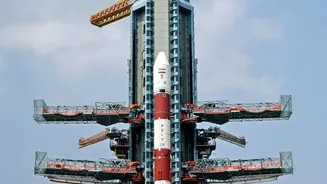
The New Space Race is Commercial
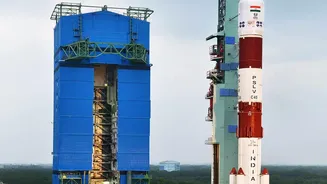
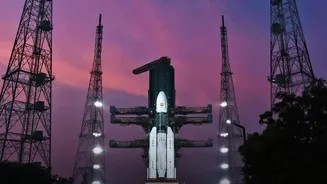
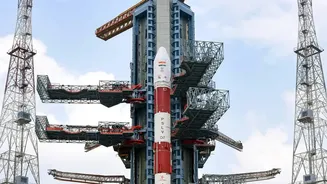
For decades, a career in India's space sector meant one thing: working for the Indian Space Research Organisation (ISRO). But following landmark government reforms in 2020, the landscape has transformed. The industry has been opened up to private enterprise,
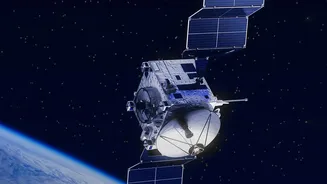
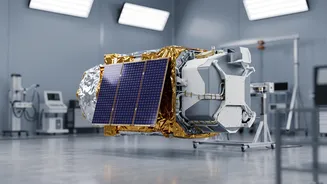
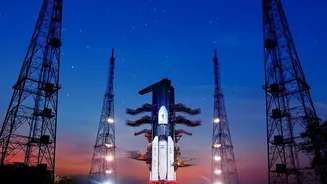
leading to an explosion of over 400 space-tech startups. This shift, facilitated by the regulatory body IN-SPACe, is changing the very nature of space work. While ISRO remains focused on pioneering research and development for national missions like Gaganyaan and deep space exploration, private companies are now taking on roles in satellite manufacturing, launch services, and data applications. This has expanded the space economy, which is projected to grow from around $8.4 billion to $44 billion by 2033, creating a surge in demand for a new generation of professionals.
Data Science and AI: The Downstream Gold Rush
The most significant growth area in the commercial space sector is not in building rockets, but in interpreting the data they send back. Satellites generate enormous amounts of information used in agriculture, climate monitoring, urban planning, and defence. This has created a massive demand for data scientists, AI specialists, and machine learning engineers. These professionals are needed to build algorithms that can analyse satellite imagery, predict weather patterns, and manage vast satellite constellations autonomously. Skills in Python, MATLAB, and geographic information systems (GIS) are becoming as crucial to the space industry as aerospace engineering. Companies are hiring experts who can turn raw data into actionable business intelligence, a trend that is expected to generate the majority of future revenue in the sector.
Advanced Manufacturing and Robotics
As private companies ramp up production of satellites and launch vehicles, demand is soaring for engineers skilled in advanced manufacturing and robotics. The focus is on making space hardware smaller, cheaper, and faster to produce. This involves expertise in areas like 3D printing (additive manufacturing) for creating complex components, using new lightweight composite materials, and developing robotic systems for assembling and testing spacecraft. Engineers who can design and operate automated systems are critical for scaling up production to meet the demands of a commercial market. This skill set is essential for building the satellite constellations and reusable rockets that are central to the business models of many new space startups.
Cybersecurity for Orbiting Assets
Satellites and ground stations are high-value strategic assets, making them potential targets for cyberattacks. A single breach could disrupt communication networks, compromise sensitive data, or even cause a satellite to become uncontrollable. As a result, cybersecurity is rapidly emerging as a critical field within the space industry. Professionals are needed to design secure communication protocols, protect ground control systems from intrusion, and ensure the integrity of data transmitted from space. This specialized field requires a unique combination of IT security knowledge and an understanding of satellite and aerospace systems, making it a highly valuable and sought-after expertise.
The Business and Law of Space
The commercialization of space has created a need for professionals outside of traditional engineering roles. The new ecosystem requires business development managers who can forge partnerships, marketing experts who can sell space-based services, and finance professionals to manage investments and funding. Furthermore, the growing number of satellites and space activities has given rise to a new legal frontier. Space lawyers and policy experts are becoming indispensable for navigating complex issues like orbital slot allocation, spectrum rights, and liability for space debris. These non-technical roles are vital for building sustainable companies and ensuring that the burgeoning private space industry operates within a clear and stable regulatory framework.