






What Just Happened?
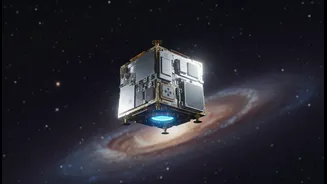
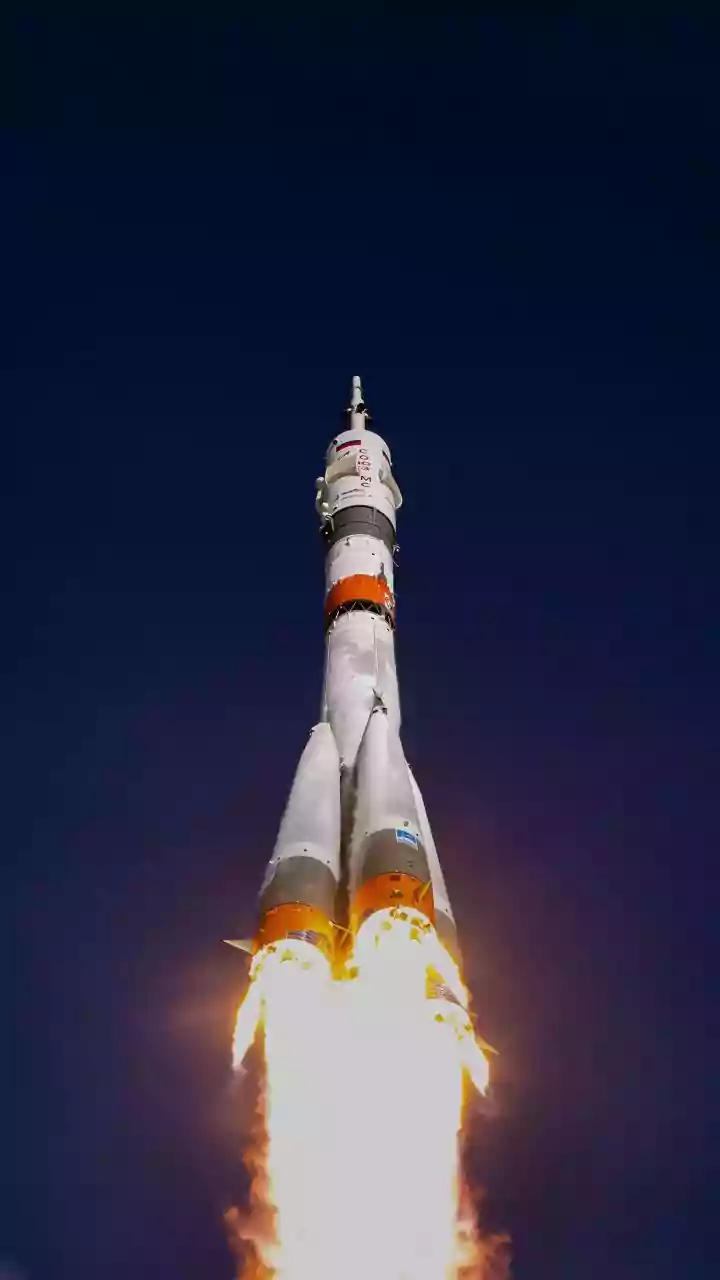
On July 7, a SpaceX Falcon 9 rocket lifted off from California as part of the Transporter-17 rideshare mission. Tucked among its 81 payloads was a tiny, softball-sized satellite that made history. Built by Florida-based company City Labs, the BOHR CubeSat
is the first commercially designed and operated spacecraft to use nuclear power in orbit. While government space agencies like NASA have used nuclear power for decades on deep space probes, this launch marks the first time a private company has sent a nuclear-powered payload to space, opening a new chapter in the commercialisation of the cosmos.
What Is a 'Nuclear' Satellite?
The term “nuclear” might bring to mind giant reactors, but the technology on the BOHR satellite is very different. It uses a power source called a betavoltaic battery. Specifically, City Labs' proprietary "NanoTritium" technology harnesses the natural decay of tritium, a radioactive isotope of hydrogen. As tritium decays, it releases beta particles (high-energy electrons). A semiconductor material within the battery captures these particles and converts their kinetic energy directly into electricity. This is different from the radioisotope thermoelectric generators (RTGs) used on NASA's Voyager probes, which convert the heat from decaying plutonium into power. The BOHR mission is a pathfinder; its main systems are still solar-powered, but its experimental payload runs solely on the tritium battery to prove the technology works in space.
Why Not Just Use Solar Panels?
Solar panels are the workhorse of the satellite industry, but they have a crucial weakness: they need sunlight. This limits missions in deep space, in permanently shadowed craters on the Moon, or even in certain Earth orbits where a satellite spends long periods in darkness. Solar panels also degrade over time. Nuclear batteries like City Labs' betavoltaic device solve this problem by providing a continuous, steady stream of power for decades, regardless of lighting conditions. While the current version on BOHR produces only a tiny amount of power—measured in microwatts—it demonstrates a capability for persistent, always-on operations that solar panels cannot match.
Is It Safe and Legal?
Safety is the biggest hurdle for any nuclear technology in space. The BOHR satellite's success is as much about regulation as it is about technology. It is the first commercial mission to receive launch approval through a new process established by the US Federal Aviation Administration (FAA). This involved a rigorous safety analysis, independently validated by Sandia National Laboratories, to ensure the radioactive material would be safely contained even in an accident. The choice of tritium as a fuel source helps significantly. It emits low-energy radiation that is much easier to shield against compared to materials like plutonium, making it safer for handling and transport.
What Does This Mean for the Future?
This single satellite launch has enormous implications. By proving a regulatory path exists for commercial nuclear payloads, it opens the door for other companies to follow. City Labs and others envision scaling up this technology to power a new generation of spacecraft. Future applications could include providing constant power for instruments on the lunar surface to help them survive the two-week-long lunar night, or enabling more ambitious commercial missions into deep space where solar power is ineffective. This launch doesn't just represent a new piece of hardware in orbit; it signals the start of the nuclear age for commercial spaceflight, promising to make the entire solar system more accessible for exploration and enterprise.