

The Sun’s Invisible Threat: Coronal Mass Ejections
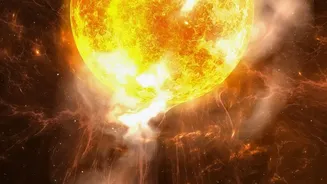
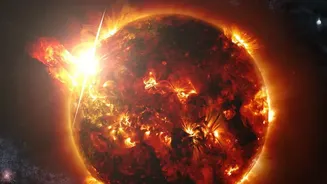
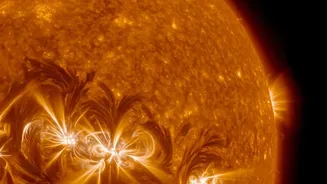
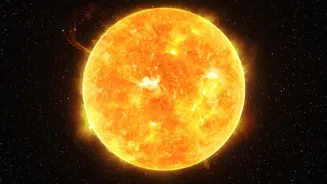
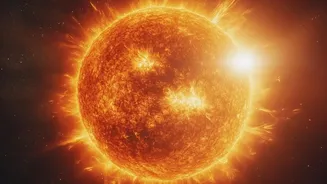
Our star is a dynamic and often violent body. It sometimes releases enormous clouds of magnetised plasma in an event called a Coronal Mass Ejection, or CME. These are not just small bursts; they can involve billions of tons of material travelling at speeds
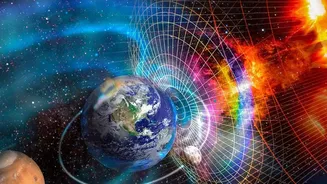
up to 3,000 kilometres per second. While many CMEs miss Earth entirely, a direct hit can be catastrophic for our technology-dependent society. When a CME slams into Earth's magnetic field, it can trigger a powerful geomagnetic storm. This storm can induce powerful, uncontrolled currents in long conductors on the ground—like our electrical power lines. These geomagnetically induced currents (GICs) can flow into high-voltage transformers, causing them to overheat, melt, and fail, potentially leading to widespread and long-lasting blackouts. The most famous example is the 1859 Carrington Event, which set telegraph offices on fire. A similar event today could cripple our infrastructure.
Our Sentinels in the Sky: Coronagraphs
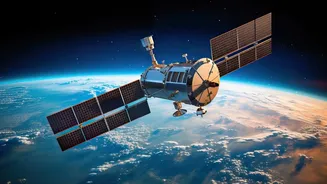
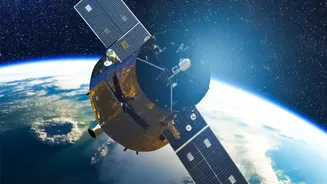
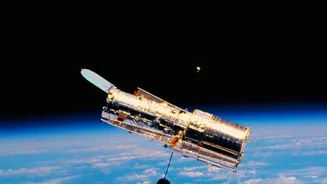
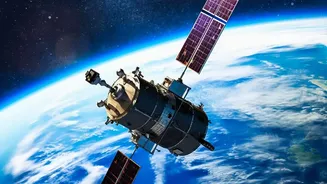
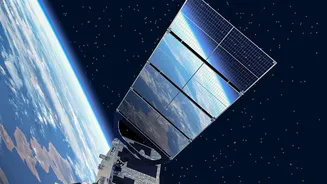
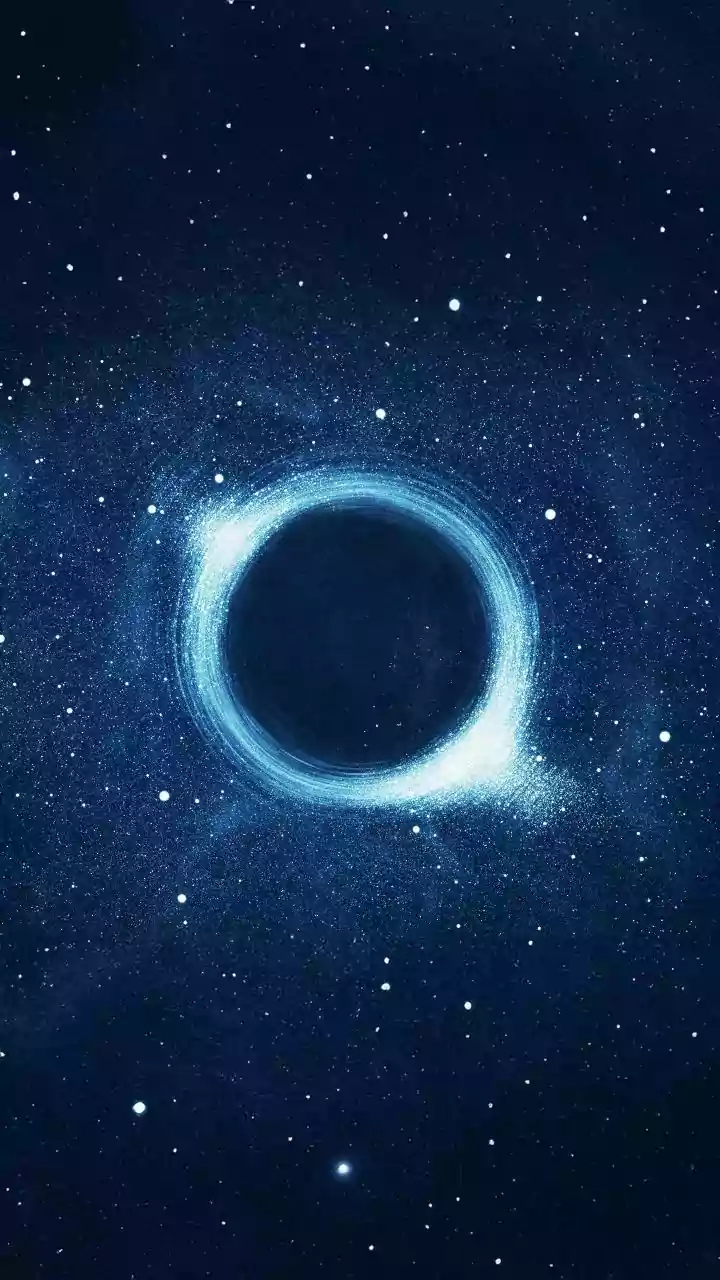
To protect ourselves from this threat, we need to see it coming. The problem is that the Sun is incredibly bright, and its faint outer atmosphere, the corona, is where CMEs originate. Trying to spot a CME leaving the Sun is like trying to see a moth flying next to a blinding stadium floodlight. This is where coronagraphs come in. A coronagraph is a special telescopic instrument designed to block out the overwhelming glare of the Sun's main disk, allowing scientists to observe the much dimmer corona. It essentially creates an artificial solar eclipse, revealing the Sun's atmospheric activity. Satellites equipped with these instruments, like the joint NASA/ESA Solar and Heliospheric Observatory (SOHO), are positioned in space to keep a constant, uninterrupted watch on the Sun.
How They Spot an Eruption
The key component of a coronagraph is a small, precisely engineered 'occulting disk'. This disk is placed in the telescope's light path to physically block the light from the Sun's bright surface. Once the main glare is gone, sensitive cameras can capture the faint light scattered by the plasma in the corona. When a CME occurs, it appears as a vast, expanding bubble or cloud of material moving away from the Sun. By taking a series of images over time, forecasters at agencies like NOAA's Space Weather Prediction Center can track the CME's speed, size, and direction. If they spot a large eruption aimed at Earth, known as a 'halo CME' because it appears to surround the Sun from our perspective, they know a potential impact is on its way.
From Detection to Grid Protection
Detecting a CME is only the first step; the true value is in the warning it provides. Because CMEs travel slower than the speed of light, observing an eruption gives us anywhere from 15 hours to several days of advance notice before it reaches Earth. This warning time is critical. It allows power grid operators to take protective measures. They can redirect power loads, take sensitive transformers offline to isolate them from the GICs, and ensure backup systems are ready. This prevents the catastrophic equipment failures and cascading blackouts that a major geomagnetic storm could cause. The advance warning also allows satellite operators to put their spacecraft into a protective 'safe mode' and airlines to reroute flights away from polar regions where radiation exposure is higher during a storm.
India's Eye on the Sun: Aditya-L1
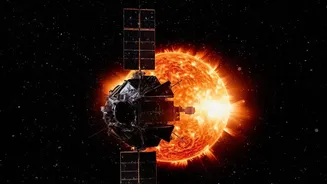
India has firmly established its presence in this crucial field of solar observation with the Aditya-L1 mission. Positioned at the Lagrange Point 1 (L1), about 1.5 million kilometres from Earth, the spacecraft has an uninterrupted view of the Sun. Its primary payload is the Visible Emission Line Coronagraph (VELC), designed to study the solar corona closer to the Sun's surface than many previous instruments. The VELC provides high-resolution data on the dynamics and origin of CMEs. Furthermore, Aditya-L1 is equipped with an automated algorithm to detect CMEs onboard, a significant technological advancement that allows for quicker alerts. This capability is vital for protecting India's rapidly expanding and critical infrastructure, ensuring the nation is not just a consumer of space weather data but a key contributor to global planetary defence.