





A Universe of Opportunity
For decades, the story of Indian space exploration was synonymous with the Indian Space Research Organisation (ISRO). But the narrative has dramatically expanded. The country is now home to a vibrant ecosystem of space technology startups, with their
numbers soaring from just a handful a few years ago to over 450. This isn't just about building rockets; these companies are innovating across the entire value chain, from satellite manufacturing and launch services to ground systems and data analytics. This boom is turning what was a government-led programme into a dynamic, commercial industry poised for exponential growth, with projections suggesting the Indian space economy could reach $44 billion by 2033.
The Policy That Unlocked the Stars
The catalyst for this transformation was a series of landmark government reforms, chief among them the Indian Space Policy of 2023. This policy was designed to formally open the doors to private participation, providing a clear framework and reducing regulatory hurdles. It established the Indian National Space Promotion and Authorisation Centre (IN-SPACe) as a single-window agency to facilitate, authorise, and supervise the activities of non-governmental entities. By allowing private firms to independently undertake end-to-end space activities and use ISRO's world-class facilities, the government effectively democratised space, unleashing a wave of entrepreneurial energy. Further liberalisation of Foreign Direct Investment (FDI) rules has also made the sector more attractive to global investors.
Meet the New Trailblazers
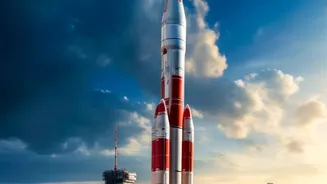
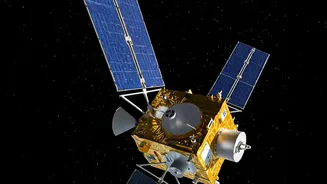
Several startups have already emerged as leaders in this new era. Hyderabad-based Skyroot Aerospace made history by launching Vikram-1, India's first privately developed orbital rocket, demonstrating the country's private launch capabilities to the world. Meanwhile, Chennai's Agnikul Cosmos is pioneering 3D-printed rocket engines and aims to make small satellite launches more affordable. In the satellite domain, companies like Pixxel are building constellations of hyperspectral Earth-observation satellites to provide valuable data insights for sectors like agriculture and climate monitoring. Dhruva Space, another key player, offers full-stack services for building and deploying small satellites, moving beyond component manufacturing to provide complete solutions.
Fuelling the Ambition
This rapid growth is being powered by a significant influx of capital. In the last three years alone, Indian space startups have attracted nearly $390 million in funding. The government is also actively nurturing the ecosystem with dedicated financial support. A ₹1,000 crore Venture Capital Fund has been established under IN-SPACe to provide crucial early-stage capital to promising startups over the next five years. This is complemented by initiatives like the IN-SPACe Seed Fund, which offers grants to early-stage ventures, and a Technology Adoption Fund to help companies commercialise their innovations. The combination of private investment and public funding is creating a fertile ground for deep-tech innovation to flourish.
Beyond the Launchpad
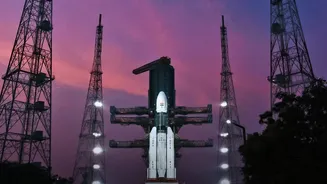
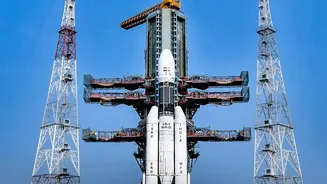
The impact of this space startup boom extends far beyond the launchpad. These companies are creating high-value jobs and fostering a new generation of engineers and scientists, with some experienced talent even moving from ISRO to join the thriving private sector. The technologies they develop have significant downstream applications. Satellite data can revolutionise agriculture through precision farming, improve disaster management with timely information, and aid in urban planning. As these startups build end-to-end capabilities, they are creating a self-reliant ecosystem that not only serves domestic needs but also competes on the global stage, positioning India as a key player in the $1.8 trillion global space economy expected by 2035.