






The Foundation: Organic Growth vs. Strategic Vision
Bengaluru’s ascent as an AI hub is a story of organic evolution. Built on its decades-long foundation as India's 'Silicon Valley,' the city boasts a deep-rooted ecosystem of IT services, a thriving startup culture, and a vast pool of engineering talent.
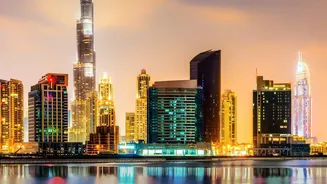
Recent reports highlight this strength, with the Global Startup Ecosystem Report (GSER) 2026 ranking Bengaluru as the second-best city in Asia for AI innovation. Its ecosystem, valued at nearly $153 billion, benefits from a constant churn of talent and ideas, making it a fertile ground for AI-native startups. Karnataka, the state where Bengaluru is located, attracts approximately 58% of India's total AI startup investments. Dubai, in contrast, represents a top-down, strategic approach. Its rise is engineered by a government with a clear vision and immense capital. The UAE's National Strategy for Artificial Intelligence 2031 is a deliberate plan to become a world leader in AI by investing heavily in infrastructure, talent, and governance. This has involved creating dedicated institutions like the Mohamed bin Zayed University of Artificial Intelligence and launching ambitious national training programs. The government's goal is to embed AI across all sectors, driving a state-led transformation that attracts global firms and experts.
The Talent Equation: Volume vs. Global Magnetism
Bengaluru's primary advantage is the sheer volume of its tech workforce. As a dominant force in India's AI talent landscape, the city is home to a massive pool of engineers and developers. This creates a competitive, cost-effective environment for companies looking to scale their AI operations. However, a significant challenge remains: while India produces a large number of AI users, there's a reported shortage in professionals with deep, specialized skills required for deploying complex AI systems. Dubai’s strategy is less about volume and more about magnetic appeal. The city focuses on attracting the world's best and brightest through incentives like tax-free salaries, high living standards, and clear residency pathways. The UAE is rapidly becoming one of the world's fastest-growing AI talent markets, drawing highly skilled workers from across the globe. Its approach is to import top-tier expertise to lead its AI transformation, while simultaneously upskilling its domestic workforce through extensive government training initiatives. This has made Dubai a hub for established global talent rather than just emerging graduates.
Bridging Worlds: A New AI Corridor
Interestingly, the relationship between these two hubs is becoming more collaborative than competitive. Recognizing the complementary strengths of each city, leaders are working to create an "AI corridor" between Bengaluru and Dubai. The idea is for Indian AI innovation and talent to leverage Dubai as a global launchpad to access markets in the Middle East, Africa, and beyond. This partnership has been formalized through agreements between Dubai Chambers and Indian industry bodies like NASSCOM. The UAE is also investing directly in India's AI infrastructure, including a landmark deal to build a national-scale AI supercomputer in India with Emirati capital and American technology.
Cost of Living and Quality of Life
The lifestyle and financial proposition offered by each city are starkly different. Bengaluru offers a significant cost advantage, with the overall cost of living being substantially lower than in Dubai. For early-stage startups and junior to mid-level professionals, this makes Bengaluru a highly attractive and sustainable option. However, infrastructure challenges and urban congestion can impact the quality of life. Dubai offers a high standard of living, world-class infrastructure, and a multicultural environment, but at a premium. The cost of living in Dubai is roughly 2.5 to 3 times higher than in Bengaluru, with rent being a primary driver of this difference. While the lure of tax-free salaries is strong, a salary in Dubai often needs to be significantly higher than an Indian package to result in greater savings after accounting for expenses like housing and school fees.
The Road Ahead: Different Races, Shared Goals
Bengaluru and Dubai are not running the same race. Bengaluru is solidifying its position as a scaled engine of AI development, leveraging its demographic dividend and homegrown startup culture. Its challenge lies in moving up the value chain from talent volume to specialized, high-impact expertise. The city's growth is rapid; its startup ecosystem value has surged 190% since 2021, far outpacing the global average. Dubai is racing to become a global command center for AI, using its strategic location, wealth, and decisive governance to attract elite talent and anchor major corporate AI initiatives. Its challenge is to ensure this imported ecosystem develops local roots and becomes self-sustaining. Both cities are proving that the future of AI will not be dictated by a single region, but by a network of diverse, ambitious hubs, each carving out its own path to success.