






What Exactly Is Zone 2 Training?
Think of Zone 2 as your body's most efficient, all-day pace. It’s a low-to-moderate intensity of aerobic exercise where your heart rate is typically between 60% and 70% of your maximum. The easiest way to estimate your max heart rate is the simple formula:
220 minus your age. So, for a 40-year-old, the max would be 180 beats per minute (bpm), and their Zone 2 would be between 108 and 126 bpm. The key feature of this zone is that it feels comfortable. You’re working, but you’re not gasping for air. A great rule of thumb is the “talk test”: you should be able to hold a conversation without struggling for breath. If you can sing, you’re likely going too easy; if you can’t talk, you’re pushing too hard.
The Science of Sustainable Endurance
The magic of Zone 2 lies in how it trains your body at a cellular level. Working out at this steady intensity primarily uses fat as its fuel source, rather than the carbohydrates (glycogen) your body burns during high-intensity efforts. This has two major benefits. First, it makes your body more efficient at burning fat for energy. Second, it stimulates the growth and efficiency of your mitochondria—the tiny powerhouses inside your cells responsible for generating energy. More and better-functioning mitochondria mean your body can produce more energy aerobically, which directly translates to better endurance. You can go for longer without hitting a wall.
Why Rowing Is the Perfect Partner
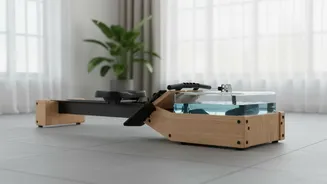
While you can do Zone 2 training with any cardio activity, rowing is exceptionally well-suited for it. Rowing is a full-body workout, engaging an estimated 86% of your muscles with every stroke, including your legs, core, and arms. This total-body engagement makes it easier to elevate and sustain your heart rate within the Zone 2 range without having to push any single muscle group to its limit. Furthermore, the smooth, rhythmic nature of the rowing stroke is ideal for the long, steady sessions that define Zone 2 training. A coach might recommend a stroke rate between 18 and 22 strokes per minute (SPM) to help maintain the correct intensity.
A Haven for Your Joints
One of the most significant advantages of rowing is that it is a low-impact exercise. Unlike high-impact activities like running, where your joints absorb the force of each foot strike, rowing is a non-weight-bearing activity. Your weight is supported by the seat, and your feet are secure on the footplates, creating a fluid motion that eliminates jarring shocks to your ankles, knees, and hips. This dramatically reduces the risk of stress-related injuries and makes it an excellent option for people with existing joint sensitivities or those looking for a sustainable, long-term fitness solution. You get all the cardiovascular benefits without the pounding.
Getting Started on the Rower
Ready to give it a try? The setup is simple. After a 5-minute warm-up, aim for a steady rowing session of 20 to 30 minutes, focusing on keeping your heart rate in that 60-70% range. Don't fixate on speed or power; the goal is time at the right intensity. Pay attention to your breathing and your ability to talk. A heart rate monitor is a useful tool, but your body's own feedback is just as valuable. Start with a couple of sessions per week and gradually increase the duration as your endurance improves. A sample beginner workout could be 20 minutes of steady rowing followed by a 5-minute cool-down.