








From Blank Page to First Draft in Minutes
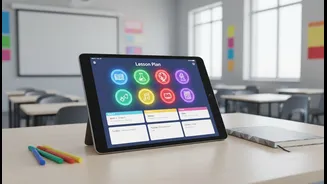
One of the most significant ways AI can assist teachers is by automating the initial, often time-consuming, stages of lesson creation. Instead of staring at a blank document, a teacher can provide an AI tool with a simple prompt, such as the topic, grade
level, and learning objectives. The AI can then generate a structured lesson skeleton in minutes, complete with potential activities, discussion points, and even assessment questions aligned with curriculum standards like CBSE or ICSE. This transforms hours of administrative work into a quick task, freeing up educators to focus on refining and delivering the content. Think of it as a brainstorming partner that kick-starts the creative process, allowing teachers to bypass the drudgery and jump straight to the art of teaching.
Effortless Differentiation for Every Student
Catering to a classroom of diverse learners is a significant challenge, especially in large Indian classes. AI is a powerful ally in creating differentiated instruction. A teacher can use AI tools to instantly adapt a single reading passage for various levels, creating a simplified version for struggling readers, a grade-level version, and an advanced version for high-achievers. These tools can also help bridge language gaps by translating materials or providing vocabulary support for multilingual learners. This process, which would manually take hours, can be done in moments, ensuring that every student receives content that is both challenging and accessible, a core principle of inclusive education.
The Teacher's Touch: Adding Soul to the Structure
A common fear is that AI will produce generic, uninspired lessons. However, the true value of these tools lies in their role as a foundation, not the final product. The AI provides the structure, but the teacher provides the soul. The AI can draft a plan for a history lesson, but it’s the teacher who enriches it with a personal anecdote, a local historical connection, or a passionate storytelling style that captures students' imaginations. The AI doesn’t know your students’ specific interests or the inside joke that could make a concept click. The teacher’s role shifts from being a content creator from scratch to an expert curator and editor, infusing the AI-generated framework with their unique insights, enthusiasm, and pedagogical magic.
A Partner for Creativity and Assessment
Beyond basic lesson outlines, AI can serve as a wellspring for creative teaching ideas. Feeling stuck in a rut? An AI tool can suggest fresh project ideas, interactive activities, or engaging discussion prompts that you might not have considered. It can also help in designing effective assessments, from generating quizzes to creating detailed rubrics for grading complex assignments. This not only saves time but also ensures that assessments are closely tied to the learning objectives. By handling the mechanical aspects of creating and assessing, AI allows teachers more mental space to think strategically about how to foster critical thinking and genuine understanding in their students.
Getting Started in the Indian Context
The push for integrating technology in Indian education is supported by initiatives like the National Education Policy (NEP) 2020. Many AI platforms are being designed with Indian educators in mind, offering support for regional languages and alignment with local curricula. The key is to start small. Experiment with one tool that addresses a specific pain point, like generating worksheets or creating presentations. As you become more comfortable, you can gradually explore more features. With programs aiming to train millions of Indian teachers in AI skills, the support ecosystem is growing. The goal is not to become an AI expert overnight, but to learn how to use these tools to make your job more sustainable and, ultimately, more focused on your students.