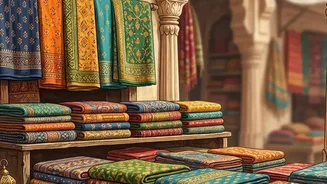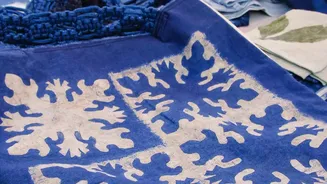




Long before sustainability became a global trend, Indian households were mastering the art of circularity. For centuries, worn-out textiles were not discarded but skillfully reborn, embedding stories and resourcefulness into every thread.
Kantha: The Running Stitch of Bengal
Hailing from
the Bengal region, Kantha is a testament to the power of a simple running stitch. Traditionally, women would layer old, soft cotton saris or dhotis, stitching them together to create lightweight quilts known as 'lep'. The threads used for the embroidery were often pulled from the colourful borders of the old saris themselves. This was not just recycling; it was an art form. The stitches would often form intricate patterns, depicting flowers, animals, birds, and scenes from folklore and daily life, essentially creating a narrative on cloth. What started as a way to make warm blankets from existing materials has evolved into a celebrated craft, with Kantha work now adorning high-fashion garments and home decor, proving that the humblest techniques can have the most enduring appeal.
Chindi: Weaving Magic from Scraps
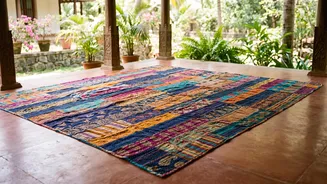
The word 'Chindi' literally translates to 'torn cloth' or 'scraps'. This craft, practiced across various parts of India, is the epitome of the 'waste not, want not' philosophy. It involves collecting leftover pieces of fabric—often from tailor shops or textile mills—and weaving them into vibrant, durable items like rugs, bags, and mats. Traditionally practiced by women in their homes, Chindi weaving turns a chaotic jumble of colours and textures into beautiful, functional products. The process is simple: fabric scraps are braided or woven together to create a new, sturdy textile. Today, the craft provides a livelihood for many artisans and has gained international recognition as a brilliant solution for industrial textile waste, making each multi-coloured Chindi rug a unique story of regeneration.
Gudri: The Patchwork Heirlooms of Western India
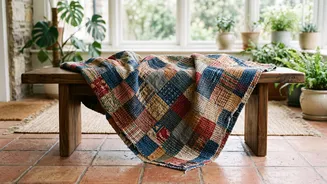
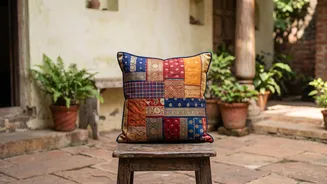
Similar to Kantha, Gudri (or Godhadi in Maharashtra) involves quilting layers of old fabric together. However, it is most often associated with patchwork. Found predominantly in regions like Rajasthan, Gujarat, and Maharashtra, Gudri quilts are made by stitching together small pieces of different fabrics into a larger mosaic. These quilts are deeply personal, often crafted by mothers and grandmothers from the family's old clothing. A piece of a father's shirt might sit next to a fragment from a mother's sari, turning the blanket into a tangible family history. The layers are hand-stitched together, creating warm, reversible, and incredibly soft quilts that carry the memories of the fabrics used. Each Gudri is a one-of-a-kind heirloom, an intimate collage of love and memory.
Khesh: A Unique Weave from Shantiniketan
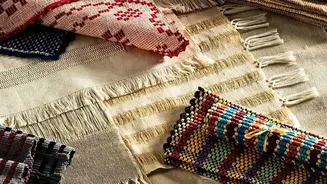
The Khesh weaving technique, which originated in the Birbhum district of West Bengal, is a particularly ingenious form of upcycling. The process involves using new cotton yarn for the warp (the vertical threads on a loom) and strips of old cotton saris for the weft (the horizontal threads). The old saris are first hand-torn into thin, continuous strips. As the weaver works the loom, these colourful strips are woven into the new fabric, creating a unique texture with a beautiful, striated 'linear mosaic' effect. The final Khesh fabric is heavy, breathable, and tells the story of its previous life through the flashes of random colour. The tradition, said to be encouraged by Rabindranath Tagore's philosophy of self-reliance at Shantiniketan, is a perfect blend of the old and the new.
Rafugari: The Invisible Art of Mending
While not strictly a recycling method, the art of Rafugari, or darning, is a profound practice of preservation and renewal that deserves a spotlight. Practiced by skilled 'rafugars', this technique involves meticulously repairing damaged textiles, especially prized shawls like Kashmiri Pashminas and Jamawars. A rafugar uses a needle to weave new threads into the damaged area, perfectly matching the original weave, colour, and pattern of the fabric. The goal is to make the repair completely invisible, restoring the garment to its former glory rather than simply patching it. This incredible skill has kept priceless heirloom textiles in circulation for generations, representing the highest form of respect for craftsmanship and a sustainable mindset that values repair over replacement.