


A Galaxy of Opportunity
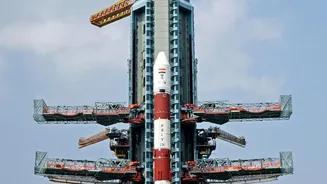
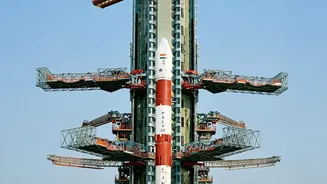
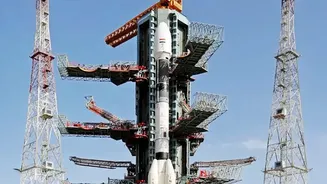
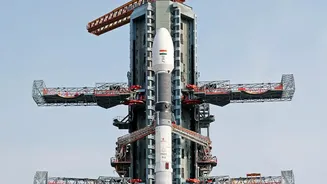
India's space program is undergoing its most significant transformation yet. While the Indian Space Research Organisation (ISRO) continues to achieve monumental feats, a deliberate policy shift is unlocking the sector for private enterprise. The Indian Space Policy
2023 formally codifies this change, encouraging Non-Governmental Entities (NGEs) to participate in everything from building and launching rockets to operating satellite constellations and providing space-based services. This isn't just about outsourcing work; it's about creating a dynamic ecosystem where ISRO transitions from being the sole player to a mentor and enabler, focusing its resources on advanced research and development for deep space missions. The goal is to grow India’s share of the global space economy from its current 2-3% to 8% by 2030, a market currently valued at approximately $8.4 billion.
The Ground Control for Private Players
To manage this new public-private synergy, the government has established two key bodies. The first is the Indian National Space Promotion and Authorisation Centre (IN-SPACe), which acts as a single-window agency to promote, guide, and authorise the activities of private space companies. It facilitates access to ISRO's state-of-the-art facilities, testing infrastructure, and expertise, providing crucial support for emerging startups. The second is NewSpace India Limited (NSIL), ISRO's commercial arm. NSIL's enhanced mandate involves commercializing ISRO's technologies, managing satellite manufacturing, and procuring launch services from both ISRO and private firms. Together, IN-SPACe and NSIL form the bedrock of the new ecosystem, aiming to streamline regulations and create a level playing field for all.
The New Constellation of Startups
This policy push has ignited a boom in the private space sector, with over 400 startups now part of the ecosystem. Leading the charge are companies like Skyroot Aerospace, founded by former ISRO scientists. Skyroot made history by launching India's first privately developed rocket, Vikram-S, in 2022 and followed up with the successful orbital launch of Vikram-1 in July 2026. Another key player is Agnikul Cosmos, which has pioneered the world's first single-piece 3D-printed rocket engine. Its successful test flight of the Agnibaan rocket, powered by a semi-cryogenic engine, showcased its innovative and rapid manufacturing capabilities. These launch vehicle companies are complemented by firms like Pixxel, which is building a constellation of hyperspectral imaging satellites to provide detailed Earth observation data for agriculture, energy, and environmental monitoring. Its satellites are designed to see what others can't, detecting issues like methane leaks or soil health degradation.
Beyond the Launchpad
The opportunities extend far beyond just building and launching rockets. The growth of these headline companies is fostering a vast supply chain for critical components, propulsion systems, and ground station services. Startups are carving out niches in satellite manufacturing, space situational awareness to track orbital debris, and developing downstream applications that use satellite data for everything from weather forecasting and telecommunications to financial services and disaster management. This end-to-end capability, from manufacturing to data analysis, is what constitutes a truly self-reliant and robust commercial space sector. The freedom for consumers to procure space services from any private or public source is expected to drive competition and innovation across the board.