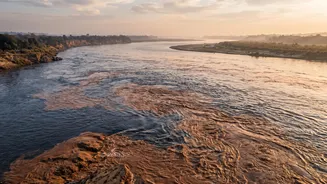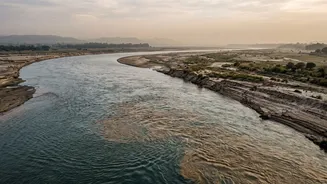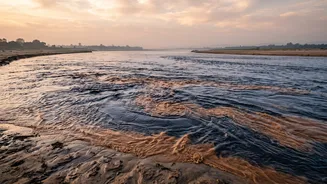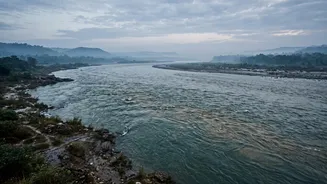








A cornerstone of Indo-Bangla relations, the 1996 Ganges Water Treaty, is approaching its expiration date. With the 30-year pact set to end in December 2026, the stage is set for critical negotiations that will shape the future of the region.
A Landmark Agreement Nears Its End
Signed on
December 12, 1996, the treaty was a diplomatic achievement that put an end to years of friction over water rights. It established a detailed formula for sharing the Ganges' lean season flow from January 1 to May 31 at the Farakka Barrage in West Bengal, located just upstream of the border. The primary goal was to ensure Bangladesh, as the lower riparian country, received a predictable and equitable share of water during the driest months, which is crucial for its agriculture, fisheries, and for preventing salinity intrusion in its southwestern coastal areas. The treaty, signed by then-Prime Ministers Sheikh Hasina of Bangladesh and H.D. Deve Gowda of India, is valid for 30 years and does not have a provision for automatic renewal, making fresh negotiations a necessity.
What's at Stake for Both Nations
For Bangladesh, the stakes could not be higher. Millions of livelihoods depend on the water that flows down the Padma, as the Ganges is known there. Reduced flow during the dry season has severe consequences, impacting everything from the massive Ganges-Kobadak Irrigation Project to the health of the Sundarbans mangrove forest, a UNESCO World Heritage site, by allowing saline water to push further inland. Environmental experts in Bangladesh warn that if a new deal isn't reached, the situation could be worse than in the years before the 1996 pact, when several tributary rivers reportedly dried up. For India, renewing the treaty is a matter of crucial diplomatic importance. A successful agreement reinforces its image as a reliable partner and leader in regional cooperation, fostering stability with a key neighbour.
The Shadow of the Teesta Dispute
Discussions around the Ganges renewal do not happen in a vacuum. They are heavily influenced by the long-unresolved issue of sharing water from the Teesta, another of the 54 rivers that cross the Indo-Bangla border. A deal on the Teesta was close to being signed in 2011 but was stalled, and the lack of progress has remained a persistent irritant in bilateral ties. This unresolved history adds a layer of complexity and political sensitivity to the upcoming Ganges talks, with many in Bangladesh viewing progress on Teesta as a litmus test of India's commitment to equitable water sharing.
New Challenges: Climate Change and Growing Demand
The world has changed significantly since 1996, and any new agreement must grapple with modern realities. Climate change is a major factor, with studies projecting more erratic monsoon patterns, increased flooding, and altered river flows due to melting Himalayan glaciers. This makes historical flow data, upon which the original treaty was based, less reliable for predicting future water availability. Furthermore, water demand has increased significantly on both sides of the border due to population growth and industrialisation. Officials in Bangladesh are advocating for a new treaty that explicitly accounts for climate change impacts and considers the entire river basin, not just the water volume at a single point.
The Path to a New Pact
Negotiations are expected to be complex. Bangladesh has reportedly formed a technical committee and has been urging India to commence talks. Dhaka is also pushing for the inclusion of a 'guarantee clause', similar to a 1977 arrangement, to ensure it receives a minimum specified amount of water, a provision absent from the 1996 treaty. On the Indian side, there are considerations of rising domestic water needs in states like Bihar and West Bengal. While India's Ministry of External Affairs has stated that river-related matters are handled by the Joint Rivers Commission (JRC), the path forward will require highlevel political engagement. A potential visit by Bangladesh's Prime Minister Tarique Rahman to New Delhi is seen as a critical step in moving the process forward.