





The Post-Monsoon Advantage
The annual southwest monsoon acts like a continental-scale air purifier. Months of rain wash dust, pollutants, and other aerosols from the atmosphere. This process dramatically reduces the amount of particulate matter that scatters artificial and natural
light, a phenomenon known as atmospheric extinction. When the monsoon withdraws, typically completing its retreat by October, it leaves behind drier, more stable air. The result is a sky with stunning transparency, allowing starlight to travel to our eyes with minimal distortion. This post-monsoon window, lasting roughly from October through November, is often considered India’s prime stargazing season, superior even to the winter months when northern haze can begin to build. For beginners, this means stars appear sharper, fainter objects become visible, and the Milky Way emerges with breathtaking clarity.
November's Celestial Line-up: Planets
November 2026 is set to be a spectacular month for planet-watchers. A 'planet parade' will be visible in the pre-dawn sky, featuring Mercury, Venus, Jupiter, and Mars. These four planets will form a diagonal line stretching up from the southeastern horizon about an hour before sunrise. While Mercury will be low and requires a clear view, Venus, Jupiter, and Mars will be bright and easily identifiable. A special highlight occurs around November 15 and 16, when Mars and Jupiter will have a close conjunction, appearing like a brilliant double star. Meanwhile, in the evening sky, Saturn will be perfectly visible after sunset. Uranus reaches opposition on November 25, making it the brightest it will be all year, though you will still need binoculars or a small telescope to spot its tiny, blue-green dot. Neptune is also visible in the evening, but requires at least binoculars to be seen.
Catch a Falling Star: Meteor Showers
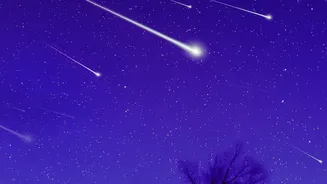
November hosts two notable meteor showers. The overlapping Taurid meteor showers, North and South, are active throughout the month. While not a dense shower, expecting maybe 10 meteors per hour combined, the Taurids are famous for producing exceptionally bright and slow-moving 'fireballs'. The Southern Taurids peak around November 5, while the Northern Taurids peak around November 12. The New Moon on November 9 ensures dark skies for these events. Later in the month, the Leonid meteor shower peaks on the night of November 17-18. Caused by debris from Comet Tempel-Tuttle, the Leonids are known for their speed, entering the atmosphere at 71 km/s. Viewers in a dark location can expect to see up to 15 bright, fast meteors per hour, best viewed after midnight until dawn.
Getting Started: Your First Night Out
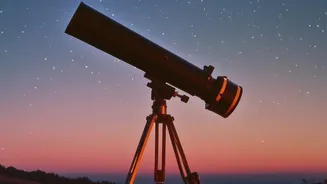
You don’t need expensive equipment to begin your astronomical journey. The first step is to get away from city lights, as light pollution is the biggest obstacle to a clear view. A rooftop, a nearby park, or a short drive to a rural area can make a huge difference. Next, allow your eyes to 'dark-adapt' for at least 20–30 minutes, avoiding your phone screen or any white lights, which will dramatically increase your ability to see faint objects. Use a stargazing app on your phone, like Stellarium or Star Walk, to help you identify what you're seeing. Point it at a bright object, and the app will tell you if it’s a planet like Jupiter or a bright star. To enhance your view, a simple pair of $10x50$ binoculars is an excellent first instrument. They are portable and can reveal the moons of Jupiter, the phases of Venus, and the breathtaking star fields of the Milky Way.