





Defining the Dual Threats of a Mission
On Earth, if a vehicle gets a flat tire or a critical part breaks, you call for a tow. On Mars, you are 100 million miles from the nearest mechanic. This is the reality that drives every decision for engineers at NASA's Jet Propulsion Laboratory (JPL).
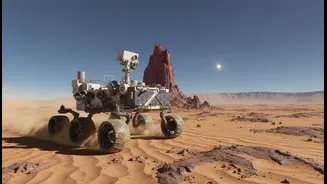
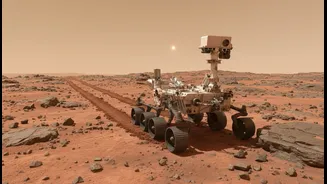
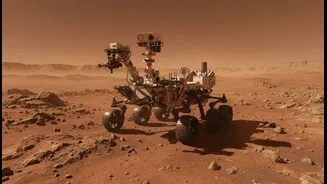
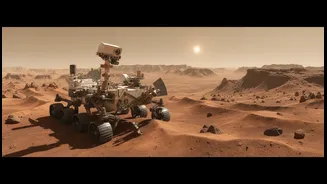
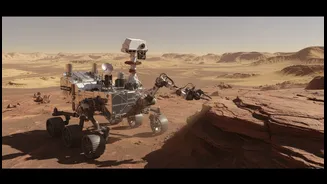
The two most persistent threats to a multi-year robotic mission are wear and route risk. 'Wear' refers to the physical degradation of the rover itself. Every movement, every turn of a wheel, every drill into a rock contributes to the slow, inevitable breakdown of components. 'Route risk' involves the external dangers of the terrain. A path might lead to a scientifically fascinating outcrop, but if it's covered in sharp rocks, steep slopes, or loose sand that could trap the rover, it presents a significant risk that must be balanced against the potential reward.
A Case Study: Curiosity's Wheel Woes
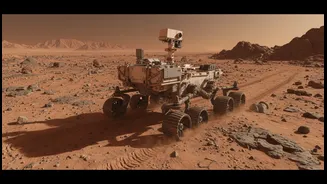
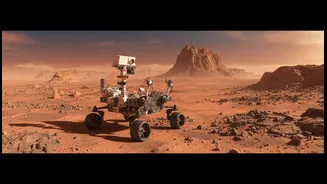
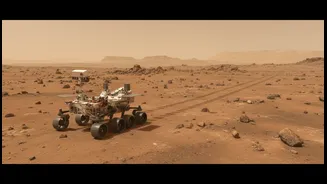
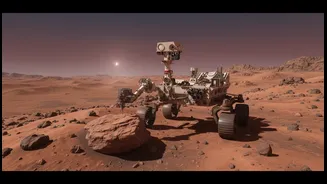
The perfect illustration of managing wear came from the Curiosity rover. Soon after landing in 2012, engineers were surprised by the accelerated pace of damage to its six aluminum wheels. The Martian surface in Gale Crater was studded with sharp, embedded rocks, which acted like can openers on the rover's thin wheel skins, causing punctures and tears far earlier than anticipated. This wasn't just a maintenance issue; it was a potential mission-killer. The response from JPL was a masterclass in creative problem-solving. Engineers began systematically imaging the wheels to track the damage and formed a special team to understand the cause. They developed new driving techniques, including driving backward, which, due to the rover's suspension design, reduced pressure on the front wheels. They also created a traction-control algorithm and software updates to manage how the wheels interacted with the ground, reducing the forces that caused the punctures.
The Art of Planning a Martian Road Trip
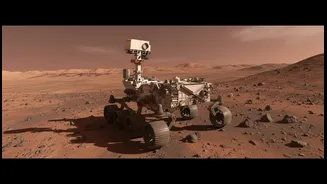
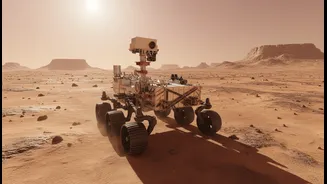
Managing route risk is a constant, high-stakes negotiation between scientists and engineers. The scientists want to go to the most interesting places to discover evidence of past life or water. The engineers have to figure out how to get there without destroying the rover. This process involves meticulous planning using satellite imagery to map out general paths, identifying potential hazards like what the team dubbed "gator-back" terrain—fields of knife-edged rocks. But the rover must also think for itself. Because of the significant time delay in communications between Earth and Mars, rovers like Perseverance use autonomous navigation systems, such as AutoNav. This onboard AI builds 3D maps of the immediate terrain, identifies hazards, and plots the safest moment-to-moment path, allowing it to "think while driving" and avoid obstacles without waiting for instructions from Earth.
Learning and Evolving for the Next Mission
The problems with Curiosity's wheels directly informed the design of its successor, Perseverance. Engineers went back to the drawing board, creating wheels that were narrower, thicker, and had a larger diameter. The tread pattern was changed from a chevron design, which created stress points, to a gentler curve, and the number of treads was doubled for better durability and traction. This iterative design process—experiencing a problem, understanding its root cause, and engineering a robust solution for the next generation—is a core principle of the field. Beyond wheels, engineers are constantly developing new risk-mitigation strategies. These range from reinventing how a robotic drill is used after a mechanism fails to developing extreme contingency plans, such as a concept for Curiosity to intentionally break off a severely damaged wheel section against a rock to keep driving on the stronger inner rim.
Why This Matters for Students and Engineers
Studying how engineers manage these risks on Mars provides invaluable lessons for anyone in robotics, engineering, or computer science. It demonstrates that success is not about designing a perfect machine that never fails. Instead, it is about designing resilient systems that can anticipate, adapt to, and manage failure. It teaches the importance of a systems-thinking approach, where the software, hardware, and operational strategy all work together to prolong a mission's life. These principles are not limited to space. Whether designing an autonomous vehicle for city streets, a robotic arm for a factory, or a drone for agriculture, the ability to balance performance goals with risk management and to design for longevity in harsh or unpredictable environments is a critical skill. The Martian rovers are an extreme example, but the lessons they offer in resilient design and creative problem-solving are universal.