





The Sacred (and Unwashed) Jersey
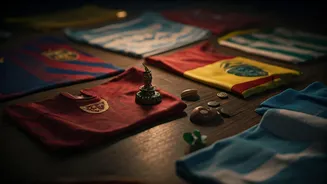
This is the king of all football superstitions. You wear a specific jersey for a match, and your team wins. Logically, you know your cotton shirt had nothing to do with that 92nd-minute goal. But emotionally? That jersey is now imbued with magical winning
properties. The ritual demands you wear it for the next game. If they win again, you dare not wash it, for fear of rinsing away the luck. This extends to lucky scarves, socks, or even underwear. It’s a smelly but time-honoured tradition, a fragrant testament to a fan’s unwavering—and slightly unhygienic—dedication.
The Power of Position
Where you watch the game is as important as the game itself. For the superstitious fan, the world is a grid of lucky and unlucky spots. There's the 'winning spot' on the sofa, the specific chair at the local screening that guarantees goals, or the exact tile you stand on in your living room. Moving from this spot is sacrilege. Did your team concede a goal the moment you got up to get a snack? You can be sure that for the rest of the tournament, you will be rooted to that spot, enduring cramps and a bursting bladder for the greater good of the team. It’s about creating a stable, controlled environment in the face of sporting chaos.
The Ritual Feast and Drink
Food and football go hand in hand, but for the superstitious, the menu is not a matter of choice—it's a matter of fate. This could mean eating the exact same meal before every match, whether it's biryani or a simple bowl of chips. Some fans take it a step further, adopting culinary warfare by eating food from the nation of the opposing team as a form of symbolic domination. Others stick to a lucky brand of beer or soft drink, convinced that their choice of beverage somehow influences play. The logic is simple: if it worked once, it becomes the official match-day fuel for the entire tournament.
Warding Off the Jinx
Perhaps the most widespread superstition is the mortal fear of the jinx. This is a complex oral tradition governed by one rule: do not tempt fate. You do not celebrate a goal before it’s officially confirmed by VAR. You do not talk about winning the final when you’re only in the group stage. And you certainly do not, under any circumstances, praise a player’s flawless penalty record just before they step up to the spot. This fear extends to the infamous 'commentator's curse,' where a pundit’s praise is seen as a guaranteed precursor to disaster. In India, cricket fans know this feeling all too well—speaking of a century before the batsman reaches it is a cardinal sin. The same nervous energy applies here.
The Human Talisman
Sometimes, the luck isn't in a thing you wear or a place you sit, but in a person. Many fans believe a certain friend or family member is a 'human mascot.' When this person watches, the team wins. When they're absent, defeat is certain. Conversely, there's the 'human jinx'—the person who is politely (or not-so-politely) asked to leave the room during tense moments. This transforms social gatherings into a strategic deployment of personnel, ensuring all lucky charms are present and all bearers of bad fortune are safely occupied elsewhere, blissfully unaware of their supposed negative influence on global sporting events.
The Controlled Viewing Experience
Beyond a specific spot, many fans curate their entire viewing environment. This can involve watching the match with the volume on a specific number, refusing to watch replays of the other team's goals, or even turning away from the screen during penalties because you 'can't bear to watch'—and your refusal to look is what helps the ball go in. Some fans might have a lucky charm—a small trinket, a photo, or an old ticket stub—that they must hold throughout the 90 minutes. These aren't just habits; they are intricate rituals designed to give the fan a sense of agency in a situation where they have absolutely none.