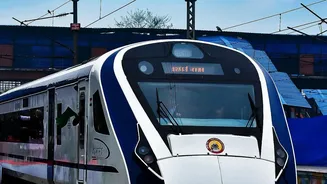





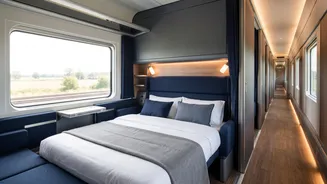

Indian Railways is preparing to roll out its much-anticipated Vande Bharat sleeper trains, promising a new era of overnight travel. But the focus isn't just on speed; it's on a smarter design philosophy aimed at a more restful journey for all.
A New Benchmark for Overnight Journeys
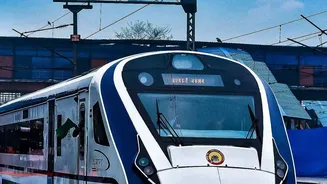
The Vande
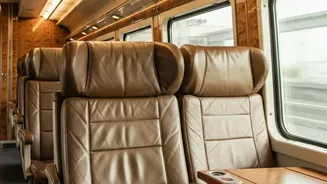
Bharat Express has already changed the game for daytime inter-city travel in India, and now its sleeper variant is set to redefine overnight journeys. Positioned as a modern successor to long-serving premium trains like the Rajdhani Express, the Vande Bharat sleeper is not merely a faster train but a complete rethink of the passenger experience. Manufactured by firms like BEML in collaboration with Indian Railways' Integral Coach Factory (ICF), these trainsets are designed to be world-class, focusing on comfort, aesthetics, and efficiency. The self-propelled trains offer quicker acceleration and deceleration, which helps in reducing overall travel time. But the most significant upgrades are inside the coaches, where small design changes are poised to make a big impact on how passengers rest.
It's Not Just Noise, It's Disturbance
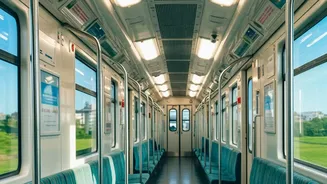
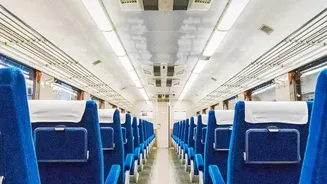
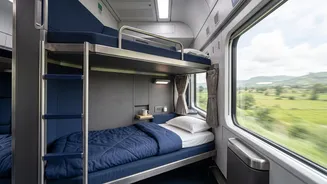
The headline feature grabbing attention is a subtle but crucial change in the coach layout, particularly in the AC 3-tier configuration. Anyone who has travelled in the berths near the coach entrance knows the struggle: constant movement of passengers, vendors, and the repetitive sound of doors opening and closing. The Vande Bharat sleeper tackles this head-on. The design introduces a sliding door and creates additional space between the main passage and the first set of berths. This buffer zone effectively distances sleeping passengers from the high-traffic entrance area, a common source of disturbance that fragments sleep. This is about more than just decibel levels; it is a holistic approach to reducing all forms of travel-related disruption, from physical movement to light spillage.
Smart Design for a Better Sleep
Beyond the layout, several other features aim to create a tranquil environment. The trains are equipped with sensor-based lighting in common areas, which means lights will only be on when needed, reducing ambient light pollution within the coach at night. Furthermore, floor-level night lighting strips provide just enough illumination for passengers to move around without disturbing others. Even the ride itself is engineered to be smoother. The use of advanced couplers significantly reduces jerks during acceleration and deceleration, contributing to a more stable and comfortable journey. While official 'noise reduction' figures aren't being promoted, the combination of a quieter propulsion system, improved sound insulation, and sealed gangways naturally leads to a more silent cabin space.
Rethinking Berth and Ladder Comfort
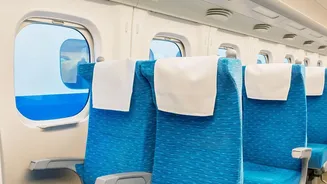
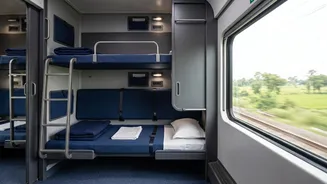
The focus on passengercentric design extends to the berths themselves. A frequent complaint on long journeys is the difficulty of accessing the upper berths. The Vande Bharat sleeper features a newly designed ladder that is more ergonomic and easier to climb, a feature particularly beneficial for older passengers. The berths also come with better cushioning than those found on existing premium trains, including extra padding on the sides for added comfort. These improvements demonstrate a focus on the microlevel details of a passenger's experience. The goal is to address longstanding pain points through thoughtful engineering and design, converting areas of discomfort into sources of comfort.
Why No 'Proven Noise Reduction' Claim?
The decision not to market a specific, scientifically proven level of noise reduction is a calculated one. Promising a certain decibel drop is complex; the perceived noise inside a train is affected by track conditions, speed, and external environment. Instead of making a claim that could be difficult to verify consistently across all operational conditions, Indian Railways and its partners are focusing on the tangible outcomes of their design choices. By highlighting features like smoother rides, reduced vibrations, and a layout that minimises foottraffic disturbance, they are managing expectations while underscoring a genuine commitment to a more peaceful journey. The emphasis is on the overall perceived comfort, which is a product of many factors, not just soundproofing.