



Mumbai: The Unrivalled Spectacle
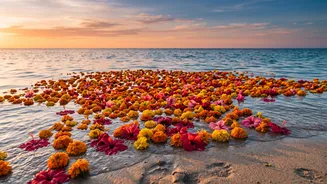
In Mumbai, Ganesh Visarjan is an epic affair, a grand procession of faith and humanity. The city’s heartbeat synchronises with the rhythm of drums as millions throng the streets to bid farewell to their beloved deity. The most iconic of these is the Lalbaugcha
Raja, or the 'King of Lalbaug'. Established in 1934 by local fishermen and traders, this idol is believed to fulfil wishes, drawing over 1.5 million devotees daily. The final procession towards Girgaon Chowpatty for immersion in the Arabian Sea can take nearly a full day, a testament to the sheer scale and devotion involved. The streets are lined not just with people, but with food stalls offering festive snacks, making the procession a feast for both the soul and the senses.
Pune: The Pulse of Tradition
Pune, where the tradition of the public or 'Sarvajanik' Ganeshotsav was popularised by Bal Gangadhar Tilak, offers a different but equally powerful experience. The city’s celebrations are distinguished by the thunderous and disciplined beats of dhol-tasha pathaks (drum troupes). These troupes, some with a history spanning decades, lead the processions of the 'Manache Ganpati'—the five most revered idols of the city. In recent years, there has been a significant resurgence in demand for these traditional drum troupes as communities move away from loudspeakers, seeking a more authentic and rhythmic farewell. The air in Pune during Visarjan is thick with percussive energy, a raw, powerful sound that connects the present to the festival's historical roots.
Hyderabad: A Towering Farewell
Hyderabad’s celebration is defined by its towering ambition, embodied by the Khairatabad Ganesha. Started in 1954 with a one-foot idol, the statue grew in height annually for decades, at one point reaching a staggering 61 feet. Though its size has been moderated in recent years, it remains one of the largest Ganesha idols in the country, drawing millions of visitors. The Visarjan procession sees this colossal idol journey to Hussain Sagar Lake for immersion, a monumental event that brings the entire city to a standstill. Another unique Hyderabadi tradition is the auction of a giant laddoo, which often fetches record-breaking bids, adding a distinct local flavour to the festivities.
The Art of the Pandal
Across all these cities, the pandals—temporary stages built to house the Ganesha idols—are marvels of artistry and creativity. Months of preparation go into these structures, which are often based on elaborate themes. Pandals might be replicas of famous temples, scenes from mythology, or even commentary on contemporary social issues and current events. Idol makers, like the Kambli family who have been sculpting Lalbaugcha Raja for generations, are revered artisans whose work is central to the festival. In recent times, pandals have also featured innovative designs, from idols made of turmeric and cashew nuts to eco-friendly creations, showcasing a blend of devotion and artistic evolution.
A Taste of Devotion
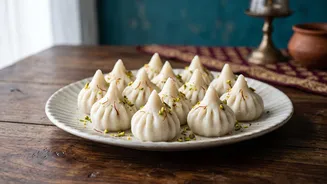
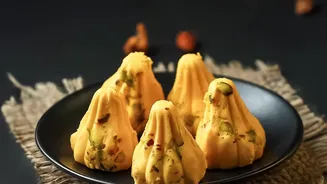
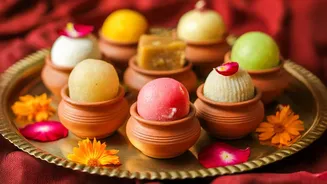
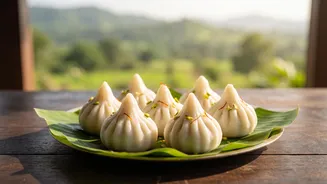
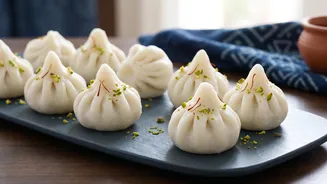
No celebration of Ganesha is complete without modak, the sweet dumpling believed to be his favourite food. Traditionally, these are steamed rice-flour dumplings filled with a mixture of fresh coconut and jaggery, delicately flavoured with cardamom. Known as 'Ukadiche Modak' in Maharashtra, preparing them is a cherished family ritual. However, the festive platter extends far beyond this classic. Modern interpretations include chocolate modaks, dry fruit modaks, and versions made from mawa (milk solids). In South India, the same dumpling is known as 'kozhukattai' and can have both sweet and savoury fillings. This culinary tradition, passed down through generations, is a delicious expression of love and offering.