





The New Moon Advantage
The single most important event for stargazers this month is the new moon on Tuesday, July 14. A new moon is invisible to us, which means its bright light won't wash out the night sky. This creates the darkest possible conditions, making it the perfect
time to hunt for fainter celestial objects during any breaks in the monsoon clouds. According to NASA, the days surrounding the new moon provide one of the best viewing windows of the month. With no moonlight to compete with, even brief clear spells can be incredibly rewarding, especially if you can get away from city light pollution.
The Galactic Core Beckons
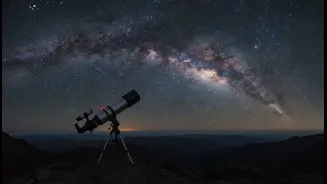
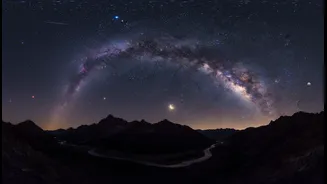
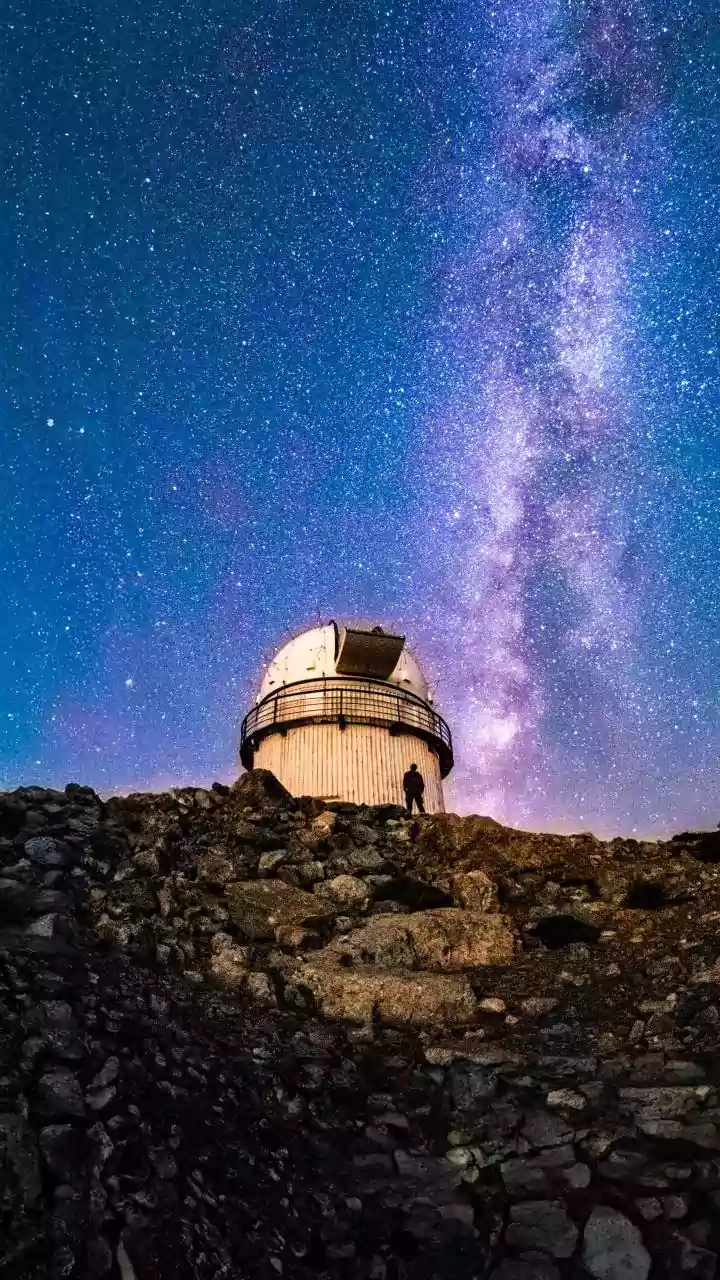
Those dark, moonless nights around July 14 are your best chance to witness the majestic sight of our own galaxy, the Milky Way. The brightest part of the Milky Way, its galactic core, is best viewed during the summer months. To find it, look towards the southern sky for the constellations Scorpius, which resembles a large hook, and the nearby Sagittarius. The dense, glowing band of the Milky Way runs right through this region. You don’t need a telescope; in fact, the view is often best with the naked eye or a pair of binoculars, which can help reveal dense star fields and dark dust lanes.
A Parade of Planets
July offers several opportunities to spot our planetary neighbours. Early in the month, brilliant Venus will be visible in the western sky shortly after sunset. On July 17, a slender crescent moon will appear close to Venus, creating a beautiful and easy-to-photograph pairing. Saturn also makes an appearance, rising after midnight. In the early hours of July 7 and 8, the moon will pass close to the ringed planet in the eastern sky. Reddish Mars is another pre-dawn target, appearing close to the beautiful Pleiades star cluster. On the morning of July 11, a crescent moon will form a lovely triangle with Mars and the Pleiades.
Late-Month Meteor Showers
July concludes with not one, but two meteor showers peaking on the same nights: the Southern Delta Aquariids and the Alpha Capricornids. Both are set to peak on the nights of July 30 and 31. Unfortunately, this coincides with a nearly full moon, whose bright light will make it difficult to see fainter meteors. However, all is not lost. The Alpha Capricornids are known for producing a small number of very bright, spectacular fireballs, which may still be visible despite the moonlight. For your best chance, find a dark spot after midnight and look toward the southern sky.
Tips for Monsoon Skywatching
Success during the monsoon requires patience and strategy. Use weather apps that provide satellite cloud cover maps, not just rain forecasts, to find potential breaks in the clouds. Be ready to head out on short notice. Find a location away from city lights to maximize what you can see in short clear patches. Once you're outside, allow your eyes at least 20 minutes to fully adapt to the darkness; avoid looking at your bright phone screen. If you need a light, use a red-light torch, as it's less damaging to your night vision. Even a 30-minute gap in the clouds on a dark, moonless night can reveal a stunning cosmic view.