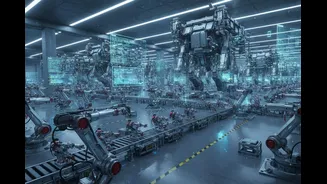

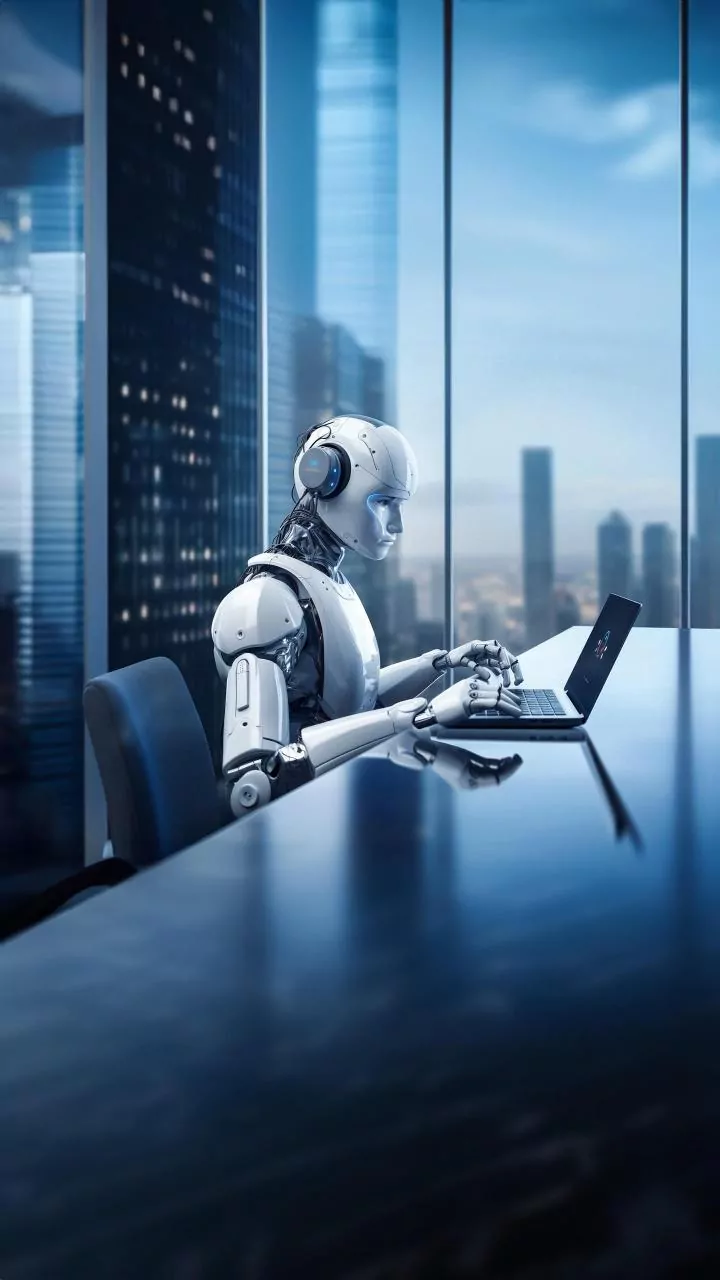





For years, artificial intelligence was seen as a powerful tool to assist tech professionals. Now, it has a seat at the table, actively reshaping company structures and creating a wave of uncertainty for the very people building the future.
More Than Just Layoffs
When companies
announce 'AI-driven restructuring', it's easy to assume it's just a new term for layoffs. While job cuts are a reality, with some companies citing AI as a direct reason for workforce reductions, the trend is far more complex. Restructuring around AI involves a fundamental reorganisation of how work gets done. It's about redesigning entire workflows, teams, and departments to leverage what AI can do, shifting the company toward an 'AI-first' operating model. This means that instead of humans performing every task, they are increasingly overseeing AI systems that handle execution. The goal for many businesses is to boost efficiency and decision-making, with some reports showing that over 80% of restructuring professionals expect AI to deliver significant improvements. This shift is affecting roles from the ground up, changing the skills required and the very nature of contribution.
The Roles Facing a Squeeze
The roles most exposed to this transformation are often those involving repetitive, predictable, or routine cognitive tasks. This includes some entry-level software development, quality assurance testing, basic data analysis, and administrative support roles. One study found that after the launch of ChatGPT, job postings for occupations with tasks easily replaceable by generative AI saw a notable decrease. The pressure is particularly high on entry-level positions. With AI handling more foundational work, the career ladder is compressing, and companies are hiring fewer junior staff for certain roles. For example, customer service is one area of significant change, where AI chatbots now handle a large volume of first-line inquiries, leaving human agents to manage more complex and sensitive issues. This doesn't always mean elimination, but it often leads to redesigned jobs with higher expectations.
The Rise of the AI-Augmented Professional
While some roles shrink, others are being transformed into 'AI-augmented' positions. Rather than being replaced, many professionals are finding that AI has become a partner in their work. This collaboration is a key driver of the current labor market transformation. Lawyers are using AI to assist with contract review, marketers use it for campaign analysis, and software developers use it as a coding assistant. The focus of these jobs is shifting from manual execution to strategy, oversight, and judgment. This trend is creating what some call a 'two-track' job market, where roles 'professionalised' by AI—those requiring more human expertise to leverage the technology—are growing and seeing higher wage growth. The most successful professionals are those who learn to work in conjunction with AI, not against it.
A New Ecosystem of Jobs
History shows that major technological shifts, while disruptive, ultimately create more jobs than they destroy, and many analysts believe AI will follow this pattern. Projections suggest a significant net gain in jobs globally by 2030, even with millions of roles being displaced. An entire ecosystem of new careers is emerging that didn't exist a few years ago. Demand is surging for roles like Prompt Engineers, who specialise in communicating with AI models, and AI Trainers, who help systems learn industry-specific nuances. Other new, inndemand positions include AI Auditors, who check for accuracy and bias, and AI Ethicists, who ensure technology is used responsibly. Technical roles like Machine Learning Engineer remain crucial, but there is also a growing need for people in AI governance, security, and strategy.
Navigating the New Landscape
For tech professionals, the current uncertainty demands adaptation. The half life of skills is shrinking , meaning that today s expertise can become redundant faster than ever . Staying relevant is no longer just about technical prowess . So called 'soft skills' are becoming critically important . As AI handles routine cognitive work , uniquely human abilities like critical thinking , creative problem solving , communication , and emotional intelligence are commanding a premium . Studies have shown that tech professionals who combine technical and workplace skills are promoted faster . The consensus is clear : AI won t necessarily take your job , but a person who knows how to use AI effectively will . The key to navigating this era is a commitment to continuous learning and focusing on the skills that AI cannot replicate : judgment , creativity , and strategic oversight .