






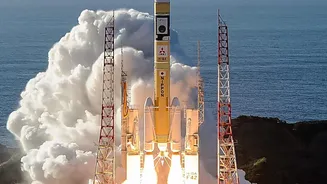


A New Space Race, Fired by Policy
For decades, the Indian space narrative was authored almost exclusively by the Indian Space Research Organisation (ISRO). But recent policy changes, most notably the Indian Space Policy 2023, have torn up the old script. The government has officially
rolled out the welcome mat for private enterprise, creating a single-window clearance agency called IN-SPACe (Indian National Space Promotion and Authorisation Centre) to guide and authorise the activities of private companies. This isn't just a minor edit; it's a complete rewrite of the rules, designed to transition ISRO’s role towards research and deep space exploration while empowering private players to handle more routine operations like satellite launches and manufacturing. The goal is ambitious: to grow India's share of the global space economy from around 2% to a projected $44 billion by the next decade.
Upstream: Building the Engines of Growth
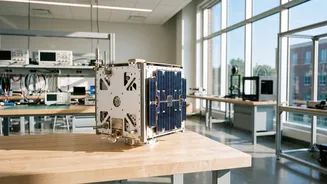
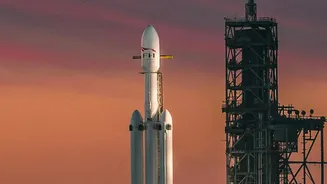
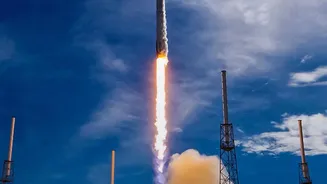
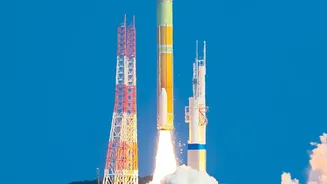
The most visible opportunities lie in the 'upstream' sector—the actual hardware of space exploration. Startups like Skyroot Aerospace and AgniKul Cosmos are making headlines by developing and launching their own rockets. Skyroot's Vikram-1, which successfully reached orbit in July 2026, marked India's entry into the elite club of nations with private orbital launch capabilities. This opens the door for a new market in launch services, offering rides to space for smaller satellites at a fraction of the cost and time compared to traditional players. Beyond complete launch vehicles, there is a thriving ecosystem emerging around building critical components, from 3D-printed engines to propulsion systems and the satellites themselves, creating a robust supply chain for the entire industry.
Downstream: The Goldmine of Data
While rockets grab the headlines, many experts believe the most sustainable and scalable opportunities are in the 'downstream' sector. This involves using the data collected by satellites to create commercially valuable services on Earth. The possibilities are virtually limitless. Geospatial intelligence companies are leveraging satellite imagery for everything from precision agriculture and monitoring crop health to urban planning and disaster management. Companies like Pixxel are building constellations of hyperspectral imaging satellites to provide data for industries like mining and climate monitoring. This data-driven approach allows startups to enter the space economy without the immense capital expenditure required to build and launch their own hardware, instead focusing on software, analytics, and service delivery across sectors like insurance, logistics, and telecommunications.
Ancillary Services: The Supporting Cast
For every rocket that launches, a whole ecosystem of supporting services is required. This ancillary market presents a fertile ground for innovation. Opportunities abound in creating ground station services to communicate with satellites, developing software for mission management, and providing data processing and analytics platforms. As the number of satellites in orbit grows, new challenges emerge, creating new business models. For example, the growing threat of space debris has given rise to startups focused on space situational awareness and debris management. Other emerging areas include in-orbit servicing, which could extend the life of satellites, and even space-based manufacturing.
Fueling the Ascent: Investment and the Road Ahead
The potential has not gone unnoticed by investors. Since the sector opened up in 2020, private investment has surged, with Indian space-tech startups raising hundreds of millions of dollars. So far in 2026 alone, the sector has attracted over $113 million. This influx of capital, including from dedicated government venture funds, is helping companies move from the prototype stage to commercial scale. With over 400 space startups now active in India, the ecosystem is rapidly maturing. Cities like Bengaluru, Hyderabad, and Chennai are becoming major hubs for space-tech innovation. The journey from a government-led program to a vibrant, private-driven market is well underway, promising to launch a new generation of Indian entrepreneurs into orbit.