



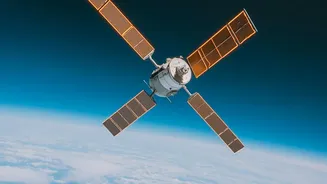

The dream of seeing human footprints on the Moon again is getting a new, more realistic timeline. NASA has officially recalibrated its ambitious Artemis program, targeting early 2028 for the first crewed lunar landing in over five decades.
What is the New Lunar Game Plan?
In a significant
strategic shift, NASA has designated Artemis IV as the mission to land astronauts on the lunar surface, with a target date of early 2028. This is a change from the original roadmap where Artemis III was slated for the historic landing. Instead, Artemis III, now scheduled for the summer of 2027, has been repurposed into a crucial test flight in low-Earth orbit. During this mission, astronauts will not travel to the Moon but will perform a complex 'dress rehearsal' close to home. They will practice rendezvous and docking procedures with test versions of the two competing commercial lunar landers: SpaceX's Starship and Blue Origin's Blue Moon. This updated plan prioritises testing and risk reduction before committing to the final descent.
Why the Change of Plans?
Space travel is incredibly complex, and timelines are often fluid. The revision to the Artemis schedule reflects a pragmatic approach to the immense technical challenges involved. A primary driver for the change is the development status of the Human Landing Systems (HLS), the vehicles being built by SpaceX and Blue Origin to ferry astronauts from lunar orbit to the surface. These are brand-new, highly advanced spacecraft that require extensive testing. SpaceX's Starship, for instance, requires a novel and complicated in-orbit refueling process involving multiple tanker flights before it can head to the Moon. NASA officials determined that conducting a dedicated test mission (Artemis III) to verify these docking and life-support systems in the relative safety of Earth orbit is a necessary step to ensure astronaut safety and mission success for the eventual landing.
A Two-Horse Race to the Surface
One of the most compelling aspects of the revised plan is that NASA is keeping its options open. The agency is funding both SpaceX and Blue Origin to develop their landers in parallel. This dual-source strategy creates competition, fosters innovation, and provides a critical backup if one provider encounters significant delays. Artemis III will allow NASA to assess both systems firsthand. For the actual Artemis IV landing in 2028, NASA will wait as long as possible to decide which lander—Starship or Blue Moon—will get the honour of carrying the first crew to the lunar south pole. The choice will come down to which vehicle is most ready and has successfully passed all its uncrewed test flights. Regardless of who goes first, both companies are planning for landing missions in 2028, with Artemis V potentially following later that year.
What Does This Mean for India?
This updated timeline for humanity’s return to the Moon is not just a story for the United States; it holds significance for India as well. India is a proud signatory of the Artemis Accords, a set of principles guiding international cooperation in space exploration. This partnership places India firmly within the global coalition aiming for a sustainable human presence on the Moon and beyond. As NASA pushes its timeline, it reinforces the collaborative nature of modern space exploration. With the resounding success of its own Chandrayaan missions, ISRO has proven its expertise in lunar exploration. India's role as a partner in the Artemis Accords could involve scientific collaboration, data sharing, and potentially contributing technology or expertise to the broader effort, solidifying its position as a major player in the new lunar race.
The Bigger Picture : Safety and a New Space Race
While a 'delay' might sound like a setback, in the context of human spaceflight, it is often a sign of prudence. The mantra 'fly when you're ready' governs every decision. Following the successful Artemis I uncrewed flight in 2022 and the crewed Artemis II lunar flyby in April 2026, this new schedule is about getting the next, much harder steps right. There is also a geopolitical dimension. NASA officials have repeatedly noted the rapid progress of China's space program, which also aims to land astronauts on the Moon by 2030. This competitive dynamic adds a sense of urgency to the Artemis program, but NASA insists that it will not compromise on safety to win a race.