





Your Body's Built-In Air Conditioner
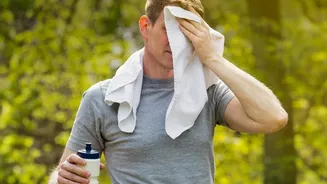
Your body has a brilliant, natural cooling system: sweating. When your internal temperature rises from exercise or heat, your brain signals millions of sweat glands to release moisture onto your skin. But the sweating itself isn't what cools you down.
The magic happens through evaporation. As the sweat evaporates from your skin into the air, it takes heat energy with it. This process, known as evaporative cooling, is your body's primary and most effective way to prevent overheating. Think of it like the chill you feel when you step out of a swimming pool; the water evaporating off your skin is actively pulling heat away from you.
How Humidity Short-Circuits the System
Humidity is the amount of water vapor already present in the air. When the humidity is high, the air is already saturated with moisture. This creates a problem for your body's cooling system. Because the air is full, there's nowhere for the sweat on your skin to go. Evaporation slows down dramatically, or on extremely humid days, it can stop altogether. Your body continues to produce sweat in an attempt to cool down, but since it can't evaporate, it just drips off or leaves you feeling sticky. This is why you can feel drenched in sweat on a humid day but not feel any cooler. Your internal air conditioner is running, but it's unable to do its job effectively.
Understanding the 'Feels Like' Temperature
This is where the concept of the "heat index" or "feels like" temperature comes from. The heat index combines the actual air temperature with the relative humidity to give a more accurate measure of how hot it feels to the human body. For example, an air temperature of 32°C might feel like 41°C when the humidity is at 70%. This isn't just a psychological effect; it's a physiological reality. Your body is struggling to cool itself, causing more strain on your cardiovascular system as it works harder to pump blood to the skin to try and release heat. This is why weather alerts often focus on the heat index, as it's a better predictor of heat-related health risks.
The Dangers of Pushing Too Hard
Exercising in high humidity without taking precautions significantly increases your risk of heat-related illnesses. The first stage is often heat exhaustion, which can include symptoms like heavy sweating, dizziness, fatigue, headache, and muscle cramps. If not treated by moving to a cool place and rehydrating, heat exhaustion can progress to heat stroke, which is a life-threatening medical emergency. Symptoms of heat stroke include a high body temperature (above 103°F or 39.4°C), confusion, slurred speech, and hot, red skin that may be dry or damp. It's crucial to recognize these signs early and take immediate action.
How to Exercise Safely in the Humidity
You don't have to give up on outdoor activity entirely when it's humid, but you do need to be smart about it. Start by adjusting the time of your workouts to the early morning or late evening when temperatures are coolest. Choose lightweight, loose-fitting, and moisture-wicking clothing to help pull sweat away from your skin. Most importantly, hydrate properly. This means drinking water before, during, and after your activity. Also, listen to your body. Accept that your performance will likely be lower in humid conditions. Slow your pace, take more frequent breaks, and if you feel any symptoms of heat exhaustion, stop immediately, find a cool place, and rehydrate.