






The Allure of a Digital Truth Machine
The idea is deeply appealing: a digital referee that can blow the whistle on synthetic media. As artificial intelligence makes it easier than ever to create convincing but entirely fake images, the desire for a tool that can definitively sort fact from
fiction has never been stronger. We imagine an application that, like a digital age lie detector, can analyse any image and deliver a simple, trustworthy verdict: 'human-made' or 'AI-generated.' This vision promises to restore a sense of order to our increasingly polluted information ecosystem, offering a quick fix to the complex problems of misinformation and digital trust. However, the reality of how these tools work is far more complex and far less certain.
How Detectors Actually Work
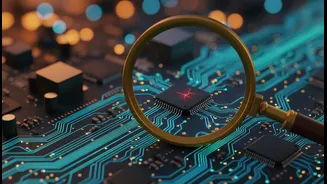
AI image detectors are not arbiters of truth but sophisticated pattern-matchers. These systems are built on machine learning models trained on vast datasets containing millions of both real and AI-generated images. During this training, the model learns to identify subtle, often invisible-to-the-eye 'fingerprints' or statistical regularities left behind by the AI generation process. This can include unnatural smoothness, texture glitches, peculiar patterns in lighting and shadows, or other pixel-level artifacts that differ from the natural noise and texture of a camera sensor. When you upload an image, the detector doesn't 'understand' what it's seeing; it analyses the pixel data and compares the patterns to what it has learned.
The 'Probabilistic' Problem
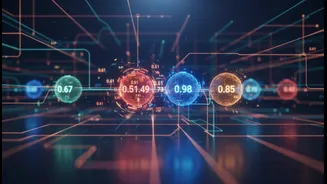
The key is that the detector's output isn't a fact but a probability. It provides a score, often from 0% to 100%, representing its confidence that an image aligns with the patterns of AI-generated content it was trained on. Think of it like a weather forecast that predicts a 90% chance of rain. It's a highly likely prediction based on data, but it's not a guarantee that it will rain. Similarly, a 98% 'likely AI' score doesn't mean the image is definitively fake; it means the image's statistical properties are overwhelmingly similar to the fake images in the detector's training data. This is what's known as a probabilistic, not a deterministic, result. A deterministic system, like a calculator, always gives the same correct answer. AI detectors, being probabilistic, deal in likelihoods.
Not Courtroom Proof
This probabilistic nature means a detector's output is not 'courtroom proof.' The risk of error is always present. A 'false positive' occurs when a detector incorrectly flags a real photo as AI-generated. This can happen if a real photo has been heavily edited, uses AI-based noise reduction, or just happens to have statistical qualities that fool the model. Conversely, a 'false negative' is when an AI-generated image slips through, identified as human-made. As AI models evolve, their outputs become more realistic and harder to distinguish, making detection a constant cat-and-mouse game. Simple edits like cropping can even break detection methods that rely on embedded watermarks. Because of these potential errors, using a detector's score as absolute proof can lead to false accusations and undermine trust.
So, Why Do They Matter?
If these tools are imperfect, why do they matter? Because their value isn't as a final judge, but as a first-pass filter and a deterrent. For social media platforms, news organizations, and publishers, detectors are an essential tool for content moderation at a massive scale. They can automatically flag suspicious content for human review, something that would be impossible to do manually across millions of daily uploads. They help researchers track the spread of coordinated misinformation campaigns. For the public, they serve as a powerful media literacy tool, encouraging a healthy skepticism about online content. The very existence of detectors also discourages low-effort fakes, raising the technical bar for those who would create deceptive content.
A Tool, Not a Verdict
Ultimately, it's crucial to frame AI image detectors correctly: they are a powerful but imperfect tool, not a replacement for human judgment. Their probabilistic outputs are a signal, not a verdict. They can't tell us with absolute certainty whether to trust an image, but they can tell us when we should be asking more questions. They are most effective when used as part of a larger verification process that includes examining the source, looking for corroborating evidence, and applying critical thinking. In the fight against digital deception, we don't have a magic bullet. What we have is a growing arsenal of tools, and probabilistic detectors are a vital, if flawed, first line of defence.