
A Breakthrough in Distant Skies
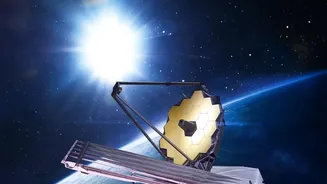
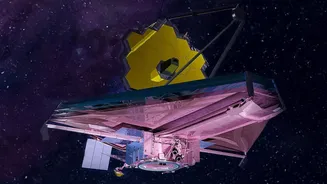
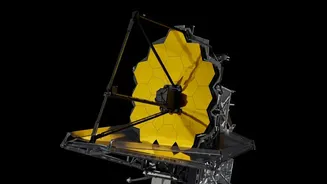
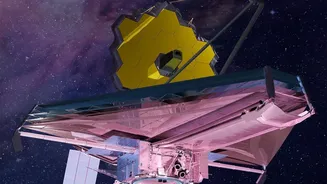
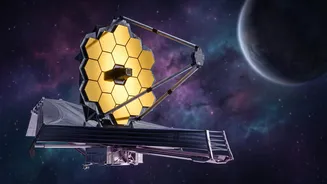
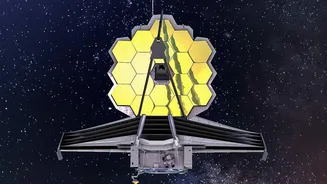
Scientists have announced a monumental step forward in the search for life beyond our solar system. Using the powerful James Webb Space Telescope (JWST), they have successfully identified water vapour on rocky exoplanets. While water has been found on gas
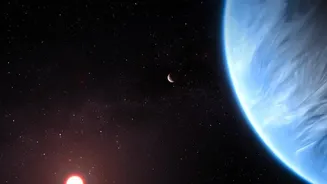
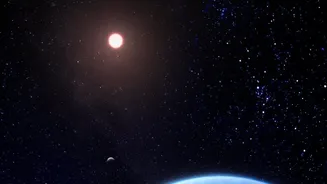
giants before, its confirmed presence in the atmosphere of a rocky, albeit much larger, version of Earth is a thrilling first. These findings, which could relate to planets like K2-18b or LHS 1140 b, confirm that a key ingredient for life exists on the most common type of planet in our galaxy, opening a new chapter in astronomy.
What Are Super-Earths?
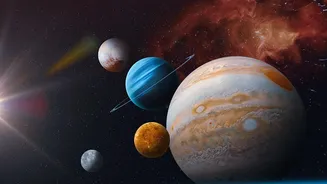
Super-Earths are a class of planet unlike any found in our own solar system. The term refers to planets with a mass higher than Earth's but significantly less than that of ice giants like Neptune. They are incredibly common throughout the Milky Way, but their nature remains a puzzle. Some may be scorching hot 'lava worlds,' while others could be entirely covered in deep oceans. Because they are more massive than Earth, they have a stronger gravitational pull, which makes it easier for them to hold onto their atmospheres over billions of years—a crucial factor for potential habitability.
Webb’s Powerful Infrared Gaze
This remarkable discovery was made possible by a technique called transit spectroscopy. As an exoplanet passes in front of its host star from our perspective, a tiny fraction of the star's light filters through the planet's atmosphere. The incredibly sensitive instruments on the JWST can analyse this light. Every chemical molecule absorbs light at specific infrared wavelengths, creating a unique 'barcode' in the light's spectrum. By reading this barcode, astronomers can determine what gases are present. In this case, the telescope picked up the distinct signature that can only be attributed to water molecules (H2O).
Why Water Is a Game-Changer
On Earth, wherever we find water, we find life. This makes the search for water on other worlds a top priority for astrobiologists. Detecting water vapour is the first step toward figuring out if a planet could have liquid water on its surface. While vapour doesn't guarantee oceans, its presence confirms that the fundamental building blocks for a habitable environment can and do exist on rocky planets outside our solar system. It suggests that, under the right conditions, these common Super-Earths could harbour a key ingredient for life as we know it.
A Stepping Stone, Not a Conclusion
It is important to manage expectations. The presence of water vapour does not automatically mean we have found a habitable world, let alone life. Many Super-Earths orbit so close to their stars that their surfaces are incredibly hot, making liquid water impossible. For example, some 'lava worlds' with temperatures of hundreds of degrees Celsius may still retain atmospheres with water vapour. The true significance of this discovery is that the JWST has proven its capability to detect this vital molecule with unprecedented precision. It's a foundational step that paves the way for future observations that will analyse the atmospheres of more promising, cooler worlds where liquid water might exist.