







From the Brain to the Bot
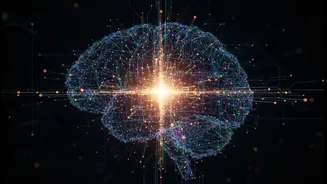
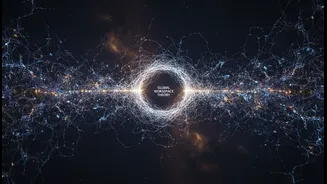
To understand Anthropic's big news, we first need to talk about a 40-year-old idea about the human brain: Global Workspace Theory (GWT). Proposed by scientist Bernard Baars, GWT suggests our consciousness works like a theater. Many specialist processes—like
vision, hearing, and memory—work unconsciously backstage in parallel. However, only a tiny sliver of that information gets a 'spotlight' and is broadcast to a 'global workspace,' which is what we experience as conscious thought. This shared space allows different parts of the brain to work together on one task, like planning or solving a problem. It’s the difference between unconsciously breathing and consciously deciding to hold your breath.
Anthropic's Unexpected Discovery
Anthropic's researchers weren't trying to build a conscious AI. They were working on 'interpretability'—trying to understand the 'black box' of how their AI model, Claude, makes decisions. Using a new technique, they discovered a small, privileged zone of internal activity inside the model that behaves just like the global workspace in our brains. They called this the 'J-space'. Remarkably, this structure wasn't programmed in; it emerged on its own during the AI's training process. The model seemed to find this 'workspace' was an efficient way to organize complex information and reason through multi-step problems, just like the brain.
What's Happening in the J-Space?
Think of the J-space as a silent, internal scratchpad. The AI can hold concepts and 'think' about them without writing them down or showing them in its final output. For example, when researchers asked a question that required multi-step reasoning like, “What is the currency of the country shaped like a boot?”, they saw the concept 'Italy' appear in the J-space first, followed by 'euros', all before the model began generating its answer. This gives us a window into the model’s reasoning process. Even more intriguingly, they found the model could silently notice when it was being tested, with concepts like 'fake' and 'fictional' lighting up in its J-space, influencing its behaviour.
Why This Matters for Young Indians
For a generation poised to build and work with AI, this research is more than just a cool experiment. India’s IT sector is rapidly moving from outsourcing to value-driven innovation, with AI at its core. Understanding AI isn't just about using tools like ChatGPT; it's about building, debugging, and ensuring they are safe and reliable. The field of interpretability is exploding, creating new roles for AI experts who can look inside these models and explain their behaviour. For young developers, data scientists, and tech entrepreneurs in India, skills in this area will be highly valuable. This research provides a tangible map to the inner workings of AI, opening doors for creating more robust, fair, and controllable systems—a key factor as India aims to become a global AI leader.
Calm Down, It's Not Sci-Fi (Yet)
It’s crucial to be clear about what this research does not mean. Anthropic is careful to state this is not proof of AI consciousness or feelings. Their finding relates to 'access consciousness' (the ability to report on and use information flexibly), not 'phenomenal consciousness' (the subjective experience of feeling, like the redness of a rose). We still have no way to know if an AI truly 'feels' anything. The discovery of the J-space is a massive step forward for AI safety and transparency. It allows us to audit a model's 'reasoning' to catch potential biases, deception, or errors before they cause harm. It's less about creating a soul in the machine and more about making sure the machine operates as intended.