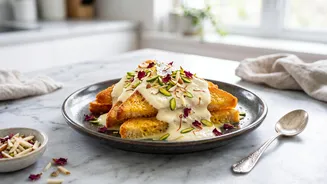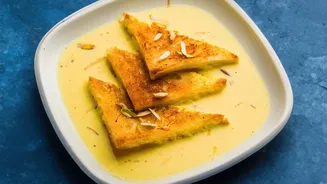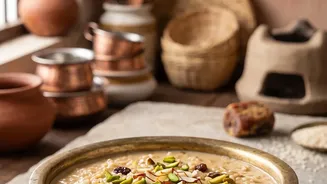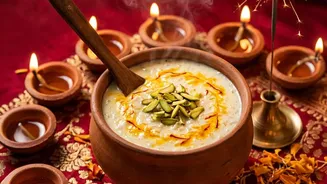



As Diwali approaches, the quest for the perfect dessert to dazzle guests begins. Enter Shahi Tukda, a royal treat that lives up to its name. With this guide to Chef Ranveer Brar's acclaimed recipe, you can recreate this magic in your own kitchen.
The Royal Legacy of Shahi Tukda
Shahi
Tukda, which translates to 'royal piece', is a dessert with roots deeply embedded in Mughlai cuisine. Its origin is often traced back to the 16th-century Mughal courts, where royal cooks were challenged to create impressive dishes. Some believe it was ingeniously devised as a way to use leftover bread, transforming it into a decadent pudding by frying it in ghee and soaking it in sweetened, thickened milk known as rabri. Over centuries, it has become a celebratory staple, especially during festivals like Eid and Diwali, beloved for its rich texture and aromatic flavours of saffron and cardamom.
The Ranveer Brar Touch
Celebrity Chef Ranveer Brar is known for making complex, traditional recipes accessible without compromising on authenticity. His approach to Shahi Tukda is celebrated for its balance and clever techniques. One of his notable methods involves creating an 'instant rabri' using a blend of condensed milk and crumbled bread, which significantly cuts down the cooking time while achieving a rich, creamy consistency. He also focuses on creating a separate milk syrup to soak the bread, ensuring it's perfectly sweet and moist before the rabri is added, creating distinct layers of flavour.
Gathering Your Royal Ingredients
To create this masterpiece, you'll need two sets of ingredients: one for the fried bread and syrup, and another for the rabri. For the 'tukda' or bread pieces, select 6-8 slices of white milk bread, which is ideal for its ability to fry up crisp and absorb the syrup. You'll also need ghee for frying, sugar, milk, and a few strands of saffron for the soaking syrup. For Brar's instant rabri, you will need condensed milk, a couple more slices of crumbled bread, more milk, saffron, cardamom powder, and a touch of rose water for that signature floral aroma. For garnish, have slivered pistachios, almonds, and dried rose petals ready.
Frying the Bread to Golden Perfection
The foundation of a great Shahi Tukda is perfectly fried bread. Start by trimming the crusts from your bread slices and cutting them into triangles. An essential tip is to use bread that is a day old or has been air-dried for a few hours; this prevents it from absorbing too much ghee. Heat pure ghee in a pan over a medium flame. Don't rush this step. Fry the bread slices until they are an even, deep golden-brown and distinctly crisp on both sides. Frying in ghee is highly recommended over oil for the authentic, nutty aroma it imparts. Once fried, place the bread triangles on a paper towel to drain excess ghee.
Crafting the Syrup and Rabri
Begin by preparing the milk syrup. In a saucepan, gently heat milk with sugar and a few saffron strands, letting it simmer for a few minutes until the sugar dissolves completely. Dip each piece of fried bread into this warm syrup, allowing it to soak for just a few moments until coated but not soggy. Arrange these soaked pieces on your serving platter. For the instant rabri, use the remaining milk syrup as a base. To this, add condensed milk, crumbled bread, saffron, and cardamom powder. Blend this mixture until it's smooth, then cook for a few minutes until it thickens into a luscious, creamy rabri. A final touch of rose water elevates the fragrance.
Assembling Your Masterpiece
The final assembly is where the magic comes together. Pour the prepared rabri generously and evenly over the syrup-soaked bread pieces arranged on your platter. Ensure every piece is well-covered in the creamy topping. For the best experience, the dish should be chilled. Place the assembled Shahi Tukda in the refrigerator for at least an hour to cool completely. This allows the flavours to meld together and the dessert to set. Just before serving, garnish with slivered pistachios, almonds, fragrant rose petals, and perhaps even a touch of edible silver 'vark' for that truly royal presentation.