




Day 1: Gateway to India and Colonial Mumbai
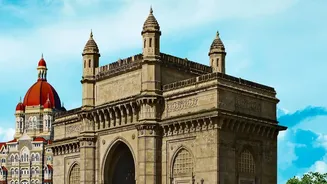
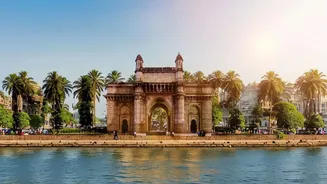
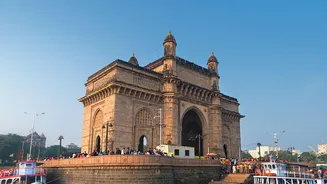
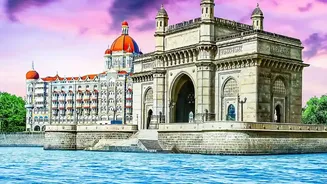
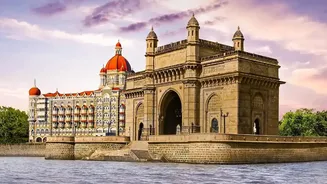
Begin your historical expedition in Mumbai, the city that was once the crown jewel of the British Raj. Start at the iconic Gateway of India, an imposing arch built to commemorate the 1911 visit of King George V. This monument, overlooking the Arabian
Sea, served as a ceremonial entrance to British India. From there, take a short walk to the Chhatrapati Shivaji Maharaj Vastu Sangrahalaya, formerly the Prince of Wales Museum. Designed by George Wittet, its grand Indo-Saracenic architecture houses over 50,000 artefacts that narrate India's history from the Indus Valley Civilization to modern times. Spend your afternoon exploring the Fort area, where Victorian Gothic buildings stand as proud reminders of the city's colonial past. A ferry ride to the Elephanta Caves, a UNESCO World Heritage site with rock-cut temples dedicated to Lord Shiva, offers a perfect end to the day, connecting Mumbai's colonial history with its more ancient roots.
Day 2: Pune, the Maratha Heartland
Travel from Mumbai to Pune, the cultural capital of Maharashtra and the former seat of the powerful Peshwas who governed the Maratha Empire. Your first stop is the Shaniwar Wada, a fortified palace built by Peshwa Bajirao I in 1732. Though a great fire in 1828 destroyed much of the palace's wooden superstructure, its massive stone walls, grand gates with anti-elephant spikes, and sprawling foundations still echo with tales of political ambition and tragic betrayals. The main gate, Delhi Darwaza, faces north, a bold statement of Maratha aspirations towards the Mughal capital. As you walk through the ruins, you can almost hear the whispers of courtly life and the alleged ghost of a young Peshwa, Narayanrao, who was murdered within these walls. Spend the evening exploring the old city's narrow lanes, a living museum of Maratha culture.
Day 3: The Lion's Fort and Hilltop Views
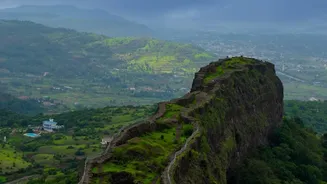
Today is dedicated to the martial history of the Marathas with a trip to Sinhagad Fort, located about 35 kilometres from Pune. Perched atop a steep cliff in the Sahyadri mountains, this fortress, originally known as Kondhana, was strategically vital for centuries. Its most famous tale is the Battle of Sinhagad in 1670, when Chhatrapati Shivaji's general, Tanaji Malusare, scaled the cliffs in a daring nocturnal raid to recapture it from the Mughals. Tanaji tragically lost his life in the battle, prompting Shivaji to rename the fort 'Sinhagad' (Lion's Fort) in his honour, famously remarking, 'Gad ala, pan Sinha gela' (The fort is won, but the lion is lost). Explore the fort's gates, defensive walls, and the memorial to Tanaji, while taking in panoramic views of the surrounding landscape.
Day 4: Journey to Aurangabad and Ellora's Marvels
Travel from Pune to Aurangabad, a city named after the Mughal emperor Aurangzeb, which serves as the gateway to Maharashtra's most celebrated ancient wonders. After settling in, drive to the Ellora Caves, a UNESCO World Heritage site just 29 kilometres away. Carved between the 6th and 10th centuries CE, this remarkable complex features 34 caves representing three major religions coexisting in harmony: Hinduism, Buddhism, and Jainism. The centerpiece is Cave 16, the Kailasa Temple. This isn't a structure that was built, but rather a monolithic temple carved downwards from a single massive basalt cliff, a feat of engineering and artistry that defies imagination. Spend hours wandering through the different monasteries and temples, each telling its own story through intricate sculptures.
Day 5: The Painted Caves of Ajanta
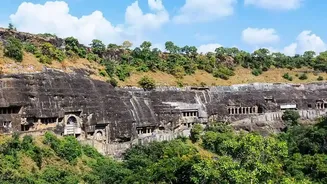
On your final day, take a trip from Aurangabad to the Ajanta Caves, another UNESCO World Heritage site located about 100 kilometres away. These 30 rock-cut Buddhist cave monuments were carved into a horseshoe-shaped gorge along the Waghora River in two distinct phases, starting from the 2nd century BCE. After being abandoned, they were lost to the world for centuries until a British officer rediscovered them in 1819. Unlike Ellora, which is famed for sculpture, Ajanta's treasure lies in its breathtaking murals. These paintings, created with natural pigments, depict tales from the Jatakas and the life of Buddha, offering a vibrant, colourful window into ancient Indian life and artistry that has survived for over two millennia. These masterpieces are considered among the finest examples of ancient Indian art.