



Understanding the Core Movement
Cat-Cow is a dynamic sequence that flows between two positions. You start on all fours in a 'tabletop' position, with your shoulders stacked directly over your wrists and your hips over your knees. The 'Cow' phase (Bitilasana) involves inhaling as you drop
your belly, lift your chest, and raise your gaze, creating an arch in your spine. The 'Cat' phase (Marjaryasana) follows on an exhale, where you round your spine toward the ceiling, tuck your chin to your chest, and press the mat away. This gentle, flowing movement helps warm up the body, improve spinal flexibility, relieve tension in the back and neck, and connect your breath to your movement.
Modification for Sensitive Wrists
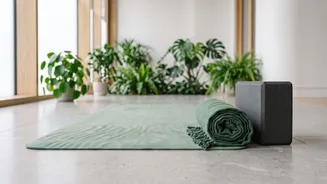
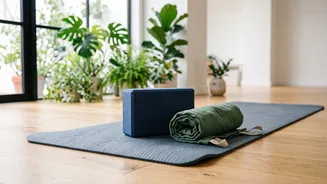
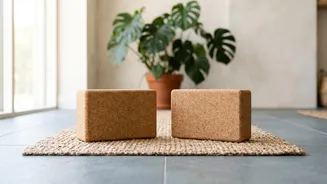
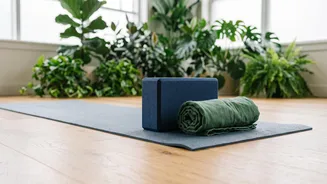
One of the most common complaints for beginners in tabletop poses is wrist discomfort. If placing your palms flat on the floor causes strain, you have several excellent options. The simplest fix is to come onto your fists, keeping your knuckles on the ground and your wrists straight and neutral. This removes the sharp angle of extension. Another effective modification is to lower onto your forearms, with your elbows directly under your shoulders. This variation, sometimes called 'Kitten-Calf', delivers the same spinal movement without any pressure on the wrists. You can also place a folded yoga mat or a specialized yoga wedge under the heels of your hands to decrease the angle of extension.
Support for Tender Knees
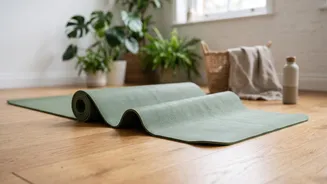
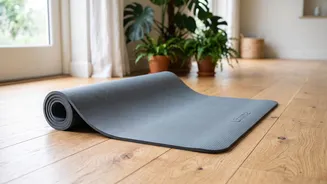
Kneeling on a hard surface can be uncomfortable or painful, but this should never be a barrier to practicing Cat-Cow. The easiest and most effective solution is to add cushioning. Simply place a folded blanket or towel under your knees to provide extra padding and relieve pressure. Some practitioners also find that folding their yoga mat in half for double thickness works well. The goal is to create a soft, supportive surface that allows you to focus on the movement of your spine without being distracted by knee pain. If kneeling remains a challenge, you can always perform the pose while seated.
Protecting Your Neck
Proper neck alignment is crucial for a safe Cat-Cow practice. A frequent mistake is cranking the head back too far in Cow pose or letting it hang heavily in Cat, which can strain the cervical spine. Instead, think of your neck as a natural extension of your spine. As you move into Cow, let your gaze lift forward or slightly upward, but avoid creating a sharp, compressed angle at the back of your neck. When rounding into Cat, gently tuck your chin toward your chest without forcing it down. The movement should originate from your pelvis and travel up the spine, with the head following last, ensuring a smooth and safe curve.
Seated and Standing Variations
If being on all fours isn't accessible for any reason, you can still reap the benefits of Cat-Cow from a different position. For a seated version, sit toward the edge of a sturdy chair with your feet flat on the floor and hands on your knees. Inhale to arch your back and lift your chest, and exhale to round your spine, mimicking the same movements you would on the floor. You can also do a standing version by placing your hands on a wall or on your thighs with knees slightly bent, and then moving through the same spinal flexion and extension. These variations make the posture accessible anywhere, from an office to an airplane.