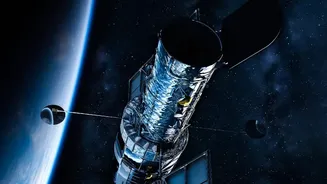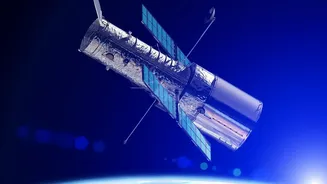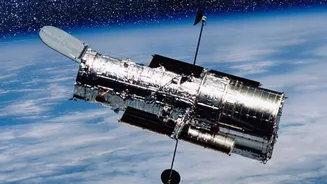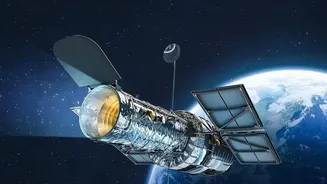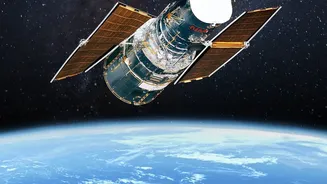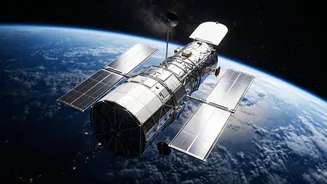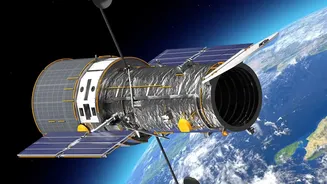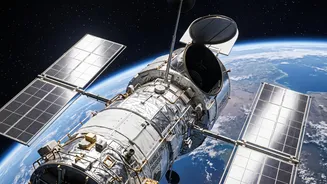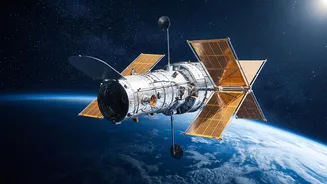





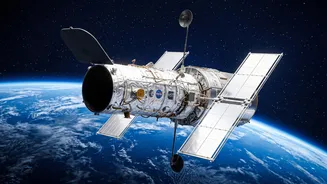
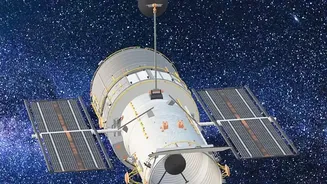
For over 35 years, the Hubble Space Telescope has been humanity's eye on the cosmos, but its time is running out. Now, NASA is turning to the private sector in a new effort to save the iconic observatory from its slow but inevitable fall.
An Icon's Slow Descent
The Hubble Space
Telescope is not failing, but it is falling. Since its last service mission by Space Shuttle astronauts in 2009, the legendary observatory has been slowly losing altitude due to faint atmospheric drag. Without an engine of its own to correct its path, Hubble's orbit continuously decays. Current projections estimate that if nothing is done, the telescope could make an uncontrolled reentry into Earth's atmosphere sometime between 2033 and 2034. This threat has prompted NASA to explore new, innovative ways to preserve one of its most valuable scientific assets, moving from internal studies to a public call for help from the burgeoning commercial space industry.
A New Call for Ideas
In late October 2026, NASA issued a formal Request for Information (RFI), opening the floor to the entire commercial space industry. The RFI asks companies for concepts on how they could extend Hubble's operational life. This is not a contract, but a market research effort to gauge what is technologically and financially feasible. The agency has laid out three main options: boost Hubble into a higher, more stable orbit; service the telescope with potential upgrades; or, if all else fails, perform a controlled de-orbit to ensure it comes down safely. Companies have until November 30, 2026, to submit their ideas.
Building on Earlier Studies
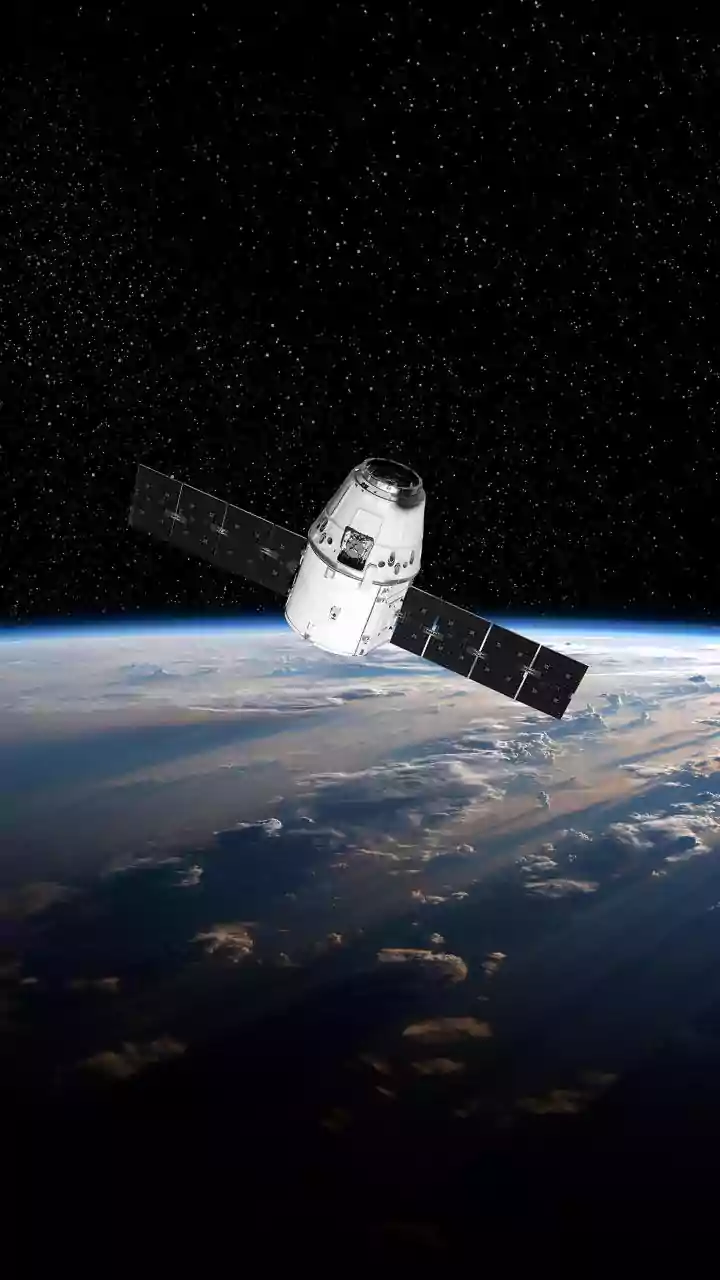
This new request isn't the first time NASA has considered a commercial rescue. The headline's mention of an 'October Request' likely refers to past initiatives, most notably a 2022 unfunded study with SpaceX. That Space Act Agreement was designed to investigate the feasibility of using a SpaceX Dragon spacecraft, in partnership with the Polaris Program, to reboost Hubble at no cost to the government. That initial study determined that a mission was technically possible. The latest RFI, however, broadens the scope significantly, inviting any capable company to present its own solution, whether it involves a robotic mission or even a crewed one. This signals a shift from a specific feasibility study to a competitive exploration of all available options.
The Primary Goal: A Reboost
The most straightforward solution to prolonging Hubble's life is a reboost. This would involve a commercial spacecraft rendezvousing with the telescope, carefully docking or grappling with it, and then using its own engines to push Hubble into a higher orbit. NASA's RFI specifies a target altitude of at least 600 kilometers, which could add more than two decades of operational life to the telescope. This is a delicate and risky operation. The last time Hubble's orbit was raised was in 2002 during a Space Shuttle mission. Any new mission would have to be performed by a new generation of spacecraft, potentially without astronauts, and would require extreme precision to avoid damaging the priceless observatory.
Who Could Answer the Call?
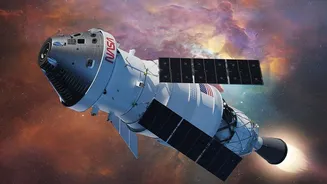
While the 2022 study put SpaceX in the spotlight, this new RFI opens the door to a wider field of commercial partners. The chosen provider would be responsible for supplying the launch vehicle, the spacecraft, and the mission operations. In 2023, a team up of Astroscale and Momentus also responded to an earlier NASA RFI with a proposal for a robotic servicing mission using a Momentus Vigoride vehicle. The recent failure of a mission to rescue the Neil Gehrels Swift Observatory in 2026 serves as a stark reminder of the risks involved in robotic rendezvous and capture. NASA will have to weigh the technical maturity, cost, and risks of any proposal before committing to a plan.
Why Saving Hubble Matters
Extending Hubble's life is about more than just preserving a piece of history. The telescope remains a unique and powerful scientific instrument. Its capabilities in ultraviolet and visible light are not replicated by the newer James Webb Space Telescope (JWST), which is designed primarily for infrared astronomy. The two telescopes are complementary, and astronomers still request seven times more observing time on Hubble than is available each year. Keeping Hubble in operation through the 2030s would allow for continued groundbreaking science, from studying exoplanet atmospheres to probing the mysteries of the early universe. The cost of a rescue mission, while significant, is a fraction of the cost of designing and launching a replacement.