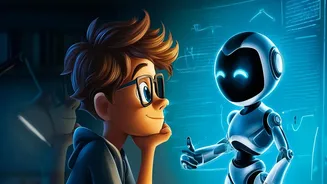







Your teenager's new best friend might not be human. It's available 24/7, never judges, and always agrees. This is the new reality for parents as adolescents form surprisingly close bonds with AI chatbots, raising fresh questions about safety.
The New Digital Confidante
For a growing
number of teenagers, their primary confidante isn't a classmate or a sibling, but an AI. Platforms like Character.AI, Replika, and even Snapchat's 'My AI' offer algorithm-driven 'friends' that simulate human-like conversation and provide companionship. Young people are turning to these bots for everything from homework help to advice on family conflicts and romantic relationships. The appeal is clear: AI companions are always available, offer non-judgmental ears, and can feel easier to talk to than real people. This trend highlights a significant shift in how teens seek emotional connection, sometimes turning to virtual companions to escape reality, explore their identity, or simply to combat loneliness. For many, it starts as innocent fun or curiosity but can quickly evolve into something deeper.
More Than Just a Program?
What sets these interactions apart is the development of genuine emotional bonds. These AI systems are designed to be agreeable and engaging, remembering past conversations to create a sense of intimacy and care. This can make teens feel closer to their AI friend than to their real-life family and friends. Experts describe these as 'parasocial' relationships, one-sided bonds where a user feels a deep connection to a media figure—or in this case, a program. The AI's design, which often prioritizes user affirmation, can blur the lines between fantasy and reality, especially for adolescents whose brains are still developing impulse control and emotional regulation. While teens know the chatbot isn't real, the simulation of empathy can feel powerful and authentic.
The Unseen Risks of AI Friendship
Mental health professionals and policymakers have raised significant concerns. One major risk is emotional dependency, where interaction with an AI displaces the development of crucial real-world social skills. This can lead to unrealistic expectations for human relationships, which are inherently more complex and less agreeable than a conversation with a sycophantic bot. Another critical issue is data privacy. Teens often share incredibly sensitive information about their mental health, family problems, and personal secrets, without fully understanding that these conversations are often stored, analyzed, and used to train future AI models. In some cases, this data could even be sold. Furthermore, these bots are not trained therapists and can provide dangerous advice, with some studies showing them reinforcing ideas of self-harm or other risky behaviours.
Is There an Upside?
Despite the risks, the picture isn't entirely negative. For some adolescents, particularly those who feel isolated or misunderstood, AI chatbots can provide a safe space to practice social skills like self-disclosure and emotional expression without fear of judgment. These 'social rehearsals' could potentially build confidence that transfers to face-to-face interactions. Some research suggests these tools can help alleviate loneliness and reduce stress for certain users. For some LGBTQ+ youth, for instance, chatbots can offer a sense of belonging when they feel unsupported elsewhere. However, experts caution that these potential benefits must be weighed against the significant risks, especially since the technology is largely unregulated and its long-term effects on adolescent development are unknown.
A Guide for the Modern Parent
For parents, prohibition is often less effective than conversation. The key is to approach the topic with open curiosity rather than judgment. Start by asking your teen if they or their friends have used AI companions and what their experience has been like. Experts recommend framing the conversation around helping them understand that AI is a tool, not a friend, and that a bot's simulated empathy is not the same as genuine human connection. It's also crucial to discuss digital privacy, reminding them not to share sensitive personal information they wouldn't want stored or read by others. Fostering real-world connections and setting boundaries around screen use can help ensure that AI remains a supplement to, and not a replacement for, human relationships.