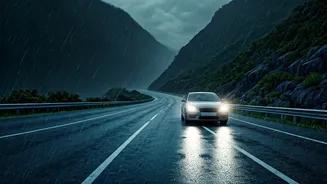





Prepare Your Vehicle Before the Rain
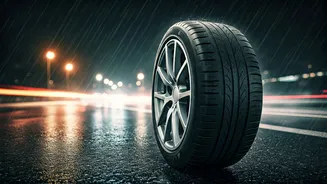
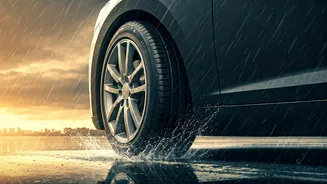
The most important safety check happens before you even turn the key. Your car needs to be monsoon-ready. First, inspect your tyres. The tread depth is crucial for gripping wet roads and preventing skidding. A simple test is to insert a one-rupee coin
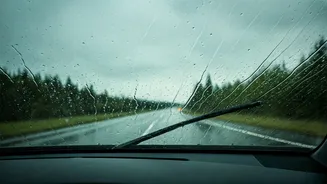
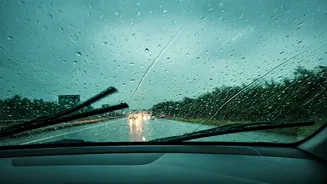
into the tread; if the head of the Ashoka lion emblem is visible, your tyres are likely too worn and need replacing. Second, check your wiper blades. Old, cracked blades will only smear water across the windscreen, destroying visibility. Replace them if they leave streaks. Finally, ensure your brakes are in top condition. Wet roads significantly increase braking distance, and you need them to be as responsive as possible. A well-maintained car is your first line of defence against monsoon hazards.
Rule #1: Reduce Your Speed Dramatically
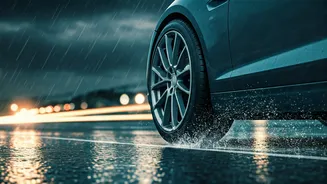
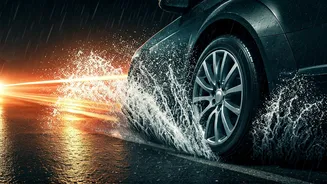
This is the golden rule of monsoon driving. Speed is your biggest enemy on a wet road. Even a thin layer of water can cause your tyres to lose contact with the road surface, a dangerous phenomenon known as hydroplaning or aquaplaning. When this happens, you are essentially skiing on water, with no steering or braking control. At speeds as low as 50-60 km/h, your tyres can start to lose their grip. The only solution is to slow down. Driving at a reduced, steady pace allows your tyre treads to channel water away effectively, maintaining contact with the asphalt. It also gives you more time to react to unexpected obstacles, like a sudden pothole hidden under a puddle or a pedestrian dashing across the road.
Rule #2: Double Your Following Distance
Tailgating is always a bad idea, but in the rain, it's downright reckless. Your car's braking distance can more than double on a wet surface. The standard 'three-second rule' for following distance in dry conditions should be extended to at least five or six seconds during the monsoon. To measure this, watch the vehicle ahead of you pass a fixed object like a lamppost or a tree. Then, start counting. If you reach that same object before you finish counting to five, you are too close. This buffer zone is not just for braking; it also gives you a better view of the road ahead and helps you avoid the spray thrown up by the vehicle in front, which can obscure your vision.
Rule #3: Master Visibility—See and Be Seen
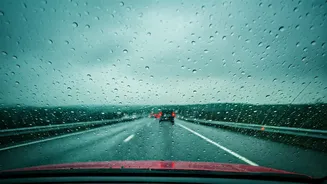
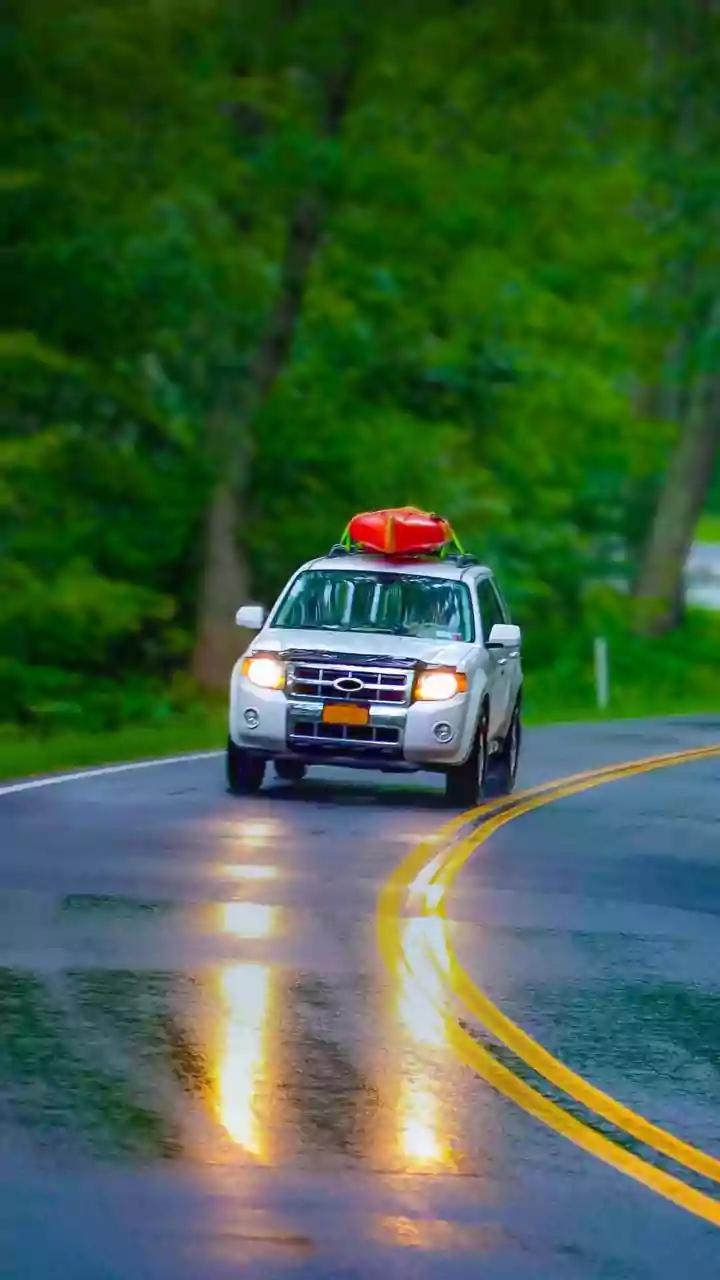
Heavy rain and overcast skies drastically reduce visibility for everyone. Your job is to see as much as possible while making sure others can see you. Always turn on your low-beam headlights, even during the day. This makes your vehicle far more visible to other drivers and pedestrians. Do not use high beams, as they reflect off the raindrops and create glare, worsening visibility for oncoming traffic. Use your car’s demister or air conditioner to keep the front and rear windscreens from fogging up. Keep your indicators on for longer before making a turn or changing lanes to give other drivers ample warning of your intentions.
Rule #4: Navigate Waterlogged Roads with Caution
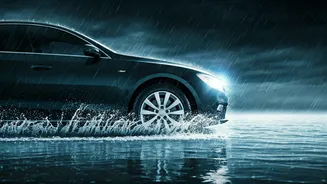
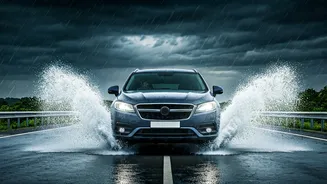
Encountering a flooded street is a common monsoon problem. Never drive into standing water if you cannot gauge its depth. A seemingly shallow puddle can conceal a deep pothole that could damage your car or, worse, cause you to lose control. If you must proceed, watch other vehicles to judge the depth and stick to the centre of the road, which is usually the highest point. Drive through slowly and steadily in a low gear (first or second) to prevent your engine from stalling. Splashing through at high speed can force water into your engine’s air intake, causing catastrophic damage. If you stall in water, do not attempt to restart the engine. This can cause it to 'hydrolock' and lead to a massive repair bill. It's better to get out and push or call for assistance.
Rule #5: Be Smooth and Gentle with Controls
Wet roads are unforgiving of sudden, jerky movements. Every input—steering, braking, and accelerating—should be smooth and deliberate. Abrupt braking can lock up the wheels and cause a skid. Sudden acceleration can cause your wheels to spin. A sharp turn of the steering wheel can break traction and send you into a slide. Drive as if you have a full glass of water on your dashboard that you don't want to spill. This forces you to anticipate turns, plan your braking well in advance, and apply power gently. Smoothness is the key to maintaining control when the grip is low.