


From Niche to Necessary
Not so long ago, dessert menus in India followed a familiar script. On one side, you had the timeless classics: gulab jamun, rasmalai, gajar ka halwa. On the other, the Western imports: chocolate lava cake, tiramisu, and New York cheesecake. For years,
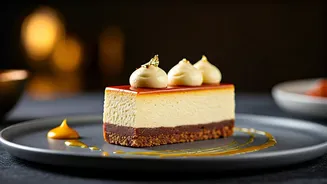
they coexisted peacefully but separately. But sometime in the last decade, the wall between them crumbled. Creative chefs and ambitious home bakers began asking, “What if?” What if the flaky, layered texture of a croissant could be filled with pista-flavoured cream? What if the beloved motichoor ladoo could be deconstructed into an elegant parfait? This curiosity sparked a culinary revolution. Fusion desserts moved from the kitchens of avant-garde restaurants to wedding menus, festive tables, and even the freezer aisles of supermarkets. They are no longer a novelty but an expectation—a testament to a collective palate that has become more adventurous, demanding both comfort and surprise on a single plate.
The Hallmarks of a Hybrid Hero
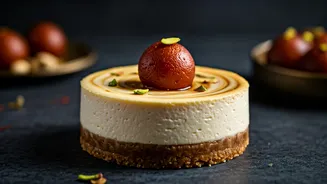
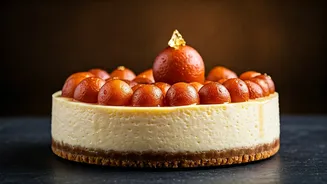
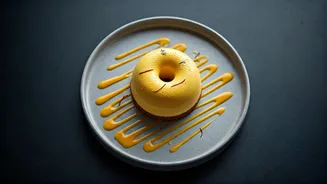
The undisputed star of this movement is arguably the Gulab Jamun Cheesecake. It perfectly encapsulates the fusion philosophy: taking two iconic, well-loved desserts from different worlds and merging them into something that feels both new and nostalgic. The dense, tangy cream cheese base provides the perfect canvas for the soft, sugar-soaked gulab jamuns nestled within. It’s a textural and flavourful masterpiece that respects both its parent dishes. But the innovation doesn’t stop there. We now have Rasmalai Tiramisu, where the coffee-soaked sponge is replaced with saffron-and-cardamom-infused milk solids. There are Thandai Panna Cottas, Chocolate Paan Mousse, and Jalebi-Rabri Cupcakes. The “king” of fusion desserts isn't a single dish, but the entire genre itself—a dynasty of creations that share a common DNA of playful reinterpretation. These dishes succeed because they aren’t just a random mashup; the best ones create a conversation between ingredients, where each element enhances the other.
More Than Just a Gimmick
Of course, with any popular trend comes criticism. Some culinary purists argue that fusion is often a gimmick, a lazy attempt to seem modern by throwing two things together without thought. And they’re not entirely wrong. A poorly executed fusion dessert can be a jarring experience, a clash of flavours that pleases no one. For every brilliant Gulab Jamun Cheesecake, there’s a misguided attempt that disrespects the integrity of the original dishes. However, to dismiss the entire movement is to miss the point. The best fusion desserts are born from a deep understanding and love for traditional Indian sweets. Chefs aren't trying to erase the original; they are building upon its legacy. They are using modern techniques and global ingredients to present familiar flavours in a new context, making them relevant for a new generation. It’s not about replacing gajar ka halwa, but about celebrating its core flavours in a form that might also appeal to someone who loves a good carrot cake.
A Taste of Modern India
Ultimately, the enduring popularity of fusion desserts tells us something important about modern Indian identity. We are a generation that grew up with global media, travelled the world (or saw it on our screens), and developed a taste for international cuisines. Yet, we remain deeply connected to the flavours of our childhood—the smell of cardamom in kheer, the syrupy sweetness of a jalebi. Fusion desserts are the edible expression of this duality. They represent a confidence to experiment, to borrow from other cultures without feeling like we’re losing our own. It’s a culinary language that says, “I can love a classic New York cheesecake and a traditional rasmalai, and I can also love them together.” This trend isn't just about food; it’s a reflection of a society that is increasingly global in its outlook but unapologetically Indian at heart.