




The Golden Rule: Why Jaggery?
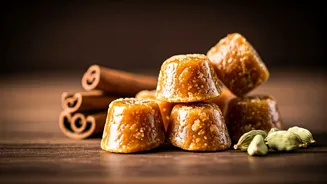
Before we dive into delicious sweets, let’s get one thing clear: jaggery is not a 'diet food'. It is, however, a more sensible choice than its stark white, chemically processed cousin. Jaggery, or 'gur', is unrefined cane sugar. Unlike refined sugar,
which is stripped of all nutrients, jaggery retains the molasses. This means it contains trace amounts of minerals like iron, magnesium, and potassium. The real win is in its complexity of flavour—it’s earthy, caramel-like, and deeply satisfying. By choosing jaggery, you are opting for a whole food over an empty, processed one. It's a small but significant step towards more mindful eating, celebrating flavour that hasn't been engineered in a factory.
A Taste of Bengal: Nolen Gurer Sandesh
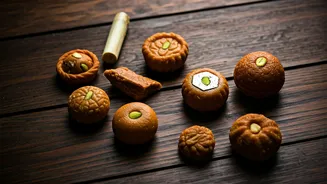
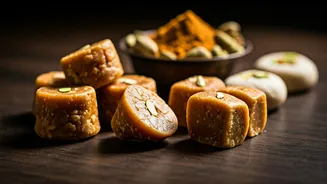
Travel to Bengal in winter, and you'll find the entire state obsessed with 'nolen gur' or date palm jaggery. This seasonal delicacy has a unique, smoky aroma and a rich, liquid-gold texture that elevates any sweet it touches. The prime example is Nolen Gurer Sandesh. Made from fresh chhena (cottage cheese), it is delicately sweetened with this special jaggery, creating a melt-in-your-mouth experience that is both subtle and profound. It’s a perfect illustration of how a heritage sweet is not just defined by its ingredients, but by the quality and seasonality of those ingredients. This isn't just a sweet; it’s an event.
Maharashtra’s Festive Favourite: Puran Poli
In Maharashtra and parts of Gujarat and Karnataka, no festival like Gudi Padwa or Ganesh Chaturthi is complete without the aroma of Puran Poli. This soft, pan-fried flatbread is filled with a sweet, fragrant mixture of chana dal (split chickpeas) and jaggery, spiced with cardamom and nutmeg. The deep, earthy sweetness of the jaggery perfectly balances the nuttiness of the lentils, creating a comforting and wholesome treat. It’s a testament to the genius of traditional Indian cooking, where a sweet dish can also be nutritious and substantial, meant to be savoured as part of a festive meal.
The Winter Warmer: Til Gud Ladoo
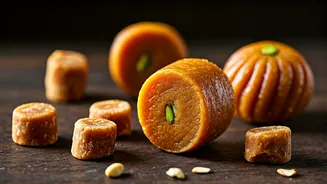
Simplicity is the ultimate sophistication, and the Til Gud Ladoo proves it. Made with just two main ingredients—sesame seeds ('til') and jaggery ('gud')—this is a powerhouse of nutrition and flavour. Primarily associated with the festival of Makar Sankranti, these ladoos are known for their warming properties, making them an ideal winter snack. The toasted sesame seeds provide a nutty crunch and healthy fats, while the jaggery binds it all together with its sticky sweetness and a dose of iron. It's a guilt-free pleasure that has been passed down through generations, reminding us that the healthiest foods are often the simplest.
Southern Comfort: Jaggery Payasam
Across South India, the celebratory dessert 'payasam' (or 'pradhaman' in Kerala) often gets its signature golden-brown hue and rich flavour from 'vellam'—jaggery. Whether it’s the Moong Dal Payasam made with lentils and coconut milk or the elaborate Ada Pradhaman with rice flakes, jaggery provides a depth that white sugar simply cannot match. It lends a beautiful colour and a complex, almost malty sweetness that pairs wonderfully with ghee, cashews, and raisins. This version of kheer feels more rustic, more grounded, and infinitely more flavourful, turning a simple dessert into a truly memorable finale.
A Sweet and Modern Revival
The return to jaggery isn't just about nostalgia; it's a full-blown modern movement. Look around, and you'll see a new wave of Indian food brands, home bakers, and chic cafes championing this humble ingredient. From jaggery-sweetened granola bars and oat cookies to artisanal dark chocolate infused with palm jaggery, it's being celebrated for its flavour and perceived health benefits. This revival signifies a broader cultural shift—a turning away from industrialised food and a conscious return to ingredients that are sustainable, traditional, and deeply connected to our land and its history.