









For over six decades, James Bond has been the epitome of globetrotting sophistication. But beyond the shaken martinis and tailored suits, the franchise's real-world locations are stars in their own right, transforming scenic spots into iconic lairs.
The Swiss Alps: A Classic Car Chase
The
hairpin turns of the Furka Pass in Switzerland provided the stage for one of cinema's most legendary car chases in 'Goldfinger' (1964). It's here that Sean Connery's Bond, at the wheel of his gadget-laden Aston Martin DB5, pursues Tilly Masterson's Ford Mustang. The dramatic mountain landscape has remained largely unchanged since filming, and the road is a pilgrimage site for both car enthusiasts and Bond fans. The sequence, set against the breathtaking backdrop of the Alps, cemented the DB5's status as the most famous movie car and established a franchise trope: thrilling action in spectacular settings.
Phang Nga Bay, Thailand: Scaramanga's Lair
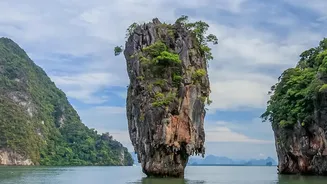
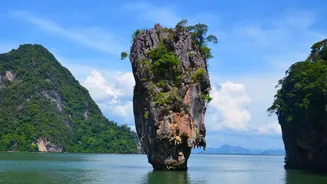
The otherworldly limestone karsts of Phang Nga Bay in Thailand became world-famous after serving as the hideout for villain Francisco Scaramanga in 'The Man with the Golden Gun' (1974). The specific islet, Ko Tapu, is now popularly known as James Bond Island. Its distinctive, nail-like shape, rising 20 meters from the emerald water, created an unforgettable backdrop for the climactic duel between Roger Moore's Bond and Scaramanga. Before 1974, the area was rarely visited, but the film's success transformed it into a major tourist destination, proving the franchise's power to put remote locations on the map.
Udaipur, India: An Opulent Floating Palace
For 'Octopussy' (1983), the franchise turned to the regal beauty of Udaipur, India. The city's stunning lakeside palaces provided a perfect setting for the film's lavish and exotic tone. The white marble Taj Lake Palace, which appears to float on the waters of Lake Pichola, served as the memorable headquarters for the film's eponymous character. One of the most famous scenes features Roger Moore's Bond approaching the palace in a submersible disguised as a crocodile. Other local landmarks, like the Monsoon Palace and Jag Mandir Palace, were also used, cementing Udaipur's image as the 'Venice of the East' in the minds of moviegoers.
The Scottish Highlands: A Return to Roots
While Bond is a global traveler, 'Skyfall' (2012) brought him home to the moody and dramatic landscapes of Scotland. Key scenes were filmed in Glen Coe and the neighboring Glen Etive, where Bond and M stop beside the classic Aston Martin DB5. This location, with the mountains of Buachaille Etive Mòr and Buachaille Etive Beag in the background, provided a raw and personal backdrop that tied into Bond's family history. Though the 'Skyfall Lodge' itself was a set built elsewhere, the desolate beauty of the Highlands added a layer of emotional depth and spectacular scenery to Daniel Craig's era.
Venice, Italy: Romance and Tragedy
The enchanting canals and grand palazzos of Venice have appeared in three Bond films, but its role in 'Casino Royale' (2006) is perhaps the most poignant. The city serves as the backdrop for the tragic final act of Bond's relationship with Vesper Lynd. Memorable scenes trace a path through the city, from their arrival on a sailboat in the Grand Canal to a frantic chase through narrow alleyways near St. Mark's Square. The climax, featuring a collapsing palazzo during a gunfight, brings Daniel Craig's first outing as 007 to a dramatic and heartbreaking conclusion in one of the world's most beautiful cities.
Cairo, Egypt: Ancient Wonders and Espionage
'The Spy Who Loved Me' (1977) saw Roger Moore venture to Egypt, blending spy-craft with ancient history. Filming took place in Cairo and Luxor, showcasing iconic landmarks. Bond is seen at the Gayer-Anderson Museum, which is adjacent to the historic Mosque of Ibn Tulun. A memorable fight scene takes place on the museum's roof. The film also features the legendary Giza pyramid complex and the Great Sphinx, where Bond's contact is killed by the imposing henchman Jaws. These scenes, set against some of humanity's most enduring monuments, added a sense of timeless grandeur to the adventure.