

An invisible force from the Sun, space weather has the power to disrupt our tech-dependent world. But new research reveals a startling twist: its effects aren't a broad blanket, but can vary intensely from one town to the next.
An Invisible Force From The Sun
Most of us think of weather
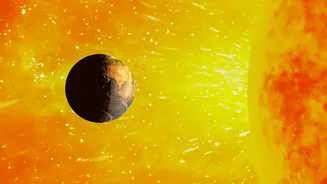
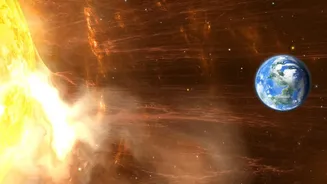
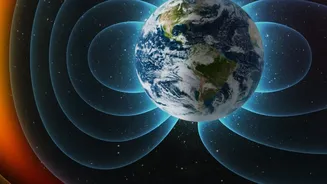
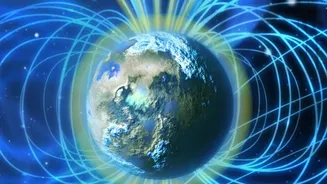
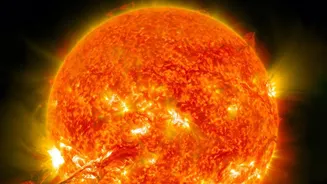
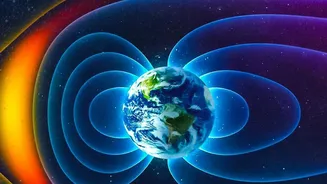
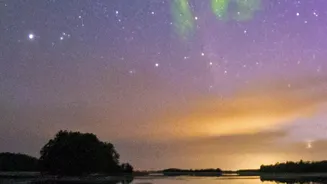
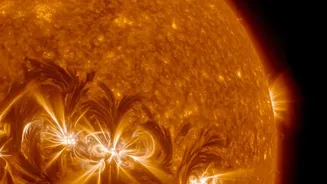
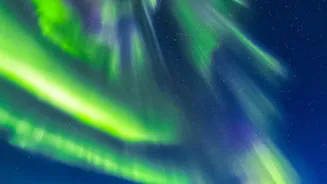
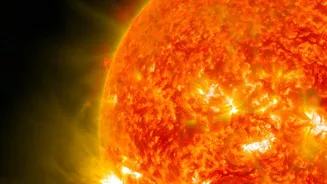
as rain, wind, and sun. But there's another kind of weather that originates 93 million miles away. Space weather refers to the constant stream of charged particles and energy, known as the solar wind, that flows from the Sun. Occasionally, the Sun releases massive eruptions of material, called coronal mass ejections (CMEs), or intense bursts of energy called solar flares. When these solar tantrums are aimed at Earth, they interact with our planet's magnetic field, creating spectacular auroras but also posing a significant, invisible threat to our modern way of life.
The Threat to Our Tech-Reliant World
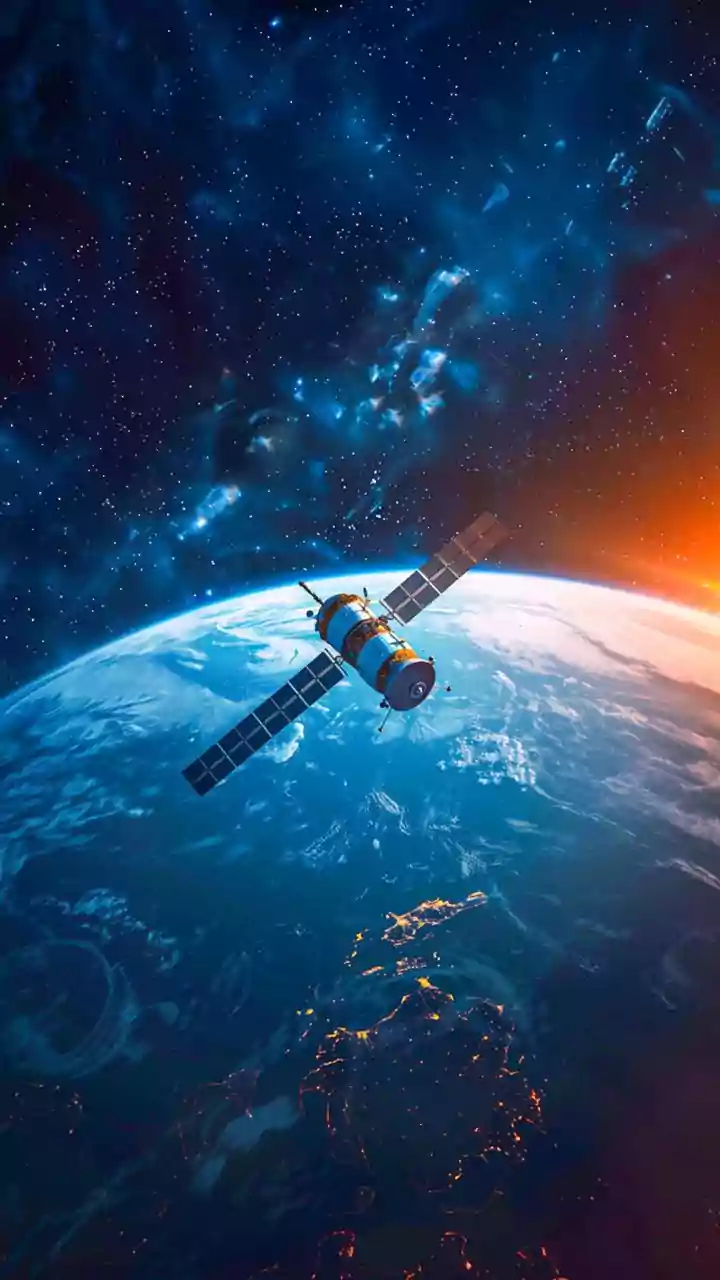
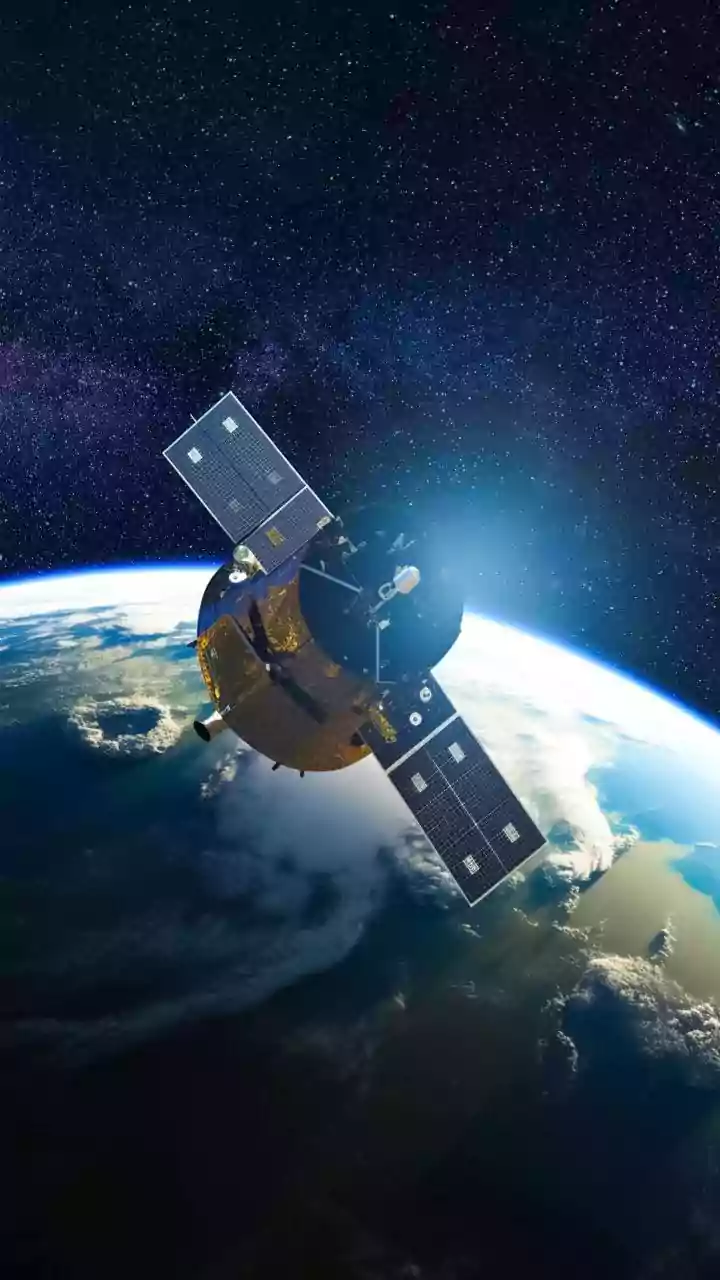
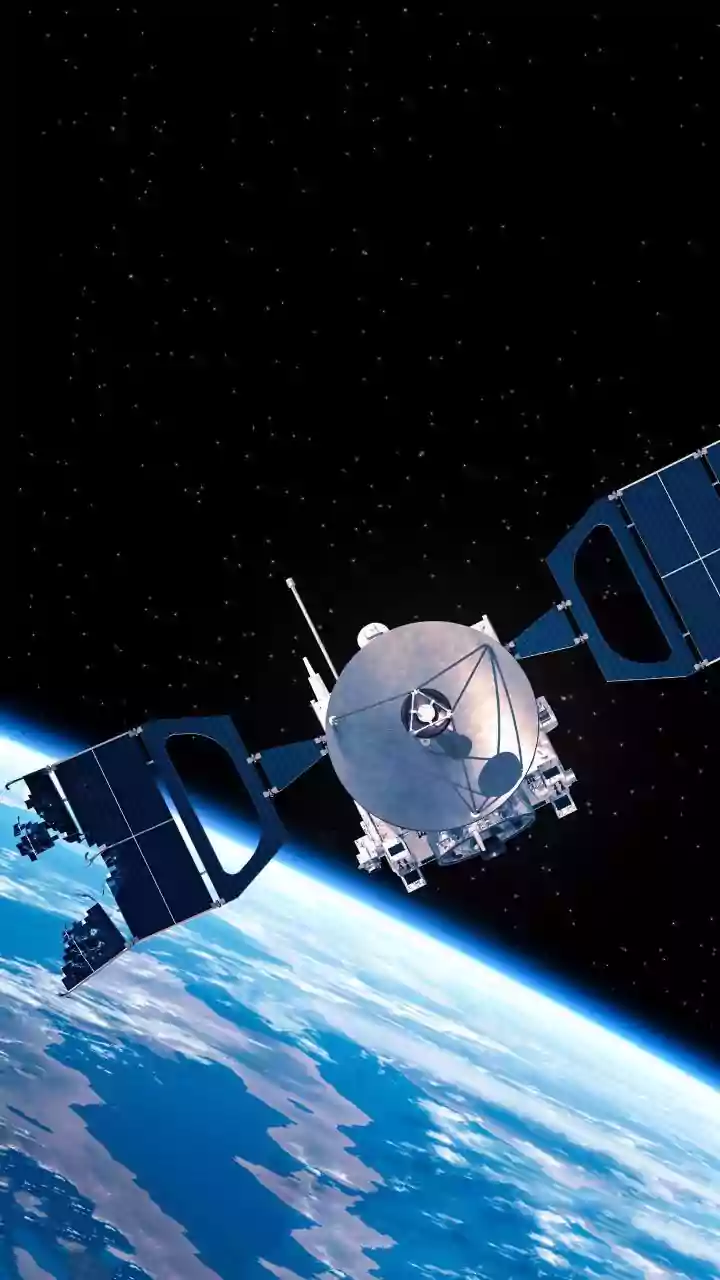
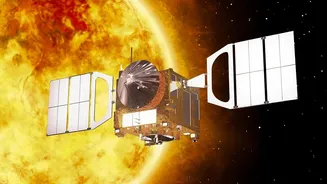
Our reliance on technology makes us uniquely vulnerable to these solar outbursts. A severe geomagnetic storm, triggered by a CME, can induce powerful electrical currents in the ground. These geomagnetically induced currents (GICs) can flow into long conductors like power lines and pipelines, potentially overloading transformers and causing widespread blackouts. The infamous 1989 storm, for instance, led to the collapse of Quebec's power grid, leaving millions in the dark. Beyond the grid, space weather can disrupt GPS signals by several metres, damage satellites, and interfere with radio communications, affecting everything from aviation to agriculture.
The Old Assumption: A Uniform Impact
For years, scientists and grid operators worked under the assumption that the effects of a geomagnetic storm were relatively uniform over large geographical areas. The prevailing belief was that if a storm was affecting one part of a region, the entire region was experiencing a similar level of disturbance. This 'blanket' model guided risk assessment and mitigation strategies. Forecasting focused on predicting the arrival of a solar storm, giving operators hours of warning to prepare their systems for a broad, widespread impact. However, this understanding failed to explain why some pieces of infrastructure would fail while others nearby remained unscathed.
The Groundbreaking Discovery: Hyper-Local Effects
Recent research has turned this old assumption on its head. A new study highlights that the ground-level effects of space weather can be surprisingly localised. Researchers found that magnetic disturbances can vary significantly between locations just a few tens of kilometres apart. One geomagnetic station might record a massive swing in the magnetic field, while another nearby sees only a weak response. This variation isn't just random; it's influenced by a complex interplay of factors, including currents in the upper atmosphere and, crucially, the local geology and electrical conductivity of the ground beneath our feet. Think of it like a thunderstorm: it might cause a torrential downpour in one neighbourhood while the adjacent one remains completely dry.
Why A Few Kilometres Makes All The Difference
This discovery of 'space weather microclimates' is a game changer for risk management. It means a power substation in one city could be at extreme risk of overload from induced currents, while another just 50 kilometres away faces a much smaller threat. The one size fits all approach to protecting our infrastructure is no longer sufficient. Predicting risk now requires a much more granular understanding not just of the incoming solar storm, but of the specific geological makeup of the land our infrastructure is built on. This makes forecasting and protecting our systems much more complex, as the threat is not uniform but a patchwork of highly localised hotspots.
What This Means For India
For a nation like India, with its rapidly expanding digital economy, national power grid, and sophisticated satellite systems, these findings are particularly critical. India's own navigation system, NavIC, along with countless communication and broadcasting services, depends on the reliable functioning of satellites that are vulnerable to space weather. Furthermore, the national power grid, which connects the country, could have unseen vulnerabilities based on regional geology that were previously not considered. Understanding this localised risk is the first step toward building more resilient infrastructure. It underscores the need for a denser network of ground based magnetic sensors to create a more detailed risk map, ensuring that when the next big solar storm arrives, we know precisely where the biggest threats lie.