

The Blind Spot of Modern Data
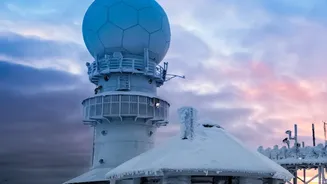
Modern weather stations are marvels of precision. They provide real-time, high-resolution data on temperature, humidity, and rainfall, which is essential for daily forecasting and aviation. However, they have a fundamental limitation: a short memory.
Most instrumental weather records in India only go back about a century. This provides a detailed snapshot of our current climate but tells us very little about long-term natural cycles, such as decade- or century-long shifts in monsoon intensity. For climate scientists trying to build models that can accurately predict future changes, this short-term view is a significant blind spot. It’s like trying to understand a person’s entire life by looking only at a photograph from last week. Without the long-term context, it's difficult to distinguish a temporary fluctuation from a fundamental, long-term trend.
Ancient Clues from a Chhattisgarh Lake
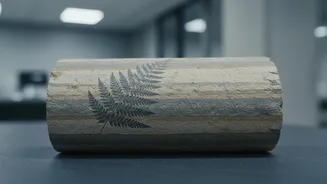
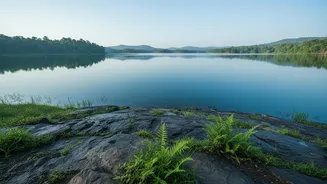
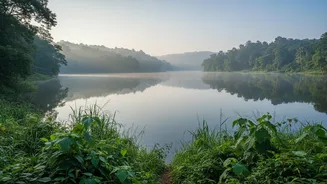
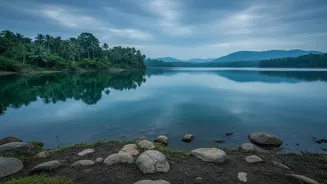
To get that long-term view, scientists are turning to a field called palynology—the study of pollen grains. Researchers from the Birbal Sahni Institute of Palaeosciences (BSIP) in Lucknow recently analyzed sediment cores from the Raja Rani Lake in Chhattisgarh's Korba district. By drilling into the lakebed, they extracted layers of mud that have accumulated over thousands of years, creating a perfectly preserved timeline. Within these layers are microscopic pollen grains shed by plants that grew in the area centuries or even millennia ago. Because the tough outer shell of pollen allows it to survive for eons, these tiny fossils act as perfect proxies for past vegetation. And since vegetation is intricately linked to climate, reading the pollen record is like reading a detailed history book of the region's climate.
A Stronger, Wetter Past
The story the pollen told was surprising. The analysis revealed that between roughly 1060 and 1725 CE, a period corresponding to the global Medieval Climate Anomaly, the Indian Summer Monsoon was significantly stronger than what we experience today. The pollen from this period was dominated by species from moist, tropical deciduous forests, indicating a warm, humid climate with intense rainfall. This finding is crucial because it provides concrete evidence of natural monsoon variability that is far greater than what is captured in the modern instrumental record. It shows that the monsoon system, which is the lifeblood for agriculture across the subcontinent, can undergo dramatic shifts in its own, independent of recent human influence. This deep historical data helps create a baseline for what is 'normal' for the monsoon over centuries, not just decades.
Building Better Climate Models
This is why such studies are more than just a historical curiosity. The data recovered from proxies like pollen is invaluable for improving climate models. Current models are calibrated using existing weather data, but as the Chhattisgarh study shows, this data might not represent the full range of climatic possibilities. By incorporating paleoclimate data—information about climate from the distant past—scientists can create models that are more robust and can simulate a wider range of potential future scenarios. Understanding how the monsoon responded to past warm periods, for instance, gives us critical clues about how it might behave in our warming world. This research from the heart of India's Core Monsoon Zone helps refine these projections, making them more accurate and relevant for Indian policy planning around water resources and agriculture.
Looking Back to See the Future
The Chhattisgarh pollen study is a powerful reminder that to understand the future of our planet's climate, we must look deep into its past. Modern weather stations provide essential, but incomplete, information. The true story of our climate is written not just in digital readouts, but also in ancient lakebeds, tree rings, and glacial ice across the country. As scientists continue to uncover these natural archives, they are assembling a more complete picture of Earth's climate system and its complex cycles. For science readers, the message is clear: the most sophisticated forecasting tools of the future may well depend on our ability to decipher the clues left behind by the past.