







The Perfumer’s Approach to Gardening
Creating a fragrant garden is much like blending a perfume; it’s about balancing different notes to create a harmonious composition. Instead of bombarding the senses, the most memorable scented spaces guide you through a journey of aromas. This means
combining powerful, heady fragrances—your 'strong notes'—with softer, more subtle scents and areas of simple greenery that act as 'quiet areas'. These quiet zones give your nose a chance to reset, making the fragrant moments even more impactful. It's this thoughtful layering that transforms a collection of potted plants into a true sensory oasis. The goal is a symphony of scents, not a single, loud blast.
Your 'Strong Notes': The Fragrant Superstars
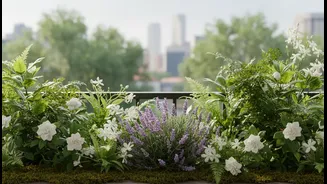
These are the showstoppers, the plants whose powerful scents can define a space, especially in the evening. In India, we are blessed with some of the most beautifully fragrant flowers in the world. Consider placing one or two of these in pots where a gentle breeze can carry their scent. Good choices include Mogra (Arabian Jasmine), with its intoxicating fragrance that intensifies after dusk, and Rajnigandha (Tuberose), famous for its rich, sweet aroma used in perfumes. Raat ki Rani (Night-blooming Jasmine) is another excellent option, releasing a powerful, sweet perfume that can fill an entire balcony. A single Gardenia (Cape Jasmine) can also serve this purpose, with its creamy white flowers emitting a strong, classic floral scent. These plants are best placed slightly away from your main seating area to avoid being overwhelming.
The 'Middle Notes': The Harmonisers
These plants provide a gentle, pleasant fragrance that bridges the gap between your strong notes and quiet zones. They add complexity and depth without competing for attention. Classic Roses (Desi Gulab) are perfect for this role, offering a timeless fragrance that is beloved but not overbearing. Lavender is another fantastic choice, known for its soothing, clean scent that also helps repel insects. You could also consider Sweet Alyssum, a low-growing plant with tiny, honey-scented flowers, perfect for the edges of pots or in hanging baskets. These plants are best positioned closer to where you sit or along pathways, so their more subtle scent can be enjoyed up close.
The 'Quiet Areas': Fragrance in Foliage
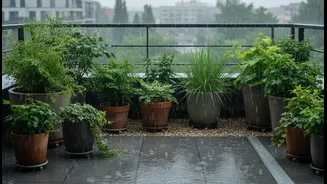
Not all fragrance comes from flowers. The 'quiet areas' of your balcony can be filled with plants whose leaves release scent when brushed against or crushed. This creates an interactive and subtle layer of aroma. Herbs are perfect for this. Pots of Mint (Pudina) release a refreshing burst of scent when you run your hand through the leaves. Lemongrass offers a crisp, citrusy aroma and is a staple in many Indian kitchens. Even a pot of Ajwain (Carom) or Thyme can provide a spicy, warm fragrance when touched. These plants provide a wonderful sensory experience along railings or near a doorway, releasing their fragrance as you move past them.
Putting It All Together: The Art of Placement
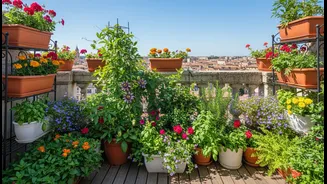
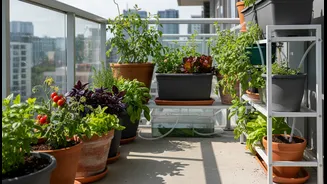
Arranging your scented balcony is about choreographing an experience. Place your 'strong notes' like Raat ki Rani or Rajnigandha at the far corners of the balcony, allowing their scent to drift over on the evening breeze. Use 'middle notes' like roses or lavender closer to your seating area, where their gentler perfume can be appreciated without overwhelming conversation. Weave your 'quiet areas' throughout by placing pots of herbs like mint and lemongrass along pathways or railings where they will be touched frequently. Consider the sun exposure of your balcony; most flowering plants like Jasmine and Rose need at least 4-6 hours of sun to bloom well. By layering scents by height and location, you create a dynamic fragrance that changes as you move through the space.