





The Great Monsoon Transition
The primary reason for October's split personality is the transition between India's two major monsoon systems. The entire country spends June to September under the influence of the Southwest Monsoon, which brings widespread rain. Come October, this
system begins its exit, a process known as the retreating monsoon. As it withdraws, it makes way for the Northeast Monsoon, which behaves very differently and affects a specific part of the country. This changing of the guard doesn't happen overnight; it's a gradual process that defines the weather for the entire month.
The Southwest Monsoon's Retreat
Starting in early September from the northwestern parts of the country like Rajasthan, the Southwest Monsoon systematically withdraws. By October, it has typically retreated from most of North and Central India. As these moisture-laden winds pull back, cloud cover disappears. This leads to clear skies and a significant drop in humidity, ushering in the pleasant, sunny, and dry weather that marks the beginning of the tourist season in places like Delhi, Rajasthan, and Uttar Pradesh. However, this withdrawal can also lead to a phenomenon called 'October Heat'. The combination of clear skies allowing for intense sunshine and the residual moisture left in the ground can create a short period of hot and oppressive weather before the cool winter air truly sets in.
The Northeast Monsoon's Arrival
As the Southwest Monsoon retreats, the wind patterns over the Indian subcontinent reverse. A high-pressure system builds over the cooling landmass of northern India, and winds begin to blow from the northeast towards the lower pressure over the Bay of Bengal. Initially, these winds are dry. However, as they pass over the warm Bay of Bengal, they pick up significant moisture. This moisture is then dumped over the southern peninsula, primarily affecting Tamil Nadu, coastal Andhra Pradesh, Rayalaseema, and Kerala. For Tamil Nadu, which lies in a rain-shadow region during the Southwest Monsoon, the Northeast Monsoon (from October to December) is its primary rainy season, accounting for nearly half of its annual rainfall. The official onset for this monsoon is typically around October 20th.
Western Disturbances and Northern Rains
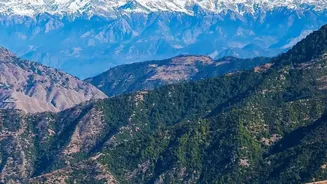
While most of North India is drying out, another weather system can influence its October climate: Western Disturbances. These are extra-tropical storms that originate in the Mediterranean region and travel eastwards. While most active in the core winter months, they can begin to affect North India in October. These disturbances bring moisture and can cause rain and early snowfall in the Himalayan states like Himachal Pradesh and Uttarakhand, and occasional showers in the northern plains, including Punjab and Haryana. This rainfall is crucial for the sowing of winter (Rabi) crops. Forecasts for 2026 suggest that Western Disturbances may bring good rainfall to these northern states.
Cyclones and Other Factors
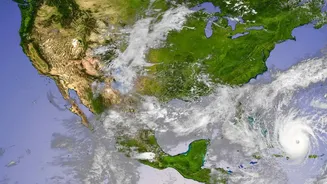
October is also a prime month for the formation of tropical cyclones in the Bay of Bengal and, to a lesser extent, the Arabian Sea. The same conditions that fuel the Northeast Monsoon—warm sea surface temperatures and shifting wind patterns—create a fertile breeding ground for these powerful storms. These cyclones can bring extremely heavy rainfall and strong winds, primarily affecting the coastal states of Odisha, Andhra Pradesh, and Tamil Nadu, often overlapping with and intensifying the Northeast Monsoon rains in the south. The complex topography of the country, such as the Western Ghats, also continues to play a role in creating localized weather variations during this transitional month.