







The Headline Number: A Significant Loss
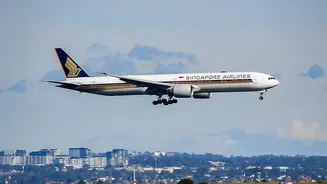
For the first half of the financial year 2027 (H1 FY27), which covers the period from April to September 2026, Air India is estimated to have posted a loss of around ₹10,500 crore. This information comes via disclosures from Singapore Airlines (SIA),
which holds a 25.1% stake in the Indian carrier following the merger of Vistara with Air India. While still a substantial figure, it represents a 16% improvement from the approximately ₹12,500 crore loss estimated for the same period last year, suggesting that some of the airline's turnaround efforts are beginning to have an effect.
The Singapore Airlines Connection
To understand the current financials, we have to go back to the landmark merger between Air India and Vistara. As part of that deal, Vistara's parent company, Singapore Airlines, acquired a 25.1% stake in the newly enlarged Air India group, with Tata Sons holding the rest. As a significant minority shareholder, SIA's financial results are directly impacted by Air India's performance. Under a method of accounting for such investments, SIA must recognise its share of Air India's profits or, in this case, losses. For H1 FY27, SIA recorded its share of Air India's losses as approximately S$361.7 million (about ₹2,640 crore).
Explaining 'Carrying Value'
The other key figure in SIA's disclosure was the change in the 'carrying value' of its investment in Air India. In simple terms, carrying value is the value of an asset as recorded on a company's balance sheet. For an investment like this, it is not its day-to-day market price but its book value. This value is adjusted periodically to reflect factors like the investee's performance. When a company in which you have a stake consistently makes losses, accounting rules often require you to reduce the carrying value of that investment on your own books. This reduction is known as an impairment or a write-down.
Why The Stake's Value Was Lowered
Singapore Airlines reduced the carrying value of its Air India stake from S$1.13 billion at the end of March 2026 to just under S$800 million by September 30, 2026. This drop of roughly S$335 million reflects the equity accounting method, where the ongoing losses at Air India erode the book value of SIA's investment. It is important to note this is a non-cash adjustment. No money actually changed hands; it is an accounting entry to ensure the value of the asset on SIA's books more accurately reflects its recoverable value in light of the airline's continued losses. While Air India's losses did narrow compared to the previous year, they were still substantial enough to warrant the write-down.
The Bigger Picture: A Turnaround in Progress
These financial figures, while stark, must be viewed in the context of Air India's massive, multi-year transformation under the Tata Group. The airline is in the midst of a complete overhaul that includes refurbishing its fleet, upgrading technology, integrating the operations of four different airlines (Air India, Air India Express, Vistara, and AirAsia India), and streamlining its cost structure. Such a large-scale turnaround is incredibly capital-intensive and was expected to involve significant losses in the initial years. Both Tata Sons and Singapore Airlines have publicly expressed their long-term commitment to the strategy, viewing the Indian aviation market as a key pillar of future growth despite the current financial strain.