







Ghee is a beloved staple in almost every Indian kitchen, celebrated for its rich flavour and health benefits. While both cow and buffalo ghee are forms of clarified butter, they aren't the same. Let's explore the key differences.
Colour, Taste, and Texture
The most obvious difference
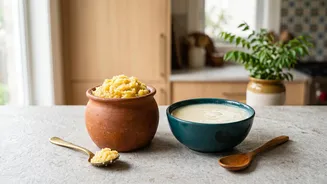
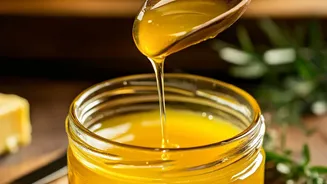
is colour. Cow ghee is typically golden yellow, a result of beta-carotene from the cow's diet. Buffalo ghee, on the other hand, is a creamy white because buffaloes convert beta-carotene into vitamin A, so the pigment doesn't pass into their milk fat. In terms of flavour, cow ghee offers a lighter, nuttier taste that complements a wide range of dishes without overpowering them. Buffalo ghee has a richer, more intense flavour and a denser, creamier texture. This makes it a favourite for sweets and rich preparations.
The Nutritional Divide
Both types of ghee are nearly 100% fat, but their nutritional profiles have subtle yet important distinctions. Buffalo ghee contains slightly more fat and calories, making it a good source of energy for those with physically demanding lifestyles or who are looking to gain weight. It is also rich in minerals like magnesium, phosphorus, and calcium. Cow ghee generally has a lower fat content and contains more vitamins A, D, and E. Some sources also suggest it has a higher concentration of conjugated linoleic acid (CLA), an acid linked to boosting metabolism.
Digestion and Health Goals
Due to its lower fat content, cow ghee is widely considered lighter and easier to digest. This makes it a preferred option for children, the elderly, and those with sensitive digestive systems. For individuals focused on weight management, cow ghee is often recommended as it is less calorie-dense. Conversely, the higher fat and calorie content in buffalo ghee makes it suitable for those aiming for weight gain or requiring sustained energy, such as athletes.
The Ayurvedic Perspective
In Ayurveda, cow ghee is often held in higher regard and considered 'nectar' for its medicinal properties. It is believed to be 'tridoshic', meaning it can help balance all three doshas (Vata, Pitta, and Kapha), making it a versatile choice for overall wellness. It's frequently used in herbal preparations to help transport medicinal properties of herbs into the body. Buffalo ghee is also valued, particularly for pacifying Vata and Kapha doshas, but is said to potentially increase Pitta. It is traditionally used to promote sleep and is considered beneficial during the winter for its heat-generating properties.
Best Uses in the Kitchen
The distinct properties of each ghee lend themselves to different culinary applications. With its mild flavour and lighter texture, cow ghee is ideal for everyday cooking, such as spreading on rotis, adding to dal, and for light sautéing or 'tadka'. Buffalo ghee’s rich taste and higher smoke point make it an excellent choice for deep-frying and preparing traditional Indian sweets like halwa and ladoos, where a strong, creamy flavour is desired.