





The Challenge of Martian Air
Mars may be our planetary neighbour, but its environment is profoundly alien. Its atmosphere is less than 1% as dense as Earth's and is composed of about 96% carbon dioxide. For humans to survive, let alone establish a long-term presence, they can't simply
bring all the oxygen they need. A crew of four astronauts would require roughly one metric ton of oxygen for a year. Launching that much weight from Earth is prohibitively expensive. The only viable solution is to 'live off the land' by manufacturing breathable air from the resources already on Mars, a process known as In-Situ Resource Utilization (ISRU). This has been the central focus of scientists and engineers for decades, a problem that must be solved before the first human footprint is pressed into the red dust.
MOXIE: A Groundbreaking First Step
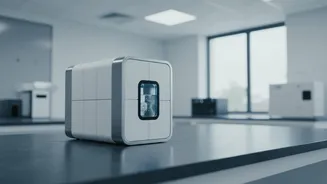
The first major breakthrough on Martian soil came from a toaster-sized instrument aboard NASA's Perseverance rover called MOXIE, the Mars Oxygen In-Situ Resource Utilization Experiment. Between 2021 and 2023, MOXIE proved that generating oxygen on another planet was possible. The device worked by pulling in the carbon dioxide-rich Martian air, compressing and heating it to around 800 degrees Celsius, and then using a process called solid oxide electrolysis to split the CO2 molecules. This successfully produced pure oxygen, releasing carbon monoxide as a byproduct. Over the course of 16 runs, MOXIE generated a total of 122 grams of oxygen, proving the technology works in real-world Martian conditions. At its peak, it produced 12 grams per hour, twice what it was designed for. But as successful as it was, MOXIE was just a demonstration. Powering a human mission would require a system roughly 100 times larger, running continuously and demanding enormous amounts of power.
The Plasma Revolution
Building on MOXIE's success, researchers are now developing improved reactors that promise greater efficiency and versatility. One of the most exciting new approaches uses plasma. Instead of relying on high heat and pressure, a plasma reactor uses powerful electric fields to excite the Martian gas, stripping electrons from the atoms and creating a stream of 'bullet-like' electrons. When these high-energy electrons collide with carbon dioxide molecules, they can shatter them, releasing oxygen. The major advantage of this method is that it is well-suited to the natural low-pressure environment of Mars, potentially eliminating the need for the heavy-duty pumps and high-temperature components that MOXIE requires. Research teams in Portugal and Romania have demonstrated promising lab results. One Romanian concept uses ultra-dense plasma pulses to instantly dissociate CO2, a system that could be easily scaled up to produce enough oxygen for a human crew.
Tapping into Salty Water
Another promising innovation tackles a different Martian resource: water. While Mars is a desert world, orbiters have confirmed the existence of frozen water and have found strong evidence for underground lakes of extremely salty water, or brine. Normally, the salt in this brine would be highly corrosive and destructive to standard electrolysis equipment. However, engineers at Washington University have developed a novel electrolyzer with a specialized anode that can work directly with this brine, even in the freezing -36°C temperatures typical of Mars. This brine electrolysis system not only produces pure oxygen but also creates a valuable co-product: hydrogen. Hydrogen is a critical component of rocket fuel, meaning this single system could provide both breathable air and the fuel needed for the return journey to Earth. The developers claim their system can produce 25 times more oxygen than MOXIE using the same amount of power, representing a radical leap in efficiency.