




Choosing Your Container
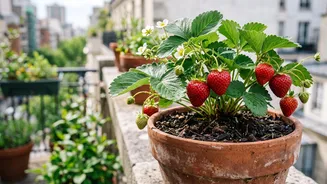
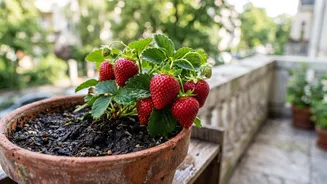
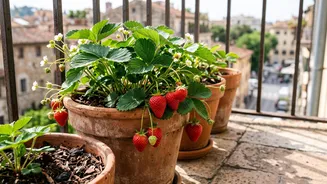
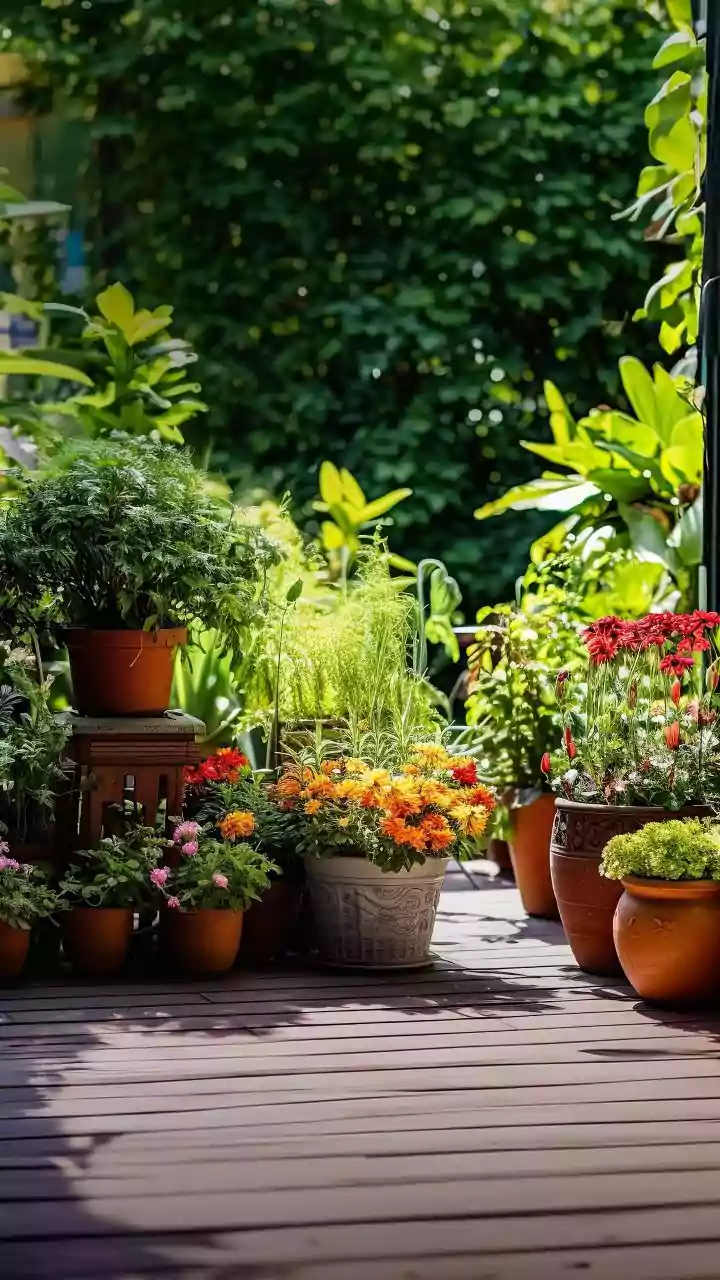
The foundation of balcony strawberry success is the right pot. Since strawberries have shallow roots, they don't need a very deep container, but they do need width. For a single plant, choose a pot that is at least 20-25 cm in diameter and 20 cm deep.
A 25-30 cm wide pot can comfortably house two to three plants. If you're using a longer planter box, you can fit three or four plants in a 60-80 cm trough. Good drainage is non-negotiable. Without holes at the bottom, water will pool and cause root rot, one of the fastest ways to kill a strawberry plant. Terracotta pots are great for air circulation but dry out fast, while plastic pots retain moisture longer, which can be helpful in hot, dry Indian climates.
Giving Plants Their Space
Overcrowding is a common mistake that leads to poor air circulation, increased disease risk, and smaller berries. A good rule of thumb is to space individual plants about 20-30 cm apart. This gives each plant enough room for its roots to expand and for air to move freely between the leaves. When planting, the most critical detail is the placement of the 'crown'—the thick, central part where the leaves emerge from the roots. The crown must sit exactly at soil level. If it's buried, the plant can rot; if it's too high, the roots will dry out. For container gardening in India, 'everbearing' or 'day-neutral' varieties are often the best choice. Unlike 'June-bearing' types that produce one large crop, everbearing varieties like Albion, Seascape, and Tristar produce fruit steadily throughout the season, which is ideal for a small balcony patch. Varieties like Sweet Charlie, Chandler, and Festival have also shown good performance in Indian conditions.
The Perfect Foundation: Soil and Sun
Never use heavy garden soil in your pots, as it compacts easily and suffocates the roots. Instead, use a high-quality, well-draining potting mix. You can buy a pre-made mix for berries or create your own by blending potting soil with compost for nutrients and perlite or coco coir to improve drainage and aeration. Strawberries prefer slightly acidic soil with a pH between 5.5 and 6.5. Once you have your soil, location is everything. Strawberries are sun-lovers and need at least six to eight hours of direct sunlight each day to produce abundant, sweet fruit. A south-facing balcony is often ideal. Less sun will result in more leaves and far fewer berries.
Watering and Feeding for Success
Pots dry out much faster than garden beds, so consistent watering is crucial. Check the soil every day, especially during hot weather. When the top 2-3 cm of soil feels dry, it's time to water. Water thoroughly until it runs out of the drainage holes, but don't let the pot sit in a saucer of water. Aim to water the soil at the base of the plant, not over the leaves, to help prevent fungal diseases. Strawberries are also heavy feeders. To support fruit production, feed your plants with a balanced, water-soluble fertiliser every two to four weeks during the growing season. A fertiliser slightly higher in potassium (like one formulated for tomatoes) can be particularly beneficial once the plants start flowering.
Encouraging a Bountiful Harvest
To get the best fruit, a little maintenance goes a long way. Many strawberry plants send out 'runners,' which are long stems that try to create new baby plants. While this is great for propagation, in a container, they drain energy from the parent plant. For the best fruit yield, it's recommended to snip off most runners as they appear. Another tip, especially for the first year, is to pinch off the first set of flowers. This is hard to do, but it encourages the plant to put its energy into developing a stronger root system, leading to a much bigger and healthier harvest in the long run. Finally, placing a layer of straw or pine needle mulch on top of the soil can help keep the berries clean, retain soil moisture, and prevent the fruit from resting on damp soil, which can cause rot.