







More Than a Digital Guidebook
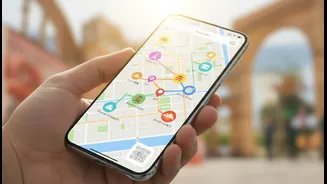
Andhra Pradesh's government has partnered with travel technology firm Explurger to roll out the NiVU AI platform across more than 100 tourist destinations. Visitors can scan a QR code at a temple, beach, or heritage site and instantly interact with an AI assistant
via voice or text in over 130 languages, all without downloading an app. The platform, which was successfully piloted in Mangalagiri, will provide historical context, architectural details, and cultural significance on demand. On the surface, it’s a sophisticated digital guidebook designed to make sightseeing more accessible and informative for a wide array of domestic and international visitors.
Breaking the Language Barrier
The most obvious win is dismantling language barriers. For decades, the travel experience in a country as linguistically diverse as India has been fragmented. Information is often limited to English and the dominant regional language, leaving many visitors disconnected. This AI initiative makes tourism more inclusive, allowing a traveller from Japan, France, or even a different part of India to engage with a site's history in their native tongue. It's a powerful tool for improving the tourist experience, making travel less intimidating and more enriching. This alone is a significant step forward in modernising the state's tourism infrastructure.
Beyond Tourists: The Platform Opportunity
But to focus only on the tourist-facing features is to miss the forest for the trees. The real, transformative opportunity is not in the AI as a product for consumption, but as a platform for empowerment. The underlying technology—a multilingual, location-aware conversational AI—is a powerful piece of digital infrastructure. While it currently answers tourist questions, its potential extends to creating a dynamic, two-way ecosystem that can redefine the local economy.
Fueling a Hyper-Local Economy
Imagine a future version of this AI. A tourist asks about local handicrafts near the Borra Caves. The AI not only describes them but connects the tourist to a local artisan's e-commerce page or provides walking directions to their workshop. A visitor at a temple asks for authentic local food, and the AI recommends a small, family-run eatery that doesn't have a marketing budget. This platform could become a bridge between global visitors and the smallest local entrepreneurs—guides, hosts, artists, and chefs. By integrating them into this digital ecosystem, the state can ensure that tourist spending flows directly into the local community, creating a more resilient and distributed economic model that technology, rather than intermediaries, facilitates.
A Blueprint for Smarter Governance
The second profound opportunity lies in data. As officials have noted, the platform will generate a wealth of real-time analytics on visitor behaviour. The tourism department will be able to see which sites are most popular, what questions visitors are asking, which languages are most used, and where infrastructure gaps might exist. This is a goldmine for data-driven governance. Are many people asking for directions to restrooms at a particular fort? That signals a need for better signage or facilities. Are tourists near Visakhapatnam beaches constantly asking about water sports? That could justify targeted investment in that sector. This data transforms policy-making from a reactive, survey-based process to a proactive, evidence-based one, allowing for smarter allocation of resources and more effective destination management.
Digital Scaffolding for Cultural Heritage
Finally, there is an implicit cultural benefit. To be effective, the AI must be trained on accurate and culturally sensitive information about Andhra Pradesh's history, heritage, and spiritual traditions. This creates a powerful incentive to digitise, catalogue, and preserve local stories, dialects, and traditions. When a specific dialect or a piece of folklore becomes a valuable dataset required to make a multi-crore technology project work, it gains a new form of currency. This initiative, therefore, can act as a form of digital scaffolding, creating a modern, commercially relevant reason to invest in the preservation and promotion of cultural and linguistic heritage that might otherwise be overlooked in the digital age.