



What is a Planetary Conjunction?
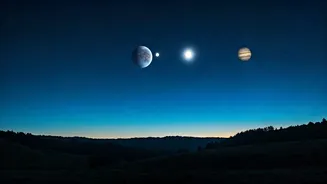
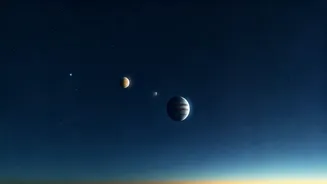
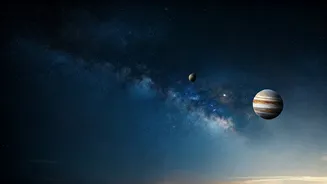
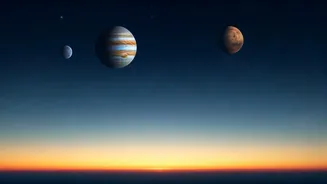
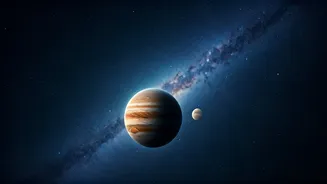
When two or more celestial bodies appear close to one another in the sky, it’s called a conjunction. It’s important to remember this is a line-of-sight phenomenon. The planets aren’t actually close to each other in space; in reality, they remain hundreds
of millions of kilometres apart. From our vantage point on Earth, however, their orbits bring them into the same patch of sky, creating a striking and often beautiful visual pairing. Conjunctions involving bright planets like Jupiter are particularly rewarding for sky-watchers, and when the elusive planet Mercury is involved, it’s an even greater treat.
When and Where to Look From India
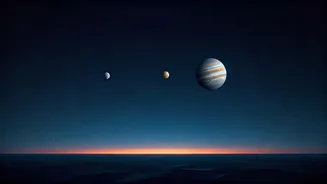
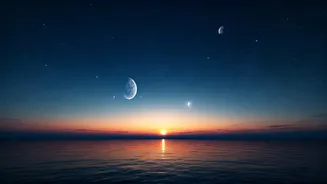
Mercury and Jupiter conjunctions are typically evening or morning events. Because Mercury orbits so close to the Sun, it’s only ever visible for a short window just after sunset in the western sky or just before sunrise in the eastern sky. Jupiter, being much farther out, is more flexible in its viewing times, but when they meet, you must follow Mercury’s schedule. The best time to start looking is about 30 to 45 minutes after the sun has fully set. You’ll need a clear, unobstructed view of the horizon. Jupiter will likely be the first point of light you spot, shining steadily and brilliantly. Mercury will be fainter and closer to the horizon, appearing as a smaller, star-like point nearby.
Telescope, Binoculars, or Naked Eye?
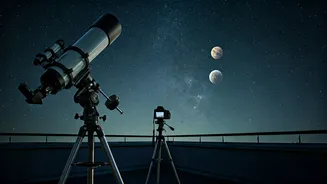
The headline says to set up telescopes, but the good news is that you don’t necessarily need one. The beauty of a Jupiter-Mercury conjunction is that both planets are bright enough to be seen with the naked eye, even from moderately light-polluted urban areas. Simply finding a spot with a clear view of the horizon is enough to enjoy the sight. However, bringing along a pair of binoculars will significantly enhance the experience. Through binoculars, you’ll be able to see the planets as distinct discs rather than points of light. You might even glimpse Jupiter’s four largest moons—Io, Europa, Ganymede, and Callisto—appearing as tiny pinpricks of light flanking the giant planet. A small telescope will, of course, provide an even more spectacular view. With a telescope, you can resolve the cloud bands of Jupiter and see its moons with greater clarity. For Mercury, a telescope will confirm its planetary nature, but don’t expect to see surface details—it’s simply too small and far away.
Tips for the Best Viewing Experience
To make the most of this celestial event, a little preparation goes a long way. First, check the weather forecast; clouds are a stargazer’s worst enemy. Second, find a location away from the glare of city lights. A park, a rooftop, or a spot on the outskirts of town will offer a darker sky and a better view. Give your eyes at least 15 minutes to adapt to the darkness; this will help you spot faint objects like Mercury more easily. Finally, consider using a stargazing app on your smartphone, like Stellarium or SkyView. These apps use your phone’s sensors to provide a real-time map of the sky, making it incredibly easy to locate Jupiter and Mercury. Just point your phone at the sky, and the app will identify the planets for you.
Why This 'Dance' is Special
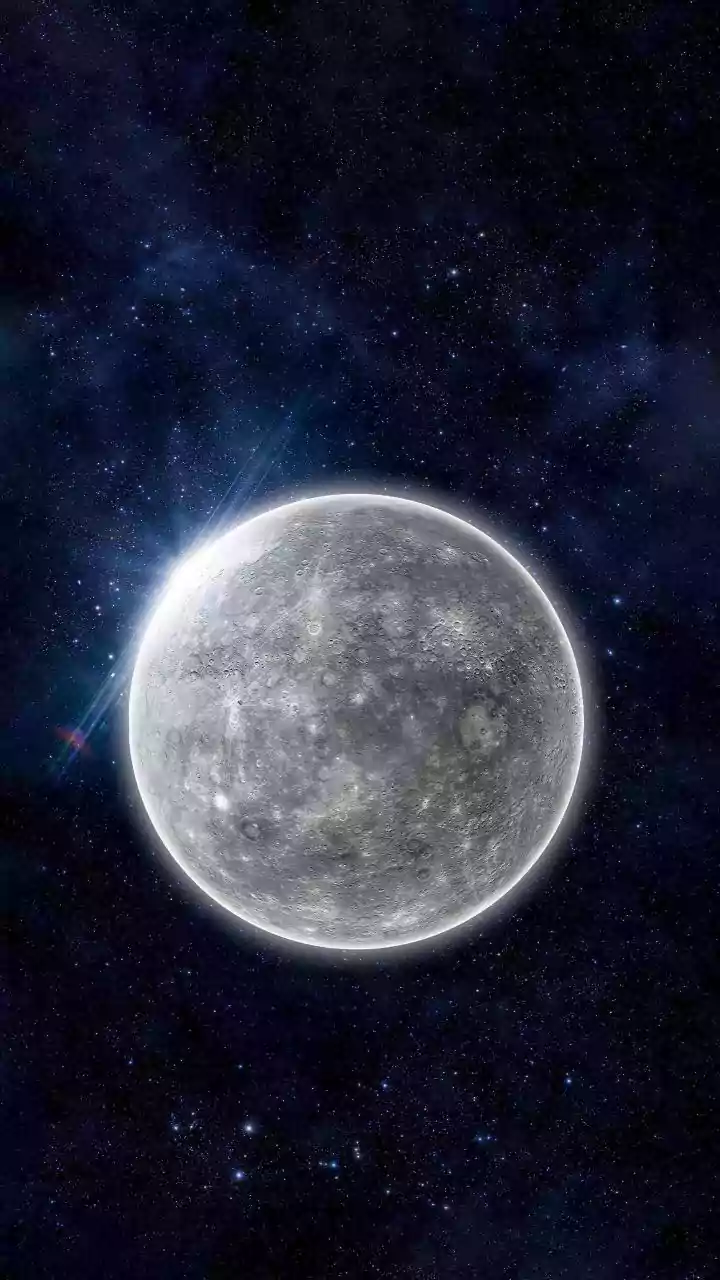
While planetary conjunctions happen with some regularity, a meeting between Jupiter and Mercury is always worth watching. Jupiter is the largest planet in our solar system, a brilliant and unmissable beacon in the night. Mercury, on the other hand, is the smallest and fastest-moving planet, a shy world that hugs the Sun’s glare and is notoriously difficult to spot. For many casual observers, a conjunction with a bright planet like Jupiter offers the best and easiest opportunity to finally catch a glimpse of the elusive messenger planet. Seeing the solar system’s biggest and smallest planets side-by-side is a wonderful reminder of the vast, dynamic cosmic clockwork we are all a part of.