


A New Blueprint for Space Science
Recent workshops, like those hosted by the National Academies and NASA, are bringing together a diverse group of stakeholders—from government agencies to private companies and university researchers—to chart a new course for science in low Earth orbit
and beyond. The central theme is a move away from the traditional model where every scientific mission is a massive, bespoke, and costly undertaking. Instead, the vision is to create a collaborative ecosystem where space becomes a utility, much like a supercomputing center that researchers can book time on. This is driven by a critical juncture in space exploration: the planned retirement of the International Space Station (ISS) around 2030. To avoid a gap in American and international research capabilities, the focus has turned to commercially owned and operated space stations.
The Old Model: A High Barrier to Entry
Historically, getting an experiment into space has been a monumental task. It involved navigating the bureaucracy of a national space agency, designing hardware to survive the rigors of launch and orbit, and competing for extremely limited room aboard a platform like the ISS. This process is long, expensive, and reserved for a select few. While incredibly productive, the ISS model is inherently limited by its nature as a single, government-operated facility. This high barrier to entry has meant that countless scientific questions have gone unanswered simply because access to a microgravity environment was unattainable for most researchers and smaller commercial entities.
The 'Shared Resource' Philosophy
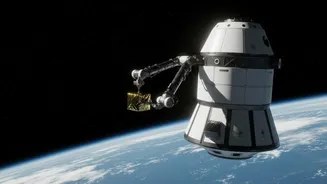
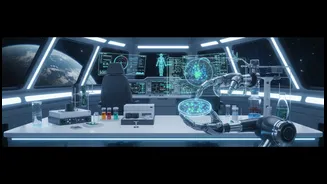
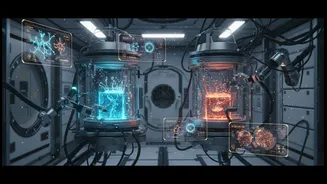
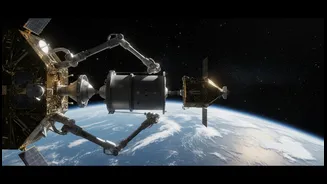
The new philosophy envisions a marketplace of opportunities. Imagine commercial space stations, like Blue Origin's Orbital Reef or Nanoracks' Starlab, offering 'lab space for rent'. Instead of building a whole new satellite, a university could send a standardized, pre-certified experiment pod on a commercial flight. This 'ride-share' approach drastically lowers costs and complexity. Discussions at recent industry workshops have focused on standardizing these processes, from payload design to data management, to create a seamless experience for scientific customers. The goal is to make space research less about reinventing the wheel for every mission and more about focusing on the science itself. This shift is crucial for fostering innovation in fields from medicine and materials science to agriculture.
From Theory to Practice
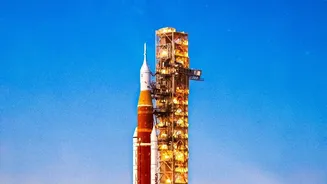
This isn't just a theoretical discussion. NASA is actively funding the development of these Commercial Low-Earth Orbit Destinations (CLDs) to ensure a smooth transition from the ISS. The agency plans to become just one of many customers, buying services from these private stations. This frees up NASA to focus on its deep space exploration goals with the Artemis program, while maintaining a robust research program closer to home. Companies are already presenting their capabilities at agency-hosted meetings, detailing how they will support human research, technology demonstrations, and biological science. Furthermore, organizations like the Translational Research Institute for Space Health (TRISH) are pioneering platforms to collect health data from private astronauts, creating a centralized database that will benefit all of humanity.
Challenges on the Horizon
Creating this new space economy is not without its challenges. A key hurdle, as highlighted in a recent NASA strategy shift called 'Ignition', is ensuring the business case for commercial stations is viable and that funding is sufficient and consistent. There are also complex technical and logistical issues to solve, from standardizing hardware across different launch providers and stations to ensuring data is shared openly and securely. International collaboration, while essential, adds another layer of complexity. Workshops involving international partners like ESA and JAXA aim to establish common roadmaps and harmonized standards for everything from mission operations to planetary protection protocols, ensuring that as space becomes more accessible, it also remains safe and sustainable.