



The First Big Question: Can We See It?
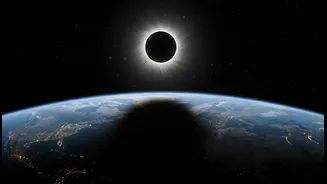
Let's get the most pressing question out of the way first: the total solar eclipse of August 12, 2026, will not be visible from India. The path of totality—the narrow corridor where the Moon completely blocks the Sun—will sweep across the Arctic, Greenland,
Iceland, and northern Spain. The entire event happens during the night for the Indian subcontinent, with the peak eclipse occurring around 11:15 PM IST. Since the Sun will be well below the horizon, there will be no direct visual spectacle for observers in cities like Delhi or Mumbai. This also means that traditional religious and cultural rituals associated with eclipses, known as Sutak Kaal, will not be applicable in India as they are tied to the eclipse's visibility.
Why This Eclipse Is a Global Highlight
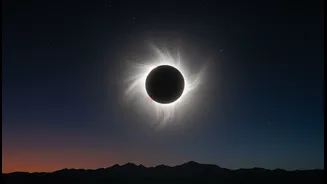
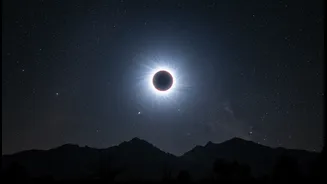
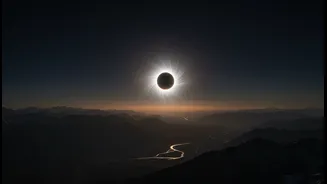
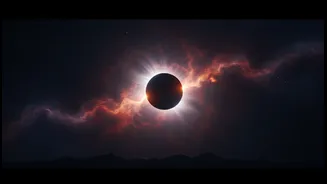
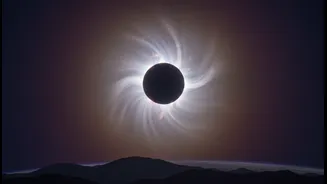
Even without direct visibility, this is a scientifically significant event. It's the first total solar eclipse to grace mainland Europe since 1999, making it a major occasion for researchers and the public there. Totality, the brief period of darkness, allows scientists a rare opportunity to study the Sun's outer atmosphere, the corona, which is usually washed out by the Sun's bright face. This particular eclipse is valuable because its path crosses over well-equipped observatories in Spain, allowing for detailed data collection. For many in Europe, the eclipse will occur just before sunset, creating a potentially stunning and rare 'sunset eclipse'. Adding to the spectacle, the eclipse coincides with the peak of the annual Perseid meteor shower, promising an unforgettable night for those in the right locations under clear skies.
The Indian Connection: Science and Perspective
While Indian skywatchers won't see the eclipse directly, the country's scientific community remains deeply engaged in solar studies. Missions like India's Aditya-L1 spacecraft are designed for continuous observation of the Sun from a point in space where eclipses don't happen, providing a constant stream of data. Events like the 2026 eclipse complement this research, offering different kinds of data that, when combined, provide a more complete picture of our star. For the Indian public, the eclipse serves as a powerful educational moment. It's a chance to learn about celestial mechanics, the science of the Sun, and India's own growing capabilities in space research. It shifts the focus from just witnessing an event to understanding the science behind it and our place in the cosmos.
Cultural Resonances and Astrological Views
In India, solar eclipses, or Surya Grahan, hold deep cultural and astrological meaning, often viewed as a period of significant change and spiritual introspection. Vedic astrology associates eclipses with the shadow planets Rahu and Ketu, considering them powerful moments for karmic shifts, new beginnings, and endings. Astrologers often see this as a 'supercharged New Moon', a time to release old patterns and embrace transformation. While the lack of visibility in India means traditional restrictions like fasting or temple closures won't apply, the astrological significance is still discussed. For many, it's a time for reflection and meditation, using the amplified energy of the celestial event for personal growth, regardless of whether they can see the shadow pass.
How to Experience the Eclipse From India
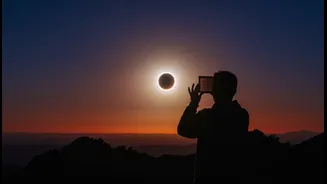
The inability to see the eclipse locally doesn't mean you have to miss out entirely. Thanks to modern technology, anyone with an internet connection can witness the spectacle. Major space agencies like NASA and the European Space Agency (ESA) will host free, high-definition live streams. These broadcasts will feature telescope feeds from various points along the path of totality, from Iceland to Spain, complete with expert commentary explaining the science as it unfolds. This offers a front-row seat to the event, allowing viewers in India to join millions around the world in a shared moment of cosmic wonder. For those truly disappointed about missing out, there is good news on the horizon. A partial solar eclipse will be visible from parts of western and northern India on August 2, 2027.