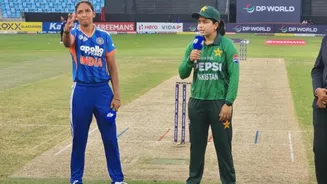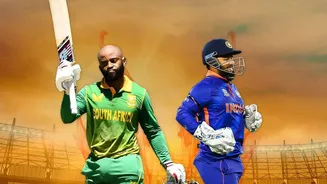






A New Proposal on the Table
The latest conversation stems from reports that the International Cricket Council (ICC) is considering a proposal for a new multi-nation tournament. This would likely be a three or four-team event designed to be commercially attractive, with India and
Pakistan as the headline acts. The idea is slated for discussion at an upcoming ICC seminar in Dubai focused on the Future Tours Programme (FTP). This isn't the first time such a concept has been floated; the Pakistan Cricket Board (PCB) has advocated for a similar model for years as a way to restart regular contests. The key difference now is that the ICC itself appears to be examining the model as a way to boost revenues outside of its major global tournaments.
The Bilateral Deep Freeze
To understand why a tri-series is even being discussed, one has to look at the long-standing suspension of bilateral cricket between the two nations. India and Pakistan have not played a bilateral series since the 2012-13 season due to persistent geopolitical tensions. The Government of India has maintained a firm stance, not permitting the Board of Control for Cricket in India (BCCI) to engage in head-to-head series with Pakistan. As a result, their on-field encounters have been restricted to multi-team events like the ICC World Cups and the Asia Cup, where participation is mandatory and not a matter of bilateral agreement. These rare matches consistently draw massive global audiences, highlighting the immense appetite that remains for this historic rivalry.
The Neutral Venue Workaround
A tri-series held at a neutral venue is being positioned as a potential workaround to the political stalemate. Since the Indian team would not be travelling to Pakistan and vice-versa, and the match is part of a multi-team tournament rather than a bilateral one, it could be more palatable from a political standpoint. The Indian government has generally not restricted matches in multi-nation events. Potential hosts like Australia, England, and the UAE have been suggested, all of which have large South Asian expatriate communities that would guarantee sell-out crowds. Cricket Australia's CEO has previously expressed openness to hosting such a series, recognising the enormous public interest. The commercial logic is undeniable; an India-Pakistan match at a venue like the Melbourne Cricket Ground for the T20 World Cup sold out in minutes.
Hurdles Remain High
Despite the commercial appeal, significant obstacles remain. The biggest hurdle is and always has been securing the approval of the Indian government, and the BCCI has consistently reiterated that it cannot move forward without this clearance. While a tri-series format is different from a bilateral one, it's not a guaranteed green light. Furthermore, the international cricket calendar is already jam-packed, and finding a window that works for three top nations would be a logistical challenge. Broadcasters and sponsors would need to be brought on board, although the sheer value of an India-Pakistan clash makes this a less daunting task. A BCCI official previously commented on a four-nation proposal by stating the focus should be on expanding cricket globally rather than on "short-term commercial initiatives," indicating a potential philosophical opposition from some quarters within the board.
A Commercially Irresistible Idea
The driving force behind this renewed push is, unequivocally, the financial potential. An India-Pakistan match is one of the most lucrative properties in global sports. For broadcasters, it delivers record-breaking viewership figures, which translates into enormous advertising revenue. A BCCI official noted in the past that while it is easy to suggest dropping these fixtures from ICC events, broadcasters would simply not agree due to the immense commercial stakes. A tri-series featuring India, Pakistan, and another top-tier team like Australia or England would create multiple high-stakes encounters, making it an incredibly valuable media rights package. For host nations, it promises a massive economic boost through tourism and ticket sales, making it an attractive proposition for boards like Cricket Australia and the ECB.