








The Concrete Jungle's Enduring Fever
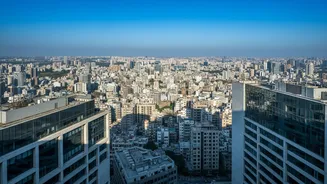
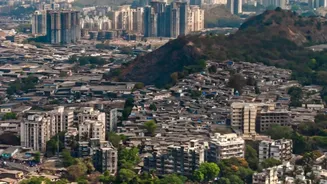
For decades, we’ve understood the Urban Heat Island (UHI) effect: our cities, packed with concrete, asphalt, and dark surfaces, absorb and retain more of the sun’s energy than surrounding rural areas. This transforms them into 'islands' of elevated temperature,
often several degrees warmer than the countryside, especially at night as buildings slowly release the day's accumulated heat. This phenomenon is not just about discomfort; it has tangible consequences. It drives up energy consumption for air conditioning, worsens air quality, and poses significant health risks.
The Monsoon Paradox: When Rain Doesn't Cool
Traditionally, the monsoon is seen as a welcome respite from the scorching pre-summer heat. But a new, uncomfortable truth is emerging. While the rains do lower the air temperature, they pump enormous amounts of moisture into the atmosphere. This spike in humidity is the critical factor. High humidity prevents our sweat from evaporating efficiently, which is the body's primary cooling mechanism. The result is a high 'heat index' or 'feels-like' temperature, where it can feel oppressively hot even if the thermometer shows a moderate number. In cities like Delhi, the heat index has been observed to cross 46-50°C in July and August, creating dangerous conditions despite the rain. This combination of retained urban heat and high monsoon humidity creates a prolonged season of thermal stress.
The Human and Economic Cost
This persistent humid heat has serious implications. Public health is a primary concern, with increased risks of heat exhaustion, dehydration, and cardiovascular stress, particularly for vulnerable populations like the elderly, children, and outdoor workers. The strain on our energy infrastructure is also immense. The prolonged discomfort leads to higher and more sustained use of air conditioners and coolers, driving up electricity bills for households and straining the power grid. This creates a vicious cycle: higher energy demand, often met by burning fossil fuels, contributes further to the emissions warming our planet. The issue also has an equity dimension, as low-income households often lack access to effective cooling and may live in poorly ventilated homes that trap even more heat.
A New Blueprint for Cooler Cities
In response, urban planners and policymakers across India are being forced to innovate. The focus is shifting from seasonal emergency responses to long-term, structural solutions integrated into the very fabric of the city. One of the most promising strategies is the adoption of 'cool roofs'—surfaces coated with reflective paints or materials that absorb less sunlight. Telangana has become the first state to launch a comprehensive Cool Roof Policy, mandating their use for various new buildings and aiming to cover 300 square kilometres by 2028. Studies show cool roofs can reduce indoor temperatures by 2 to 4 degrees Celsius. Other key strategies include expanding 'blue-green infrastructure'—creating interconnected networks of parks, lakes, and vegetation to provide natural cooling through shade and evapotranspiration.
From Policy to Pavement
Implementing these changes is a complex challenge. Many Indian cities have developed Heat Action Plans (HAPs), but critics argue they often focus too much on short-term advisories rather than transformative, long-term infrastructure changes. The challenge lies in retrofitting dense, existing urban areas and embedding these new principles into building codes and master plans. However, momentum is building. Cities like Ahmedabad, a pioneer with South Asia's first HAP, and Chennai are integrating heat resilience into their master planning. Bhubaneswar is developing a climate-risk dashboard to map heat stress down to the building level. The central government is also promoting thermal comfort standards for affordable housing and updating model building bylaws to include passive cooling techniques. These efforts signal a crucial recognition that building for the future means building for heat.