





The Hybrid Network Vision
At its core, SpaceX’s plan is to create a single, unified mobile network that seamlessly blends satellite and terrestrial (ground-based) technologies. The goal isn't just to provide internet from space, but to allow standard, everyday smartphones to connect
directly to satellites when they are out of range of a traditional cell tower. This hybrid approach means your phone would intelligently switch between a ground signal and a satellite signal, ensuring continuous coverage whether you are in a dense city or a remote rural area. The company's recent deal to acquire low-band 800 MHz spectrum in the US is a critical piece of this puzzle, as these frequencies are excellent at penetrating buildings, addressing a key weakness of satellite-only signals. This signals an ambition far beyond just filling in gaps; SpaceX aims to become a major mobile carrier itself.
How 'Direct to Cell' Technology Works
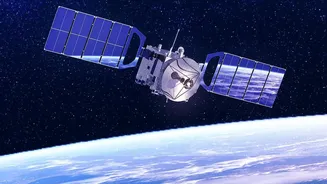
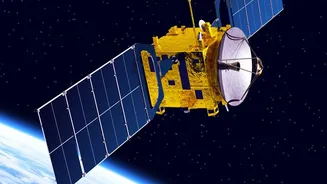
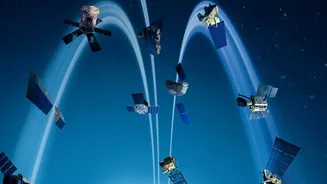
The magic behind this plan is Starlink's 'Direct to Cell' technology. SpaceX is equipping its second-generation satellites with advanced eNodeB modems, which essentially act as cell towers in space. These satellites orbit at a low altitude of about 550 kilometres, which helps reduce the signal lag, or latency, that plagued older satellite phone systems. When your phone leaves an area with terrestrial 4G or 5G coverage, it will automatically search for and connect to an overhead satellite using standard LTE protocols. You won't need a special phone or extra hardware. The satellite then relays your data through its network of laser links—a mesh of light beams connecting the satellites in orbit—before sending it down to a ground station that is connected to the global internet. This entire process is designed to be as seamless as roaming on a partner network.
The Promise: Eliminating Dead Zones
The primary benefit of this integrated network is not necessarily faster speeds in cities, but the near-total elimination of connectivity blackouts. For vast countries like India, with challenging terrain and countless remote villages, this could be a transformative development. The technology promises to bring reliable communication to areas where building physical cell towers is economically or geographically impractical. This has huge implications for everything from emergency response in disaster zones to enabling remote work and education in underserved communities. By partnering with local telecom operators, Starlink can extend their coverage globally, offering a safety net of connectivity almost anywhere with a clear view of the sky. The service is already live for messaging in some countries, demonstrating its viability.
The India Equation: Hurdles and Hopes
While the technology is advancing, its launch in India faces significant regulatory and security hurdles. Starlink has been awaiting final commercial clearance in India for years, a process that has been recently paused over national security concerns. The Indian government requires that it can monitor and control data traffic within the country, a complex demand given Starlink's ability to route data between satellites before it hits a ground station. Elon Musk has publicly voiced frustration over the delays, suggesting powerful local business interests are hindering the launch, a claim the Indian government has dismissed as 'baseless'. Despite these challenges, Starlink executives have met with Indian officials to discuss providing last-mile access in remote areas and have built ground infrastructure in anticipation of approval. The company remains one of three, alongside Jio Satellite and OneWeb, that have received initial licenses but are still undergoing security assessments.
A New Competitive Landscape
SpaceX's strategy positions it as a future direct competitor to established telecom giants like AT&T, Verizon, and T-Mobile in the US, and potentially incumbents in India once approved. While some companies like T-Mobile are currently partners in the Direct to Cell rollout, they could become rivals tomorrow. This has already caused ripples in the market, with telecom stocks falling after SpaceX announced its spectrum acquisition. However, building a full-scale mobile network requires enormous investment in more spectrum and ground infrastructure. Furthermore, SpaceX is not alone in the satellite internet race. Amazon's Project Kuiper is a major emerging competitor, and companies like OneWeb are also active, though more focused on enterprise customers for now. The race is on to see who can master this hybrid model first.