


The Agony and Ecstasy of a Single TV
Imagine this: a single television set, a grainy broadcast, and an entire neighbourhood huddled together, hanging on every ball. There were no second screens, no streaming apps to watch on your phone. You watched the match on the one channel that broadcast it,
and you watched it with everyone else. A power cut during a tense chase was a collective tragedy. The moment Sachin Tendulkar was dismissed, it wasn't just a personal disappointment; it was a signal for many households to turn off their TVs altogether, a shared ritual of despair. This communal viewing experience, where the joy of a boundary and the pain of a wicket were felt in unison, created a powerful, localised bond that today’s fragmented, personal-screen viewing struggles to replicate.
The Pre-Smartphone Quest for Scores
Before live-streaming and ball-by-ball push notifications, getting a score update was a mission. If you weren't near a TV, you relied on the crackle of a radio broadcast or, more often, the slow-loading pages of ESPNcricinfo on a dial-up connection. Refreshing a webpage to see the score change from 125/3 to 126/3 felt like a victory in itself. Others depended on SMS update packs, which were a new and often delayed luxury. There was no instant analysis, no flood of memes, and no real-time player stats popping up on screen. The information gap made every run scored and every wicket taken feel more significant because it wasn't just one of a million data points—it was the entire story.
Heroes Before Hashtags and Franchises
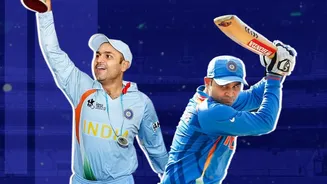
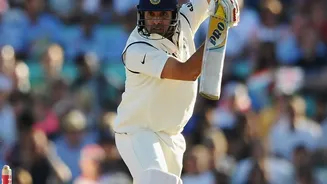
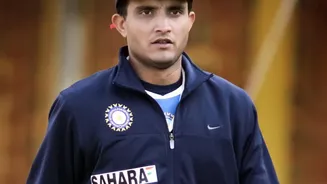
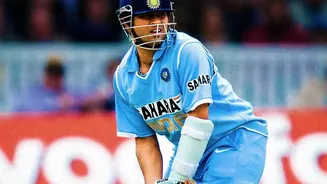
In the 2000s, cricketers were heroes for India, period. There were no IPL franchises to divide loyalties. Your favourite players—Sachin, Dravid, Ganguly, Laxman, Kumble—all played for the same team. Sourav Ganguly's captaincy, which began in 2000 after a match-fixing scandal, ushered in an era of fearless, aggressive cricket. He backed young talents like Virender Sehwag, Yuvraj Singh, and Harbhajan Singh, building a team that learned to give back to opponents who sledged. This 'Team India' identity was absolute. Fandom was team-centric, not player-centric. While Gen Z fandom is often built around individual athletes and their personal brands, 2000s fans rallied behind the flag and the eleven men wearing the India blue.
The Unfiltered India vs. Australia Rivalry
Today's rivalries are intense, but the India-Australia contest of the 2000s was the stuff of legend, a clash of civilizations on the cricket pitch. Australia was the undisputed, often arrogant, world champion. India, under Sourav Ganguly, was the defiant challenger. Matches were filled with raw emotion and psychological warfare. The 2001 Test series, where India won after being forced to follow on in Kolkata thanks to VVS Laxman and Rahul Dravid's historic partnership, is etched in memory as one of the greatest comebacks in sports. Conversely, the crushing loss in the 2003 World Cup final was a national heartbreak. This rivalry wasn’t diluted by players sharing a dressing room in the IPL; it was pure, unfiltered, and deeply personal for fans.
One God, No Arguments
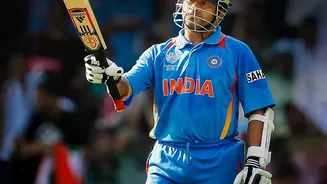
Before the endless 'GOAT' debates on social media, there was a consensus: Sachin Tendulkar. In the 2000s, his status as the 'God of Cricket' was virtually undisputed. He carried the hopes of a billion people for two decades. His peak in the late 90s and early 2000s saw him dominate the world's best bowlers. When he batted, the nation stopped. His failures were mourned, and his centuries were celebrated with an almost religious fervour. While Gen Z fans have a pantheon of stars to debate over—Kohli, Sharma, Bumrah—the singular, unifying reverence for Tendulkar was a defining feature of that era's fandom.
The T20 Revolution Was a Shock, Not the Norm
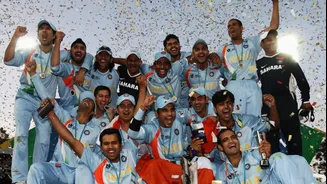
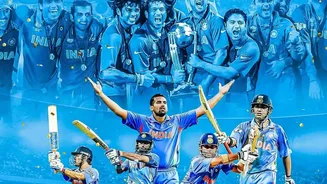
For Gen Z, T20 cricket and the IPL are the default formats. But in the mid-2000s, T20 was a quirky experiment that the Indian cricket board was reluctant to even join. India sent a young, second-string team to the inaugural T20 World Cup in 2007, with senior players like Tendulkar, Dravid, and Ganguly sitting out. Led by a young MS Dhoni, this team of underdogs went on to beat arch-rivals Pakistan in a nail-biting final. That victory was a shockwave. It wasn't just another trophy; it was the event that changed Indian cricket forever, paving the way for the launch of the IPL in 2008 and sparking a revolution that reshaped the sport globally.