

The Bleaching Epidemic
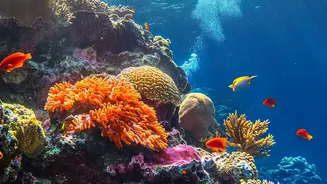
To understand the solution, we first need to grasp the problem. Coral bleaching is a stress response. Corals are animals that live in a symbiotic relationship with microscopic algae called zooxanthellae. These algae live within the coral's tissues, providing
up to 90% of their food through photosynthesis and giving them their brilliant colours. When water temperatures rise, even by just one degree Celsius for a few weeks, the corals become stressed and expel these vital algae. Without their algal partners, the coral's tissue becomes transparent, revealing its white limestone skeleton. This is bleaching. A bleached coral is not dead, but it is starving and highly vulnerable to disease and mortality. With climate change causing more frequent and severe marine heatwaves, reefs no longer have the decade or so they need to recover from these events.
Meet the 'Super Corals'
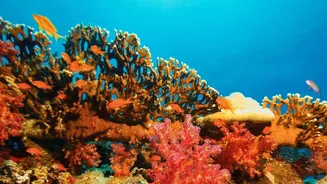
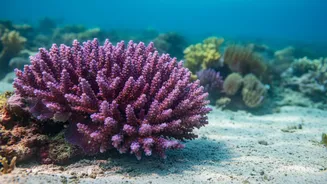
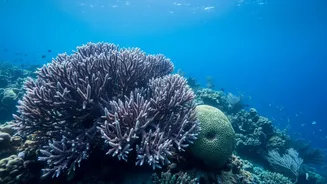
Amidst the widespread devastation, scientists have observed a remarkable phenomenon: in a bleached reef, some individual corals remain colourful and healthy. These naturally resilient survivors are often called 'super corals'. They possess an innate ability to withstand higher water temperatures that would bleach their neighbours. This thermal tolerance isn't magic; it's often a result of their genetic makeup or the specific type of heat-tolerant algae they host. Scientists are now racing to understand the secrets of these hardy survivors, seeing them as a potential cornerstone for reef conservation in a warming world.
Finding and Breeding Resilience
The key to leveraging these super corals lies in identifying and propagating them. Researchers use several methods. One approach is finding naturally tolerant corals in environments that are already extreme, such as shallow lagoons that heat up significantly at low tide. Another method involves 'assisted evolution'. This doesn't necessarily mean genetic engineering. Instead, it can involve selective breeding, where scientists cross-breed corals that have survived bleaching events to produce more resilient offspring. Another technique is thermal conditioning, essentially a 'boot camp' for corals where they are exposed to gradually increasing temperatures in labs to build their resilience before being planted in the ocean. Scientists can also focus on the algal symbionts, cultivating heat-tolerant strains of algae and introducing them to corals.
A Critical Tool, Not a Silver Bullet
While the prospect of heat-resistant reefs is exciting, scientists caution that this is not a magic solution. For one, restoration is expensive and resource-intensive, and outplanting these corals would need to be done on a massive scale to have a meaningful impact over centuries. There are also ecological risks. Focusing too heavily on a few heat-tolerant strains could reduce the natural genetic diversity of reefs, potentially making them vulnerable to other threats like disease. Some researchers worry about unintended long-term consequences of introducing lab-assisted corals into the wild. Therefore, experts agree that using thermally tolerant corals is a crucial intervention, but it must be paired with aggressive action on the root cause of the problem: climate change and greenhouse gas emissions.
The Future of Reef Restoration
The work on thermally tolerant corals is part of a larger, innovative push to save the world's reefs. Large-scale projects, like one in Abu Dhabi, are deploying artificial reef structures and cultivating native 'super corals' adapted to the extreme heat of the Gulf. Researchers are also developing 'Coral IVF', where they collect spawn during mass spawning events to raise millions of baby corals in protected enclosures before releasing them onto damaged reefs. New findings have even shown that corals can be 'trained' to resist disease, similar to a vaccine, by exposing them to inactive pathogens. These combined efforts represent a new era of active, intervention-based conservation, moving beyond simply monitoring decline to actively trying to rebuild these vital ecosystems.